1/ 34
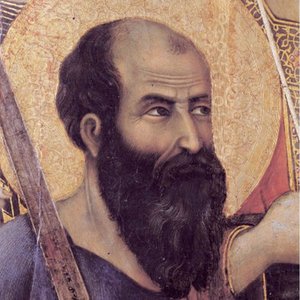
Дуччо ди Буонинсенья 1255–1319
Итальянец b. Сиена Сиенская школа, Треченто, готика Wikipedia 31/32
Gothic художники at a glance
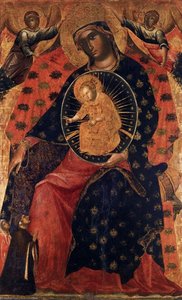
Дуччо ди Буонинсенья (1255–1319) is the most famous Gothic художник, best known for Мадонна Ручеллаи (деталь) и Полиптих №28 (Святая Дева Мария с Младенцем Иисусом и Четырьмя Святыми). Then Симоне Мартини, Джентиле Да Фабриано, Пизанелло и Штефан Лохнер. The list covers 34 художники born between 1161 and 1465 in 8 countries, from Master Mateo to Jan Baegert.
Method. Scope: artists filed under Gothic in our catalogue. Order: our artist fame ranking. Excluded: artists born after 1955 without a Wikidata identifier. Wikipedia figure: languages with an article, out of our 32.
Key data
Ranked list
1/ 34
Итальянец b. Сиена Сиенская школа, Треченто, готика Wikipedia 31/32
3/ 34
Итальянский b. Фабриано Международный готический Wikipedia 23/32

4/ 34
Итальянский b. Пиза Готический искусство; Раннее Возрождение Wikipedia 28/32

The Vision of Saint Eustace, signed “Antonius Pisanus,” showcases a harmonious blend of Gentile da Fabriano’s refinement and Stefano da Verona’s stylistic nuances. The Vision of Saint Eustace: Demonstrates a harmonious blend of Gentile da Fabriano’s style and Stefano da Verona’s influence.
5/ 34
немец b. Мерсбург Поздняя готика, Интернациональная готика Wikipedia 19/32

6/ 34
Italian b. Флоренция Gothic, Early Renaissance Wikipedia 20/32

Agnolo’s artistic lineage began with Taddeo Gaddi (1300 – 1366), himself a devoted pupil and protégé of Giotto di Bondone—the revolutionary artist who irrevocably altered the course of Western painting by introducing naturalism, emotional depth, and narrative clarity into Florentine art. These eight panels recount the biblical narrative of the True Cross, commencing with Michael the Archangel delivering a branch from the Tree of Knowledge to Seth—a scene rendered with breathtaking precision and imbued with palpable spiritual fervor.
8/ 34
Итальянец b. Венеция Византийское влияние и готическое искусство Wikipedia 15/32

10/ 34
Итальянец b. Ареццо Связующее звено между школой Джотто и Сиенской школой Wikipedia 16/32

11/ 34
Итальянец b. Флоренция Раннее Возрождение Wikipedia 17/32

Loggia del Bigallo, Флоренция: Изучите искусство XIV века и исторические артефакты Compagnia del Bigallo, включая работы Арнольди и Дадди. Уникальная флорентийская жемчужина! Бернардо Дадди — Музей Гетти: Ознакомьтесь с коллекцией Музея Гетти в Центре Гетти и Вилле Гетти. Бернардо Дадди — Википедия: Узнайте больше о его жизни, творчестве и влиянии в Википедии.
13/ 34
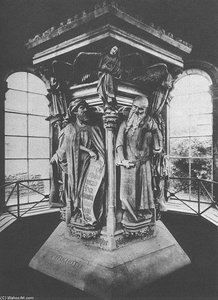
Spanish Romanesque Sculpture

While his contemporaries often relied on stylized, flat figures, Mateo meticulously studied human anatomy and the complex behavior of drapery, achieving an astonishing accuracy in his depictions.
14/ 34
Нидерландский (голландский) b. Неймеген Интернациональная готика Wikipedia 16/32

15/ 34
Немецкий b. Гейльгенштадт Поздний готический и Ренессанс

His training began around 1478/79, as he embarked on a deliberate journey through the workshops of Swabia and the Upper Rhine, immersing himself in the diverse styles and techniques prevalent throughout the region.
16/ 34
Голландский b. Нижний Рейн (регион) Готическое Возрождение Wikipedia 14/32

18/ 34
Italian b. Florence Gothic Wikipedia 7/32

Jacopo's dedication extended beyond commissions; he actively participated in shaping Florence’s cultural landscape through his involvement with the cathedral workshop and his role as consul of the Arte dei Medici e Speziali (1384, 1387, 1392).
19/ 34
Catalan b. Вальс Late Gothic, Flemish influence Wikipedia 10/32

Between 1440 and 1445, his hand reached into the workshops of Zaragoza and Tarragona, where he encountered the influential Flemish style brought by Luis Dalmau. His ability to command both scale and detail is evident in his diverse body of work: The Archangel St Michael: A celestial sentinel rendered with heroic posture, framed by stylized foliage and a radiant, textured gold leaf that seems to emanate an inner light.
20/ 34
German b. Weil der Stadt Late Gothic Art Wikipedia 10/32

Commissioned for the parish church in Tiefenbronn, the altarpiece depicts scenes from the life of Mary Magdalene with a striking departure from the prevailing aesthetic norms.
21/ 34
German b. Minden International Gothic Wikipedia 13/32

While sharing similarities with other artists of the period, such as Master Francke (another prominent Hamburg painter), Bertram's work possesses a distinct character—a subtle restraint in emotional expression compared to Francke’s more overtly dramatic approach. The Victoria and Albert Museum in London houses a 45-scene depiction of the Apocalypse, likely created by Bertram's workshop, further demonstrating his influence within the artistic community.
Key works · Top 100 works · Master Bertram reproductions
22/ 34
Spanish Gothic-Italian

Pere Serra, also known as Jaume Serra, stands as a compelling figure in the transition from the International Gothic style to the burgeoning Renaissance aesthetic within Catalonia.
23/ 34
Итальянец b. Сан-Квирико-д’Орча Натурализм, проторенессанс Wikipedia 10/32

Key works · Top 100 works · Паоло Ди Джованни Феи reproductions
 The Coronation of the Virgin, and Saints
 Madonna and Child
 Madonna and Child Enthroned with Saint John the Evangelist, Saint Peter, Saint Agnes, Saint Catherine of Alexandria, Saint Lucy, an Unidentified Female Saint, Saint Paul, and Saint John the Baptist, with Eve and the Serpent; the Annunciation
24/ 34
Italian b. Milan Gothic Illuminations

Giovannino de’ Grassi remains one of the most captivating enigmas of the late medieval period, a figure whose brushstrokes breathed life into the prestigious Visconti court of Milan. He operated in an era where the transition from the rigid structures of the Middle Ages to the burgeoning naturalism of the early Renaissance was beginning to stir, and de’ Grassim stood at the very heart of this aesthetic evolution.
25/ 34
Catalan b. Girona International Gothic Wikipedia 8/32

A pioneer who fundamentally reshaped the visual language of Catalonia, Borrassà emerged from the historic streets of Girona to become a master of the International Gothic style. The foundations of Borrassá’s mastery were laid in his youth, likely under the guidance of his father, Honorat Borrassà, a fellow painter.
26/ 34
Italian b. Venice International Gothic Wikipedia 10/32

In the heart of fifteenth-century Venice, a city defined by its shimmering lagoons and unparalleled maritime wealth, the artistry of Michele Giambono emerged as a luminous bridge between the medieval past and the dawning Renaissance. As a follower of luminaries such as Jacobello del Fiore and Gentile da Fabriano, Giambono inherited a fascination with delicate line work and the use of precious materials to evoke the celestial realm.
27/ 34
Итальянский b. Флоренция Поздний готика/Раннее Ренессансо Wikipedia 7/32

31/ 34
German Late Gothic Wikipedia 11/32

The influence of Netherlandish masters is readily apparent in his draftsmanship and compositional structure.
32/ 34
b. Wesel Late Gothic Wikipedia 3/32

By 1492, Jan Baegert was recognized as a master in Kalkar, a significant milestone that confirmed his ability to manage large-scale commissions independently. In Hamburg, the Kunsthalle holds two significant examples of his ability to handle specific hagiographic figures: Saint Catherine with a patron and John the Baptist.
Location Tracing the physical remains of Jan Baegert’s output requires looking toward the Westphalian and Lower Rhine regions.
33/ 34
Italian Late Gothic Wikipedia 8/32

These paintings, scattered across museums in Siena, Washington D.C., New York, and Wiesbaden, Germany, offer a profound glimpse into the evolving artistic landscape of late Gothic Italy and reveal a painter deeply attuned to both religious devotion and the complexities of human experience.
34/ 34
Austrian International Gothic Wikipedia 5/32

However, he also incorporated elements of the International Gothic style, characterized by elongated figures, delicate hands, and an expressive use of color. Clare (c. 1400-1410): National Gallery of Art, Washington D.C. – A cornerstone of the Master’s oeuvre, showcasing his dramatic use of light and shadow to convey a sense of profound sorrow and spiritual transcendence.
Best-known works
Chronology
Statistics
| Италия | 15 |
|---|---|
| Germany | 4 |
| Германия | 3 |
| Нидерланды | 3 |
| Italy | 3 |
| Spain | 2 |
| Испания | 1 |
| Austria | 1 |
| 12th век | 1 |
|---|---|
| 13th век | 6 |
| 14th век | 18 |
| 15th век | 5 |
| Метрополитен-музей | 8 |
|---|---|
| Национальная галерея | 4 |
| Галерея Уффици | 3 |
| Музеи изобразительных искусств Гарварда | 3 |
| Museo dell'Opera del Duomo | 2 |
| Germanisches Nationalmuseum | 2 |
| Gallerie dell'Accademia di Venezia | 2 |
| Лувр | 2 |
Index
Дуччо ди БуонинсеньяИтальянец · 1255–1319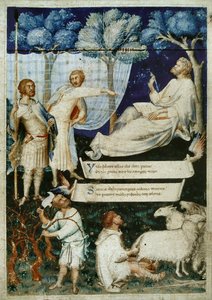 Симоне МартиниИтальянец · 1284–1344Джентиле Да ФабрианоИтальянский · 1370–1427ПизанеллоИтальянский · 1395–1455Штефан Лохнернемец · 1410–1451Аньоло ГаддиItalian · 1350–1396
 Братья ЛимбургиГолландцы · 1385–1416Паоло ВенецианоИтальянец · 1333–1358
 Липпо МеммиИтальянец · 1291–1356Спинелло АретиноИтальянец · 1350–1410Бернардо ДаддиИтальянец · 1290–1348
 Андреа ПизаноИтальянец · 1290–1348Master MateoSpanish · 1161–1217Жан МалуэльНидерландский (голландский) · 1370–1415Тилман РименсхейдерНемецкий · 1460–1531Мастер ФранкеГолландский · 1380–1435
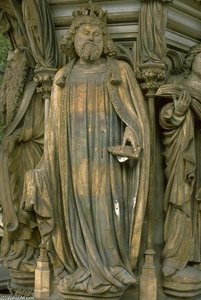
 Клаус Слютерголландский · 1355–1406Jacopo di CioneItalian · 1325–1399Хайме УгеCatalan · 1445–1492Lucas MoserGerman · 1390–1443Master BertramGerman · 1345–1415Pere SerraSpanish · 1357–1406Паоло Ди Джованни ФеиИтальянец · 1345–1411Giovannino De' GrassiItalian · 1350–1398Lluís BorrassàCatalan · 1360–1425Michele GiambonoItalian · 1400–1462Джованни даль ПонтеИтальянский · 1385–1438
 Теодорик ПражскийЧеш ·
 Никколо Ди Пьетро ДжериниИтальянец · 1368–1415
 Пачино Ди БонагуидаИтальянский · 1280–1340Master Of The Life Of The VirginGerman · Jan Baegert1465–1535Master Of The OsservanzaItalian · Master of Heiligenkreuz AbbeyAustrian ·
FAQ
Дуччо ди Буонинсенья (#1) comes first, ahead of Симоне Мартини (#2) and Джентиле Да Фабриано (#3).
Дуччо ди Буонинсенья (#1), Симоне Мартини (#2), Джентиле Да Фабриано (#3), Пизанелло (#4) и Штефан Лохнер (#5).
The museums holding the most key works of this list are Метрополитен-музей (8), Национальная галерея (4) и Галерея Уффици (3).
The highest-ranked художники born in Италия are Дуччо ди Буонинсенья (#1), Симоне Мартини (#2), Джентиле Да Фабриано (#3), Пизанелло (#4) и Аньоло Гадди (#6).
Италия: 15 of the 34 художники in this list were born there, then Germany (4) и Германия (3).
“His magnum opus, Saint George and the Princess of Trebizond, executed as a fresco in Verona’s Church of Sant'Anastasia, exemplifies his mastery of narrative composition and textural richness.” — from our biography of Пизанелло (#4).
Most художники in this list were born in the 14th век (18 of 34), between 1161 and 1465 overall.
The earliest-born художник in this list is Master Mateo (#13), born in 1161.
Флоренция: 5 of the художники in this list were born there.
Our catalogue holds 1,535 works by these художники. Each one can be ordered as a hand-painted oil reproduction or a print.
Guides
Other lists
 Знаменитые художники BaroqueРембрандт ван Рейн · Рембрандт
 Знаменитые художники Contemporary RealistСборецы · Жан-Франсуа Милле
 Знаменитые художники ImpressionistЗвёздная ночь (Нью-Йорк, MoMA) · Винсент Ван Гог
 Знаменитые художники RomanticistСатурн пожирающий своего сына · Франсиско Гойя
 Знаменитые художники NeoclassicistСмерть Марата · Жак-Луи Давид
 Знаменитые художники RealistПроисхождение мира · Гюстав Курбе
 Знаменитые художники RenaissanceМона Лиза (Джоконда) · Леонардо Да Винчи
 Знаменитые художники Dutch Golden AgeДевушка с жемчужной серёжкой · Ян Вермеер
 Знаменитые художники ExpressionistКомпозиция VII · Василий Васильевич Кандинский
 Знаменитые художники RococoОтплытие на Кифере · Антуан Ватто
By period
 Знаменитые художники Early MedievalSnowy River · Ван Вэй
 Знаменитые художники High MedievalМадонна в Маэсти (Мадонна Оньисанти) · Джотто Ди Бондоне
 Знаменитые художники Late MedievalБлаговещение и два святых · Симоне Мартини
 Знаменитые художники RenaissanceСотворение Адама · Микеланджело
 Знаменитые художники Early ModernПризвание святого Матфея · Караваджо
 Знаменитые художники 19th CenturyВодяные лилии (или Нимфеи) · Клод Моне
 Знаменитые художники ModernГерника · Пабло Пикассо
 Знаменитые художники ContemporaryWind Sculpture III (one in a series of nine) · Yinka Shonibare
Related lists