Гарантия возврата средств · 30 дней Бесплатная доставка по всему миру
449 332произведения искусства 30 637художники 4 753музеи 32язык
Валюта
Язык
Ателье · Осн. в 2015 г. · Париж, Франция
AllPaintingsStore
allpaintingsstore.com
Личный кабинет Избранное Корзина

Тобиас Штимер

1539 - 1584

Краткая справка

  • Movements: mannerism
  • Lifespan: 45 years
  • Copyright status: Public domain
  • Also known as:
    • Томас Штимер
    • Штимер
    • Тобиас
  • Creative periods:
    • mature renaissance
    • mature period
  • Top-ranked work: Portrait of a Bearded Man
  • Works on APS: 61
  • Развернуть подробности
  • Art period: Ренессанс
  • Born: 1539, Шафхаузен, Швейцария
  • Museums on APS:
    • Музей Дж. Пол Гети
    • Музей Дж. Пол Гети
    • Музей Дж. Пол Гети
    • Музей Дж. Пол Гети
    • Музей Дж. Пол Гети
  • Top 3 works:
    • Portrait of a Bearded Man
    • Fama
    • Temperance
  • Nationality: Швейцария
  • Died: 1584

Тест по искусству

В каждом вопросе только один правильный ответ.

Вопрос 1:
Кто оказал значительное влияние на ранний стиль Томаса Стимера?
Вопрос 2:
В какой стране родился Томас Стимер?
Вопрос 3:
Что является наиболее известным в творчестве Томаса Стимера?
Вопрос 4:
Какой художественный стиль характеризует работы Томаса Стимера?
Вопрос 5:
Как назывался дом Томаса Стимер в Шаффхаузене?

Tobias Stimmer (1539-1584): Swiss Renaissance Painter & Illustrator

Tobias Stimmer, born in the bustling Swiss city of Schaffhausen in 1539, emerged as a pivotal figure during a period of profound artistic and religious transformation. While details surrounding his earliest training remain somewhat elusive, it’s clear he quickly established himself as a versatile artist, initially working as both a wall and portrait painter across Switzerland and beyond – from the vibrant streets of Strasbourg to the elegant courts of Baden-Baden. Stimmer's career unfolded against the backdrop of the Reformation, an era that deeply influenced artistic expression and subject matter throughout Europe. He wasn’t merely a recorder of his time; he was a sensitive interpreter of its shifting beliefs and values, translating them into images imbued with both precision and spiritual depth.

The Influence of Holbein & The Dawn of Mannerism

Stimmer’s artistic lineage is readily apparent in his profound debt to Hans Holbein the Younger. The meticulous realism, the psychological insight, and the sheer technical mastery that characterized Holbein’s work served as a foundational influence on Stimmer’s early development. However, Stimmer didn’t simply imitate his predecessor; he absorbed these lessons and forged his own distinctive path within the evolving aesthetic of Mannerism. This is evident in his tendency towards elongated figures, elegant compositions marked by dynamic movement, and an almost obsessive attention to intricate detail. His work embodies a sophisticated balance between Renaissance ideals and the emerging stylistic tendencies that would define art for decades to come. He wasn’t afraid to experiment with form and composition, pushing boundaries while maintaining a remarkable level of technical skill.

Monumental Achievements: The Strasbourg Astronomical Clock

Perhaps Stimmer’s most celebrated contribution lies in the exquisite paintings adorning the Strasbourg astronomical clock – a testament to his ability to seamlessly blend portraiture with allegorical representation. These intricate depictions, brimming with symbolic meaning, showcase not only his technical prowess but also his deep understanding of humanist thought and scientific inquiry. The meticulous detail captured within these panels reflects Holbein’s influence, yet Stimmer infused them with Mannerist dynamism and a profound exploration of human experience.

Prolific Illustrator & Designer: Woodcuts for Print

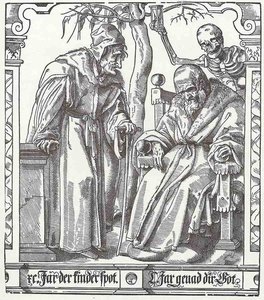
Beyond this monumental project, Stimmer was an exceptionally prolific creator of designs intended for woodcuts. These drawings, often illustrating biblical scenes or exploring complex allegories, were widely disseminated thanks to prominent printers like Sigmund Feyerabend in Frankfurt am Main and Bernhart Jobin in Strasbourg, significantly expanding his reach and influence across Europe. His meticulous attention to line and texture—a hallmark of Mannerist style—transformed these images into powerful visual narratives accessible to a broader audience.

A Legacy of Precision & Spiritual Depth

Stimmer’s portraits, such as those of Jacob Schwytzer and his wife Elsbeth Lochmann, stand as compelling examples of his ability to capture not only physical likeness but also the social standing and inner character of his sitters. His work exemplifies a remarkable fusion of Renaissance refinement and Mannerist expressive force—a testament to Stimmer’s enduring contribution to Swiss art history. He passed away in Strasbourg in 1584, leaving behind a body of work that continues to captivate and inspire scholars and art enthusiasts alike.