Záruka vrátenia peňazí · 100 dní Bezplatné celosvetové doručenie
646 446artworks 53 409umelci 5 406múzeá 32jazyky
Portrét Jim Nutt

The Top 6 Jim Nutt Paintings, Ranked by Fame

Aktualizované október 2026 · zoradené podľa našej miery popularity (vyhľadávanie, návštevy a objednávky pre každou prácu) · 6 dielov umelca Jim Nutt v našom katalógu

Rýchla odpoveď

Untitled (1966) je najznámejším obrazom umelca Jim Nutt; originál sa nachádza v múzeu Art Institute of Chicago, Chicago. Miss E. Knows (1967) je na druhom mieste, Rosie Comon (1968) na tretom. Náš katalóg obsahuje 6 diel od Jim Nutt; tu je 6 najznámejších, usporiadaných podľa popularity, spolu s rokom a múzeou každého diela, aby vám to pomohlo pri výbere toho, ktorý si chcete objednať.

narodený 1938, Pittsfield Najviac diel: Art Institute of Chicago

Jim Nutt: 10 najlepších obrazov

6
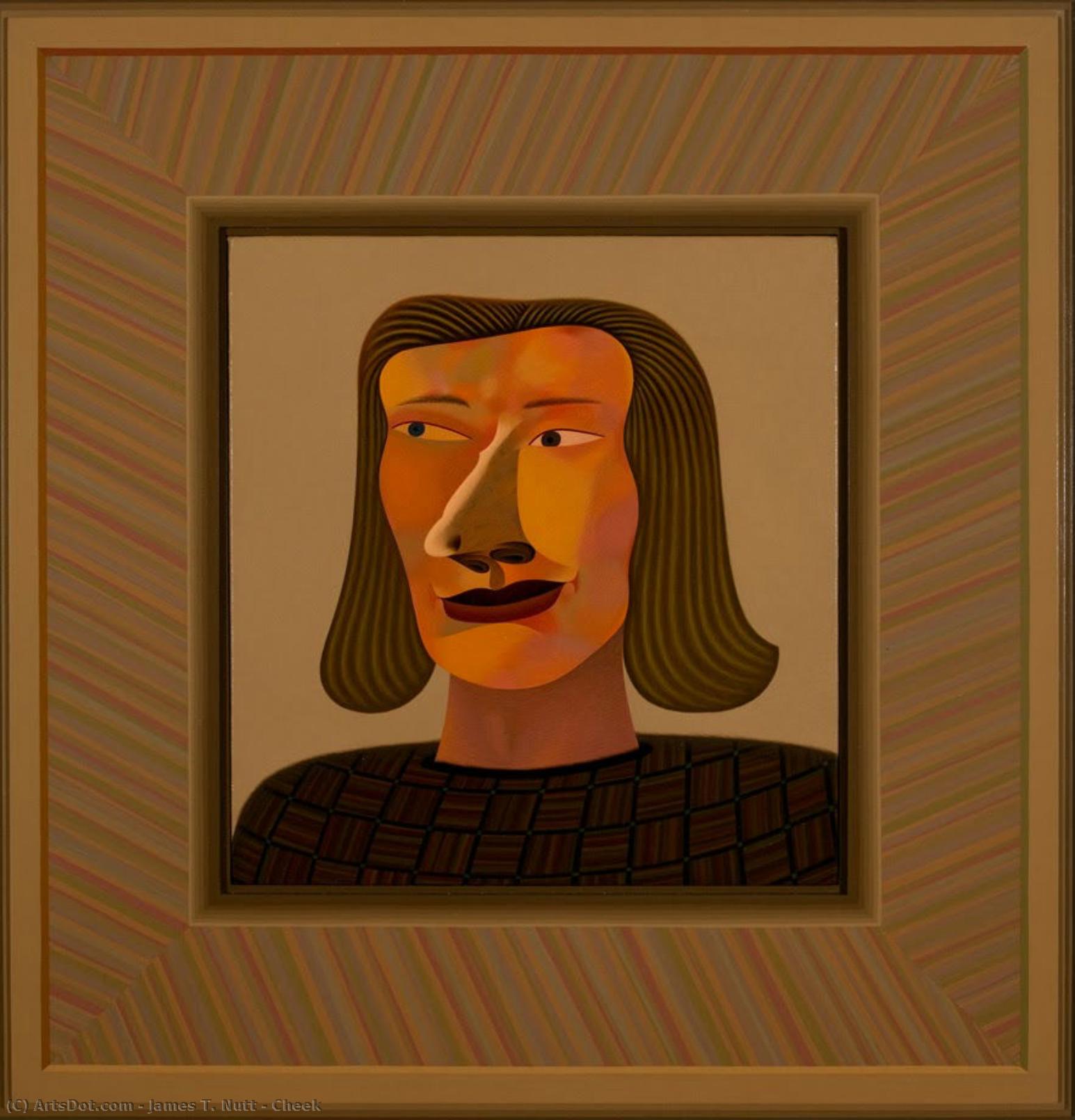
Cheek (1991) od Jim Nutt

Cheek

1991 · Acrylic · Madison Museum of Contemporary Art, Madison

In the evocative painting Cheek, created in 1991 by the master of surrealist intensity, James T. Nutt, we are invited into a profound and unsettling encounter with the human form. The work presents a striking portrait of a woman, her face emerging from a deep, earthen brown background that feels both intimate and infinite. There is an immediate, magnetic pull in her gaze; she looks directly at the viewer, bridging…

Múzeá, ktoré uchovávajú originály umelca Jim Nutt

2 múzeá, v ktorých sa nachádza najviac obrazov z tejto stránky.

Múzeá Mesto Diela umelca Jim Nutt Obrazy z tohto zoznamu
Art Institute of Chicago, ChicagoArt Institute of Chicago Chicago 3 Untitled, Miss E. Knows, Lip Thrashed
Madison Museum of Contemporary Art, MadisonMadison Museum of Contemporary Art Madison 3 Rosie Comon, Toot and Toe, Cheek

Najlepšie obrazy umelca Jim Nutt podľa dekád

Diela podľa dekád

Vyberte dekádu, aby ste si pozreli jej najznámejší obraz.

Čo treba vedieť o obrazoch od Jim Nutt

Ktorý slávny obraz od Jim Nutt dominuje v rebríčku?Zobraziť odpoveď

Untitled (1966), Art Institute of Chicago, Chicago, zaužíva prvé miesto, za ktorým nasledujú Miss E. Knows (1967) a Rosie Comon (1968).

Koľko rokov mal(a) Jim Nutt v roku vytvorenia Untitled?Zobraziť odpoveď

Jim Nutt mal 28 rokov: Untitled je datované 1966 a Jim Nutt sa narodil v 1938.

Koľko diel umelca Jim Nutt obsahuje váš katalóg?Zobraziť odpoveď

V našom katalógu sa nachádza 6 diel od umelca Jim Nutt, datovaných od 1966 do 1991.

Kde možno vidieť originály slávnych obrazov umelca Jim Nutt?Zobraziť odpoveď

Predovšetkým v Art Institute of Chicago (Chicago) a Madison Museum of Contemporary Art (Madison). Pre úplný zoznam pozrite tabuľku múzeí vyššie.

V ktorých rokoch vytvoril Jim Nutt svoje najlepšie diela?Zobraziť odpoveď

V období 1960s: 4 z 6 obrazov v tomto rebríčku pochádza z tohto obdobia, vrátane Untitled.

Ktoré obrazy slávneho Jim Nutt sú najstaršie a ktoré najnovšie?Zobraziť odpoveď

Najstaršie na tejto stránke: Untitled (1966). Najnovšie: Cheek (1991).

Aké obrazy od Jim Nutt má v zbierkach Art Institute of Chicago?Zobraziť odpoveď

V múzeu Art Institute of Chicago, Chicago sa nachádza 3 z tu uvedených obrazov, vrátane Untitled, Miss E. Knows a Lip Thrashed.

Jim Nutt: život a kariéra

A Chicago Visionary: The Surreal World of James T. Nutt

James T. Nutt, born in Pittsfield, Massachusetts, in 1938, emerged as a pivotal figure in the vibrant and iconoclastic art scene of mid-century Chicago. He wasn’t simply *part* of a movement; he helped define it. Along with fellow artists like Gladys Nilsson – who would become his wife – Nutt was instrumental in forging the distinctive aesthetic of the Chicago Imagists, also known as the Hairy Who. This collective, born from the fertile ground of the School of the Art Institute of Chicago, rejected the prevailing cool detachment of East Coast Pop Art, opting instead for a raw, intensely personal, and often deliberately unsettling vision. Nutt’s journey wasn't one of immediate recognition; it was a gradual unfolding of a unique artistic language steeped in both high art tradition and the vernacular exuberance of popular culture.

Early Influences and the Formation of the Hairy Who

Nutt’s academic path was somewhat circuitous, drifting through studies of drawing and architecture before finding his true home at the Art Institute of Chicago in 1960. It was there he encountered Nilsson, a partnership that would prove both personally and artistically transformative. Crucially, they came under the mentorship of Whitney Halstead, an art history professor who provided intellectual guidance and encouragement. Halstead introduced them to Don Baum, whose Hyde Park Art Center became a crucial exhibition space for their burgeoning group. The Hairy Who’s initial 1966 show was a deliberate provocation—a rejection of minimalist formalism in favor of intensely figurative work brimming with sexual energy, cartoonish imagery, and a deliberately “bad taste” aesthetic. They drew inspiration from sources often dismissed by the art establishment: pulp magazines, advertising, comics, folk art, and even tattoos. However, Nutt’s work wasn't merely appropriation; it was a complex synthesis of these elements filtered through a deeply personal sensibility. He didn’t simply *use* pop culture imagery; he dissected it, reconfigured it, and imbued it with a psychological weight that set his paintings apart.

Developing a Distinctive Style: Line, Color, and the Grotesque

Nutt's artistic development saw him refine a style characterized by bold lines, saturated color palettes, and an embrace of the grotesque. His early works often employed plexiglass as a support, painting on the reverse side—a challenging technique that demanded precision and allowed for a unique luminosity. This process contributed to the density and immediacy of his compositions. The figures in these paintings are rarely conventionally beautiful; they’re bulbous, misshapen, and often fragmented, evoking a sense of both fascination and unease. Critics have noted the influence of European Expressionism and Surrealism, but Nutt's work is distinctly American—rooted in a specific cultural context and infused with a uniquely subversive humor. He wasn’t interested in replicating reality; he sought to reveal the hidden anxieties and desires lurking beneath its surface. His paintings are populated by hybrid creatures, distorted bodies, and ambiguous narratives that invite multiple interpretations. The meticulous craftsmanship belies the seemingly chaotic energy of his compositions—each line, each color choice is deliberate, contributing to a carefully constructed visual world.

Recognition and Lasting Impact

While initially met with resistance from some corners of the art world, Nutt’s work gradually gained recognition for its originality and uncompromising vision. He was one of six artists representing the United States at the 1972 Venice Biennale—a significant achievement that brought international attention to the Chicago Imagist movement. Major exhibitions followed at institutions like the Museum of Contemporary Art in Chicago, the Milwaukee Art Museum, and the Whitney Museum of American Art. Throughout his career, Nutt has consistently pushed the boundaries of figurative painting, challenging conventional notions of beauty and taste. His influence can be seen in the work of numerous contemporary artists who embrace a similar blend of high art and low culture, psychological depth and visual exuberance. He is often lauded as “the premier artist of his generation” by curators like Lynne Warren, a testament to the enduring power and originality of his vision.

A Legacy of Surreal Exploration

James T. Nutt’s contribution extends beyond his individual paintings; he helped establish a new paradigm for figurative art—one that embraced subjectivity, challenged established norms, and celebrated the complexities of the human psyche. His work continues to resonate with audiences today, offering a compelling glimpse into a surreal world where beauty and grotesquerie coexist, and where the boundaries between high art and popular culture are blurred beyond recognition. He remains an active artist, continuing to explore the themes that have defined his career—a testament to his enduring creativity and unwavering commitment to his unique artistic vision.