The Great Shift: Breaking the Rules of Fine Art
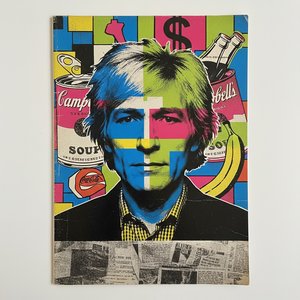
Before the mid-20th century, the art world operated under a strict set of unwritten rules. Museums were filled with heavy, emotional, and deeply personal works that required years of study to truly grasp. Then came a group of artists in the 1950s and 1960s who decided to look elsewhere for inspiration. Instead of searching for meaning in the subconscious, they looked at the supermarket shelves, the comic book stands, and the glowing screens of television sets. This was a revolt against the idea that art had to be difficult or elite. By pulling imagery from the streets and the living room, they bridged the gap between the high-brow gallery and the everyday person.
This movement finds a historical echo in the Dada movement of the early 20th century. Dadaists used absurdity and found objects to challenge the logic of a world at war, often using "ready-made" items to shock the establishment. Pop Art took that spirit of rebellion but swapped the shock value for a reflection of modern life. While Dada was a protest, Pop Art was a mirror, reflecting a world that was becoming increasingly saturated with mass-produced goods and media imagery.
By removing the barrier between "high art" and "low culture," these artists changed the visual language of the modern era forever.
The Beauty of the Banal: Turning Everyday Objects into Art
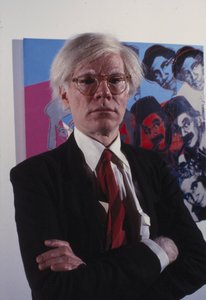 Andy Warhol
Pop Art icon Andy Warhol created the legendary Campbell's Soup Cans. Discover his vibrant world of celebrity and consumer culture today.
Imagine walking into a gallery and seeing nothing but soup cans or laundry detergent boxes. To the critics of the time, this felt like an affront to the dignity of painting. However, for artists like Andy Warhol, the mundane was where the real story of modern life lived. There is a specific power in taking a common, mass-produced item and isolating it. When a soup can is placed on a canvas, it stops being just a grocery item and becomes a symbol of the abundance and consumerism that defined the post-war era. It turns the "kitsch" and the "banal" into something worth looking at closely.
This focus on the object echoes the tradition of Still Life painting. For centuries, artists meticulously painted bowls of fruit or flowers to show off their technical skill and celebrate nature. Pop Art simply updated the subject matter. Instead of a bowl of fruit, the subject became the products that people actually used every day. The technique shifted from the organic textures of nature to the hard edges and clean lines of commercial design.
This shift turned the act of consumption into a subject for contemplation, proving that anything can be art if you change the way you look at it.
The Celebrity Lens: From Royal Portraits to Pop Icons
 Che Guevara
Che Guevara, Andy Warhol
In the past, a portrait was a way to immortalize kings, queens, or religious figures. In the Pop Art era, the new royalty was found on the silver screen and in tabloid magazines. Artists began to treat celebrities like Marilyn Monroe or Che Guevara with the same reverence—or sometimes the same irony—previously reserved for monarchs. This wasn't just about painting a face; it was about capturing the way media saturation turns human beings into symbols. A face becomes a brand, repeated and recolored until it feels as familiar as a logo.
This approach draws a direct line back to the formal portraiture of the Renaissance. Back then, a portrait was a tool of power used to signal status and permanence. Pop Art took that concept of the "icon" and applied it to the fleeting, transient nature of fame. While a Renaissance portrait sought to capture the soul, Pop Art often captured the surface—the glossy, public image that everyone recognizes instantly.
By doing this, artists highlighted how much our perception of people is shaped by the media we consume.
Dots and Lines: The Graphic Language of Mass Production
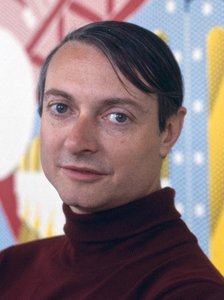 Roy Lichtenstein
Pop Art pioneer Roy Lichtenstein is famed for his Ben-Day dots and Whaam!. Discover his iconic masterpieces today.
If you look closely at a comic book, you see a pattern of tiny dots used to create color and shading. This is known as Ben-Day printing. Roy Lichtenstein took this mechanical process and turned it into a deliberate artistic choice. By using stencils to recreate these dots on a large canvas, he mimicked the look of cheap, mass-produced print. His work often features bold, primary colors and thick black outlines, making the art feel as dynamic and loud as an action sequence in a graphic novel.
This technique is a modern evolution of printmaking, a method used for centuries to spread information and imagery quickly. While traditional printmaking was used to make many copies of a single image, Pop artists used the *aesthetic* of printing to question the idea of originality itself. They embraced the "impersonal" look of the machine to move away from the messy, emotional brushstrokes of the artists who came before them.
The result is a style that feels both highly structured and incredibly energetic, turning the mechanics of printing into a fine art technique.
The Commercial Pulse: Art as a Tool for Modern Branding
Today, we see the fingerprints of Pop Art everywhere, from the neon-lit interiors of gaming lounges to the bold graphics in boutique hotels. The movement's ability to use recognizable symbols makes it a powerful tool for communication. When a space uses the visual language of Pop Art, it isn't just decorating; it is signaling a connection to a shared global culture. It creates an immediate emotional link because the imagery is already part of our lived experience.
This connection to commerce is a direct descendant of the world of advertising and graphic design. Many of the pioneers of Pop Art, including Andy Warhol and Ed Ruscha, actually started their careers as commercial illustrators and billboard painters. They didn't see a wall between "commercial art" and "fine art"; they saw them as two sides of the same coin. They took the skills used to sell products and used them to create something entirely new.
This legacy ensures that Pop Art remains a living, breathing part of our visual landscape, constantly being remixed and reused in new ways.
The Legacy of Pop: Why It Still Defines Our Visual World
Pop Art did more than just change what we paint; it changed how we see the world around us. It taught us to recognize the art in the everyday and to question the images that surround us. In a world that is more saturated with digital media and instant imagery than ever before, the themes of Pop Art—celebrity, consumerism, and mass production—are more relevant than ever. We are living in a continuous loop of imagery, much like the artists of the 1960s predicted.
The movement's influence can be seen in everything from contemporary street art to the way we design our digital interfaces. It broke the hierarchy of culture, allowing for a democratic approach to aesthetics where anything can be a subject and anyone can be an icon.
For those looking to bring this energy into their own space, AllPaintingsStore.com offers a vast selection of high-quality, hand-painted reproductions and custom commissions. Whether you want a classic Lichtenstein-style piece or a custom portrait remixed into a Pop Art aesthetic, our artists can bring that bold, graphic energy to your walls. From professional digital mockups to global shipping, we provide the tools to make your space culturally literate and visually striking.