Jean-Honoré Fragonard: A Dance of Light and Desire
Born in the heart of Provence, in Grasse – a city renowned for its exquisite perfumes – Jean-Honoré Fragonard’s life was inextricably linked to beauty and sensuality. His birth in 1732 marked the beginning of an artistic journey that would ultimately transform him into one of France's most celebrated figures of the Rococo era, a period defined by elegance, playfulness, and a subtle celebration of pleasure. From his early years amidst the fragrant fields to his eventual recognition as a master painter, Fragonard’s life was a testament to the power of observation, imagination, and an innate ability to capture the fleeting moments that define human experience.Early Influences and Artistic Training
Fragonard's artistic development began not with grand ambitions but with a quiet relocation to Paris alongside his family. It was there, under the tutelage of Jean Siméon Chardin – a master known for his profound understanding of everyday life and his ability to imbue even the simplest scenes with grace and emotion – that young Fragonard first encountered the possibilities of paint and canvas. However, it was within the atelier of François Boucher, the celebrated painter to the court of Louis XV, that his true stylistic foundations were firmly established. Boucher’s influence instilled in Fragonard a deep appreciation for graceful forms, delicate colors, and a playful spirit – qualities that would become hallmarks of his distinctive oeuvre. Winning the prestigious Prix de Rome in 1752 was a pivotal moment, granting him access to the artistic heart of Italy for several years. This period wasn’t merely an opportunity for imitation; it was a transformative immersion in classical antiquity and Renaissance art, fueling his imagination and shaping his unique vision. He studied not just the works of the masters but also the very atmosphere of Rome, absorbing its vibrancy and sensuality – elements that would later infuse his own paintings with a palpable energy.The Rococo Master: A Celebration of Pleasure and Intrigue
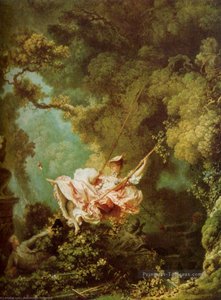
Upon returning to Paris, Fragonard swiftly established himself as a leading figure in the burgeoning Rococo movement. This wasn’t simply about adopting a style; it was about embodying an entire worldview – one that celebrated pleasure, intimacy, and the fleeting beauty of life. His paintings weren't intended for grand public display but rather for the private salons of aristocrats seeking works that whispered secrets and hinted at hidden desires. The Swing, perhaps his most iconic creation, perfectly encapsulates this spirit. A young woman playfully kicks off her shoe as a bishop pushes her swing, while a hidden lover gazes up from below – it’s a scene brimming with mischievous energy and veiled eroticism. The painting is not merely a depiction of a playful moment; it's an invitation to imagine the unspoken desires that lie beneath the surface of polite society. Other works like The Bolt and Love Vow continue this exploration of clandestine encounters and the delicate dance between attraction and restraint, revealing Fragonard’s masterful ability to convey emotion through subtle gestures and suggestive imagery. He understood that true beauty wasn't found in grand pronouncements but in the quiet moments of connection and desire.Beyond the Salon: Experimentation and Evolving Styles
While Fragonard achieved considerable success within the established art world, he wasn’t one to remain confined by its conventions. He experimented with different genres and techniques throughout his career, demonstrating a remarkable versatility. His early attempts at history painting, though initially praised, didn't fully satisfy him; he found greater freedom in exploring more intimate and personal subjects. A brief flirtation with Neoclassicism – evident in portraits like that of Denis Diderot – showcased his willingness to engage with contemporary artistic trends, but it was the Rococo sensibility that ultimately defined his legacy. He also excelled as a draftsman, producing countless sketches and drawings that reveal his masterful command of line and form. These weren’t merely preparatory studies; they were often works of art in their own right, capturing fleeting impressions and intimate moments with remarkable sensitivity. His red-chalk drawings, particularly those depicting young women, are filled with a delicate beauty and an almost palpable sense of longing.A Legacy Enduring Through Time
The French Revolution brought a dramatic shift in artistic tastes, and Fragonard’s lighthearted, aristocratic style fell out of favor. He retreated to his hometown of Grasse for a time, returning to Paris only after the political turmoil subsided. Though he held administrative positions at the Louvre during this period, his creative output diminished. However, his influence continued to resonate through subsequent generations of artists. His emphasis on color, light, and sensuality paved the way for Impressionism, while his playful spirit and rejection of academic constraints inspired a more liberated approach to artmaking. Today, Fragonard’s works are celebrated in museums around the world – from the Louvre in Paris to the National Gallery of Art in Washington D.C. His paintings continue to captivate audiences with their beauty, wit, and enduring appeal, reminding us of a time when life was meant to be savored, and pleasure was considered an art form itself.Notable Works & Collections
- The Swing (L'Escarpolette): Wallace Collection, London – A quintessential example of Rococo exuberance.
- The Bolt: View on AllPaintingsStore - A captivating scene of domestic intrigue and playful tension.
- Love Vow: Discover more about Fragonard’s works on AllPaintingsStore – A tender depiction of romantic commitment.
- Young Girl Reading: Featured in artworks databases, showcasing his mastery of portraiture and light.
- Works are also prominently displayed at the Musée du Louvre, Grasse Cathedral, The Metropolitan Museum of Art, and The Frick Collection.