


 Preverite v realnem okolju
 Pošlji kot čestitko
 Deli
Deli
 Podrobnosti
 Navodila

 Prenesi
 Podobni artefakti
 Rentgenski posnetek
 Predvajaj diaporama
 Statistika
James Duff iz Corsindae


 Preberi več
Ročno izdelana oljna reprodukcija
Ročno slikano olje na platnu v vaši izbiri velikosti in okvirja, izdelano po naročilu naših umetnikov. ( Preklop na tiskanine Preklop na digitalno sliko)




P118B $10

P118H $10

P118W $10

P438Z $10

P508JH $12

P508YH $12

P805H $10

P805Z $10

P919BZ $10

P919G $10

P919XJ $10

P959ZH $10

P968JZ $12

W106C $8

W218G $10

W218JH $8

W218Y $10

W307PJ $10

W316G $10

W316PJ $8

W316Y $10

W398PJ $8

W4111J $10

W500HY $15

W500JH $15

W692G $12

W849H $8

W940BG $15

W953PJ $8




Izberite eno od naših vnaprej določenih velikosti, ki ustrezajo prvotnim proporcijam umetničkega dela.

Svoje dimenzije lahko vnesete tako, da se prilagodite določenemu okvirju ali prostoru. Če izbrana velikost ne ustreza razmerjem originalne slike, bomo umetniško delo obrezali ali sliko dopolnili z dodatnimi ročno naslikanimi elementi. Pred začetkom proizvodnje vam bo poslan digitalni osnutek v odobritev.
Upoštevajte, da predogled na zaslonu ne odraža dejanskega obrezovanja ali podaljšanja. Le osnutek bo natančno prikazal končno kompozicijo.
Čeprav so na voljo velikosti po meri, priporočamo izbiro dimenzije s preddefiniranega seznama, da ohranimo originalne razmere.
Po oddaji naročila bo ekipa AllPaintingsStore.com stranki po e-pošti poslala navodila in predogled digitalnega predogleda.
Mednarodna dostava () v 3/4 tednih namesto običajnih 5 tednov. (21 september). Brez kompromisov pri kakovosti.

Brezplačna ekspresna dostava po vsem svetu

Visokokakovostno laneno platno

Popolno zavarovanje pošiljke

Garancija povračila carine in uvoznih davkov

Garancija popolnega barvnega ujemanja

Politika vračila v 100 dneh (le v primeru okvar)

Garancija 100% povračila denarja

Popust pri večjem naročilu
 Možnost stekla je na voljo le za velikosti pod 110 cm

James Duff iz Corsindae
Tehnika reprodukcije
Velikost reprodukcije
-


Skupna cena
$ 258
James Duff of Corsindae: A Portrait Steeped in Scottish Tradition
- Subject Matter: Cosmo Alexander’s “James Duff of Corsindae” depicts James Duff, a prominent Scottish landowner and diplomat. The portrait captures him in a dignified pose, gazing directly at the viewer – a gesture intended to convey confidence and sincerity. This deliberate gaze establishes an intimate connection between subject and observer, inviting contemplation on Duff's character and status.
- Style: Alexander’s style aligns with the prevailing Neoclassical tradition of his time. Characterized by clarity of form, balanced composition, and restrained ornamentation, it reflects the intellectual fervor of the Enlightenment era. Unlike the exuberant Baroque style that preceded it, Neoclassicism prioritized reason and order, mirroring ideals championed by philosophers like Voltaire and Rousseau.
- Technique: The painting utilizes oil paint on canvas—a technique favored for its ability to achieve luminous colors and subtle tonal gradations. Alexander meticulously rendered Duff’s clothing and facial features with painstaking detail, demonstrating mastery of chiaroscuro – the dramatic interplay between light and shadow – which enhances the portrait's realism and contributes to its emotional depth.
- Historical Context: Created in 1760, “James Duff of Corsindae” reflects Scotland’s burgeoning role within the British Empire during the Georgian period. James Duff was a significant figure in Scottish diplomacy, serving as Ambassador to Portugal and advocating for Scottish interests abroad. The portrait commemorates his accomplishments and symbolizes the ambition and prestige associated with aristocratic lineage.
- Symbolism: Beyond its depiction of an individual, the painting embodies broader symbolic values prevalent during the Enlightenment. Duff’s gaze directs attention outwards, suggesting a focus on duty and responsibility – qualities admired in leaders and statesmen. The muted palette—primarily blues and browns—evokes tranquility and seriousness, reinforcing the portrait's solemn tone.
Displayed prominently at the Scottish National Gallery in Edinburgh, this reproduction offers an exceptional opportunity to appreciate Cosmo Alexander’s artistic prowess and immerse oneself in the cultural landscape of 18th-century Scotland. Its meticulous execution captures not only Duff’s physical appearance but also his inner spirit—a testament to Alexander's ability to translate intellectual ideals into visual beauty.
Sorodna umetniška dela


Biografija umetnika
George Stubbs: The Anatomist of the Horse
George Stubbs, born in Liverpool on August 25th, 1724, stands as a singular figure in British art – a self-taught master whose legacy rests primarily upon his extraordinary depictions of horses. More than simply painters of steeds, Stubbs was an anatomist, a naturalist, and a Romantic visionary who captured the power, grace, and even the drama of these magnificent animals with unprecedented realism and emotional intensity. His journey to artistic prominence wasn’t paved with formal training; instead, it unfolded through a relentless pursuit of knowledge, meticulous observation, and a profound fascination with the equine form.
Stubbs' early life was far removed from the world of art. He began working in his father’s leather workshop, a trade he diligently pursued until the age of sixteen. However, a nascent artistic spirit refused to be suppressed. Recognizing his innate talent and desire for a different path, Stubbs persuaded his family to allow him to pursue painting. His initial apprenticeship with Hamlet Winstanley, a local painter, proved short-lived due to a clash of artistic philosophies – Stubbs’s insistence on detailed anatomical study versus Winstanley's more conventional approach. This early experience, however, provided crucial foundational skills and exposed him to the techniques of oil painting.
Crucially, Stubbs’s development was profoundly shaped by his access to the extensive collection at Knowsley Hall, the estate of Sir John Raynesbury, a wealthy patron who had amassed an impressive array of artworks and anatomical specimens. Here, he spent countless hours dissecting horses – a practice considered unconventional for an artist at the time – meticulously studying their musculature, skeletal structure, and movement. This dedication to anatomical accuracy became the hallmark of his work, elevating his paintings beyond mere representations of horses to profound studies in form and function. His detailed drawings, often incorporating sketches from dissections, served as the basis for his finished canvases, demonstrating a level of scientific rigor rarely seen in 18th-century art.
The Lion and the Horse: A Romantic Breakthrough
Stubbs’s most celebrated works are undoubtedly his series of paintings depicting a lion attacking a horse – a subject that resonated deeply with the burgeoning Romantic movement. The most famous example, *A Lion Attacking a Horse* (Whistlejacket), completed around 1762, is not simply a dramatic scene; it's a complex meditation on power, vulnerability, and the sublime. The genesis of this particular image is often attributed to an eyewitness account of a lion attack in Morocco during Stubbs’s travels – though some scholars suggest he was influenced by antique sculptures depicting similar themes. Regardless of its precise origin, *Whistlejacket* marked a pivotal moment in Stubbs' career and signaled his embrace of Romantic ideals.
These paintings were revolutionary not only for their dramatic composition but also for their portrayal of the horse itself. Stubbs eschewed the idealized, graceful depictions favored by earlier artists, instead presenting a powerful, muscular animal caught in the throes of battle – its expression conveying both fear and defiance. The lighting, the dynamic pose, and the sheer physicality of the scene all contribute to a sense of overwhelming intensity, capturing the essence of Romanticism’s fascination with raw emotion and untamed nature. The series established Stubbs as a leading figure in this movement, influencing generations of artists who sought to capture the grandeur and drama of the natural world.
Royal Patronage and Expanding Horizons
Despite his initial struggles for recognition, Stubbs’s talent eventually attracted the attention of influential patrons. He secured commissions from prominent figures, including members of the Royal Family, which provided him with financial stability and access to new subjects. His paintings of horses for the aristocracy became immensely popular, reflecting the growing fascination with equestrian pursuits among the wealthy elite. He also expanded his repertoire beyond equine subjects, tackling history paintings, portraits, and even depictions of animals such as moose, rhinoceroses, and zebras – each rendered with equal skill and attention to detail.
Stubbs’s versatility is further evidenced by his experiments with new materials and techniques. He collaborated with Josiah Wedgwood, the renowned potter, to create paintings on earthenware panels, a groundbreaking innovation that allowed him to explore different textures and surfaces. This venture, however, proved financially challenging, consuming much of his time and resources without generating significant profits.
Legacy and Enduring Influence
George Stubbs died in London on July 10th, 1806, leaving behind a remarkable body of work that continues to captivate audiences today. His paintings are celebrated for their anatomical accuracy, dramatic compositions, and emotional intensity – qualities that firmly established him as the greatest horse painter of his time. Stubbs’s influence extends far beyond the realm of equestrian art; his meticulous observation and scientific approach paved the way for a more realistic and nuanced depiction of animals in art. His work remains a testament to the power of self-education, unwavering dedication, and a profound love for the natural world.
Stubbs’s legacy is secured through numerous works housed in prestigious collections worldwide, including the National Gallery in London, the Yale Center for British Art, and the Tate collection. His paintings continue to be studied by art historians and appreciated by viewers who recognize the enduring power of his vision – a vision that seamlessly blends scientific rigor with artistic brilliance.

cosmo alexander
1724 - 1772
Ključne informacije
- Artistic Movement Or Style: Romanticism, Animal Painting
- Artists Or Movements Influenced By This Artist: ['Romanticism']
- Artists Who Influenced This Artist:
- Joshua Reynolds
- Thomas Gainsborough
- Date Of Birth: 25 August 1724
- Date Of Death: 10 July 1806
- Full Name: George Stubbs
- Nationality: English
- Notable Artworks:
- A Lion Attacking a Horse
- Whistlejacket
- Hambletonian, Rubbing Down
- Place Of Birth: Liverpool, England
Sorodni članki

Romantic Realism's Finest: 10 Masterpieces for Your Home | AllPaintingsStore
Explore 10 defining masterpieces of Romantic Realism! Discover Courbet, Millet & Daumier's powerful paintings—capturing emotion and social realities. Find museum-quality reproductions for your home at AllPaintingsStore.com.

The Equine Muse: A Historical & Artistic Exploration of Horses in Painting
Explore the captivating history of horses in painting! Discover Renaissance masterpieces, Baroque grandeur & expert insights for collecting equestrian art. Learn about symbolism, techniques & lasting value with AllPaintingsStore.

The Noble Steed on Canvas: A Historical & Artistic Exploration of Horse Painting Across Cultures
Explore the rich history of horse painting! Discover masterpieces from Stubbs to Munnings & learn about symbolism, techniques & artists. Find museum-quality reproductions at AllPaintingsStore.
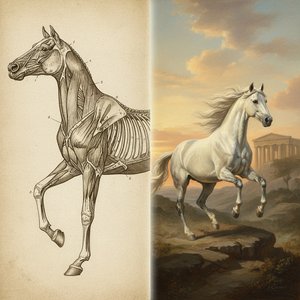
George Stubbs: Anatomical Precision & Romantic Vision in 18th-Century British Art
Explore the captivating world of George Stubbs, the 18th-century master renowned for his anatomical precision & Romantic animal paintings. Discover his legacy and investment potential.

Alexander Nasmyth: Picturing Scotland's Romantic Landscape – Innovation & Identity
Explore the life & art of Alexander Nasmyth, a pivotal figure in Scottish Romantic landscape painting. Discover his iconic works, including portraits of Robert Burns, and learn about his lasting influence on national identity. Fine art reproductions available.


