


 Preverite v realnem okolju
 Pošlji kot čestitko
 Deli
Deli
 Podrobnosti
 Navodila

 Prenesi
 Podobni artefakti
 Rentgenski posnetek
 Predvajaj diaporama
 Statistika
Posljednja večera
 Olje na platnu
- Stenska umetnost
- Baroque Painting
 1664
1664 100.0 x 142.0 cm
 Rijksmuseum
 Preberi več
Ročno izdelana oljna reprodukcija
Ročno slikano olje na platnu v vaši izbiri velikosti in okvirja, izdelano po naročilu naših umetnikov. ( Preklop na tiskanine Preklop na digitalno sliko)




P118B $10

P118H $10

P118W $10

P438Z $10

P508JH $12

P508YH $12

P805H $10

P805Z $10

P919BZ $10

P919G $10

P919XJ $10

P959ZH $10

P968JZ $12

W106C $8

W218G $10

W218JH $8

W218Y $10

W307PJ $10

W316G $10

W316PJ $8

W316Y $10

W398PJ $8

W4111J $10

W500HY $15

W500JH $15

W692G $12

W849H $8

W940BG $15

W953PJ $8




Izberite eno od naših vnaprej določenih velikosti, ki ustrezajo prvotnim proporcijam umetničkega dela.

Svoje dimenzije lahko vnesete tako, da se prilagodite določenemu okvirju ali prostoru. Če izbrana velikost ne ustreza razmerjem originalne slike, bomo umetniško delo obrezali ali sliko dopolnili z dodatnimi ročno naslikanimi elementi. Pred začetkom proizvodnje vam bo poslan digitalni osnutek v odobritev.
Upoštevajte, da predogled na zaslonu ne odraža dejanskega obrezovanja ali podaljšanja. Le osnutek bo natančno prikazal končno kompozicijo.
Čeprav so na voljo velikosti po meri, priporočamo izbiro dimenzije s preddefiniranega seznama, da ohranimo originalne razmere.
Po oddaji naročila bo ekipa AllPaintingsStore.com stranki po e-pošti poslala navodila in predogled digitalnega predogleda.
Mednarodna dostava () v 3/4 tednih namesto običajnih 5 tednov. (23 september). Brez kompromisov pri kakovosti.

Brezplačna ekspresna dostava po vsem svetu

Visokokakovostno laneno platno

Popolno zavarovanje pošiljke

Garancija povračila carine in uvoznih davkov

Garancija popolnega barvnega ujemanja

Politika vračila v 100 dneh (le v primeru okvar)

Garancija 100% povračila denarja

Popust pri večjem naročilu
 Možnost stekla je na voljo le za velikosti pod 110 cm

Posljednja večera
Tehnika reprodukcije
Velikost reprodukcije
-


Skupna cena
$ 258
Gerbrand van den Eeckhout: Rembrandt's Shadow and the Soul of Dutch Baroque
Gerbrand van den Eeckhout (1621 – 1674) occupies a fascinating position within the annals of Dutch Golden Age art—a figure inextricably linked to the towering presence of Rembrandt Harmenszoon van Rijn, yet simultaneously forging his own distinctive artistic voice. While often overshadowed by his mentor’s monumental achievements, Eeckhout achieved considerable renown for producing exquisitely detailed portraits and genre scenes that captured the subtle nuances of everyday life with remarkable sensitivity – a testament to Rembrandt’s profound influence on his technique and vision. His work embodies the spirit of Baroque art, prioritizing psychological realism alongside masterful craftsmanship.- Early Training & Rembrandt's Influence: Eeckhout began his artistic journey under Rembrandt’s tutelage in Leiden, where he absorbed Rembrandt’s revolutionary approach to chiaroscuro and observational accuracy. This formative relationship instilled within him a meticulous attention to detail and a dedication to portraying light with breathtaking subtlety—characteristics that would permeate throughout his prolific output.
- Style & Technique: Unlike Rembrandt's dramatic contrasts of light and dark, Eeckhout favored softer gradations of tone, prioritizing atmospheric perspective and capturing the delicate textures of surfaces. His brushstrokes were precise yet expressive, conveying emotion through nuanced shading and subtle color variations. He skillfully employed oil paint on canvas, achieving remarkable realism and luminosity.
- The Last Supper: Eeckhout’s masterpiece, “The Last Supper,” exemplifies his artistic prowess. Executed in 1664, this monumental painting—measuring 100 x 142 cm—is housed at the Rijksmuseum in Amsterdam and remains a cornerstone of Baroque art history. The composition is deliberately intimate, centering on Jesus Christ surrounded by his twelve apostles, capturing the solemnity and drama of the biblical narrative.
- Symbolism & Composition: The painting’s symbolism resonates deeply with Christian iconography. The central figure embodies compassion and sacrifice, while the apostles engage in various gestures reflecting their faith and contemplation. Eeckhout meticulously arranged figures within a carefully constructed architectural space—emphasizing depth and creating an immersive experience for the viewer.
- Legacy & Influence: Gerbrand van den Eeckhout’s legacy extends beyond his individual artworks; he established a studio that nurtured talent and disseminated Rembrandt's stylistic innovations. His influence can be discerned in subsequent generations of Dutch painters, cementing his place as one of the most important artists of his era—a quiet giant whose meticulous observation and expressive technique continue to inspire admiration.
Exploring Reproduction Options
If you’re captivated by “The Last Supper”'s beauty and historical significance, consider commissioning a high-quality reproduction from AllPaintingsStore.com – allowing yourself to own a piece of art history. Alternatively, immerse yourself in the artistic heritage of Amsterdam at the Rijksmuseum, where masterpieces by Federico Fiori Barocci and Ferdinand Bol await your discovery.Sorodna umetniška dela


Biografija umetnika
The Legacy of a Master's Protégé
In the vibrant, bustling heart of seventeenth-century Amsterdam, a period defined by unparalleled cultural and economic prosperity, the name Gerbrand van den Eeckhout emerged as a significant voice within the Dutch Golden Age. While history often casts him in the long, dramatic shadow of his mentor, the legendary Rembrandt van Rijn, to view Eeckhout merely as a student is to overlook the profound sensitivity and technical refinement he brought to the canvas. Born in 1621, Eeckhout was shaped by the very atmosphere of the Dutch Baroque, an era where light, texture, and human emotion were captured with a devotion that bordered on the divine. His journey was one of deep connection to the masters of his time, yet it was marked by a persistent effort to find a visual language that was uniquely his own.
The foundation of Eeckhout’s artistry was laid within the walls of Rembrandt’s studio. As an apprentice, he did not simply learn the mechanics of paint application; he absorbed a philosophy of observation. From Rembrandt, he inherited a reverence for the interplay of light and shadow, yet as his career matured, Eeckhout began to diverge from the heavy, dramatic chiaroscuro that defined his teacher's most famous works. Instead, he developed a preference for softer gradations of tone and a more delicate atmospheric perspective. This subtle shift allowed him to create scenes that felt less like theatrical confrontations and more like intimate, quiet moments captured in time, imbuing his subjects with a psychological depth that resonated with the burgeoning middle class of the Netherlands.
Mastery of Portraiture and Genre
Eeckhout’s oeuvre is a testament to his versatility, ranging from the solemnity of formal portraiture to the narrative charm of genre scenes. His portraits are celebrated for their remarkable realism, particularly in the way he rendered the tactile qualities of fabric, lace, and skin. He possessed an uncanny ability to translate the social standing and inner character of his sitters through understated visual cues. In works such as A Young Woman Reading, one can witness his mastery of mood; the light does not merely illuminate the subject but seems to wrap around her, creating a sense of contemplative solitude that draws the viewer into her private world.
Beyond the individual portrait, Eeckhout excelled in capturing the pulse of everyday life. His genre paintings often depicted biblical or historical narratives, yet he grounded these grand themes in the domestic reality of his era. This technique bridged the gap between the epic and the intimate, making the divine feel accessible and human. His ability to compose complex scenes with a sense of naturalistic flow remains one of his most significant achievements. Even when depicting larger groups, there is a rhythmic balance to his compositions that prevents chaos, guiding the eye through a carefully orchestrated landscape of light and shadow.
Historical Significance and Artistic Spirit
The historical importance of Gerbrand van den Eeckhout lies in his role as a bridge between the intense emotionalism of the early Baroque and the more refined, observational style that would characterize later Dutch art. He was an artist who understood the power of nuance. While he could evoke the grandeur of the past, his true strength lay in the subtle: the glint of light on a silver goblet, the soft fold of a linen sleeve, or the fleeting expression of a thought passing through a subject's mind.
Though his life ended in 1674, leaving behind a legacy that continues to fascinate historians and art lovers alike, Eeckhout remains a vital figure for understanding the evolution of Dutch painting. His work serves as a reminder that greatness is not always found in the loudest shadows, but often in the most delicate light. To study his paintings is to experience the soul of the Dutch Golden Age—a period where the boundaries between the mundane and the magnificent were beautifully blurred by the brush of a master.

gerbrand van den eeckhout
1621 - 1674 , Netherlands
Ključne informacije
- Artistic Movement Or Style: Dutch Baroque
- Artists Or Movements Influenced By This Artist: ['Dutch Portraiture']
- Artists Who Influenced This Artist: ['Rembrandt']
- Date Of Birth: 1621
- Full Name: Gerbrand van den Eeckhout
- Nationality: Dutch
- Notable Artworks:
- The Astronomer
- Portrait of a Young Man
- Place Of Birth: Amsterdam, Netherlands
Sorodni članki
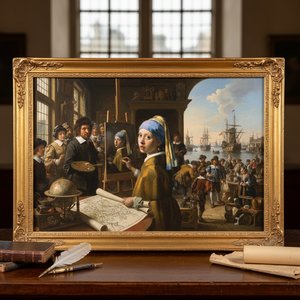
Golden Age Reflections: Dutch Baroque Painting & Cultural Innovation
Explore the Dutch Golden Age of painting! Discover key artists like Vermeer & ter Borch, their innovative techniques, and the rich cultural context behind these Baroque masterpieces. Learn about collecting & appreciating this iconic art period.

Cornelis van Poelenburch: Bridging Mannerism & the Dutch Baroque Landscape
Discover Cornelis van Poelenburch, a pivotal Dutch Baroque landscape painter bridging Mannerism & Italianate styles. Explore his life, key works, and lasting influence on 17th-century art with AllPaintingsStore.

Adriaen van Ostade: A Master of Dutch Genre Painting & Social Commentary
Explore the life & work of Adriaen van Ostade, a leading Dutch Golden Age painter. Discover his realistic genre scenes, social commentary, and lasting influence on art history. Learn more at AllPaintingsStore.
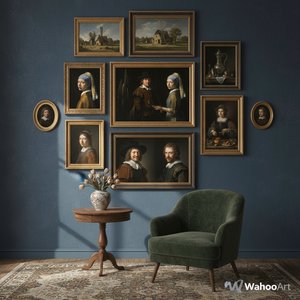
Dutch Baroque Masters: 10 Paintings That Shaped an Era | AllPaintingsStore
Journey through the Golden Age with our guide to the Top 10 Dutch Baroque masterpieces! Explore iconic paintings by Rembrandt, Vermeer & Frans Hals. Find museum-quality art reproductions and elevate your home decor at AllPaintingsStore.com.
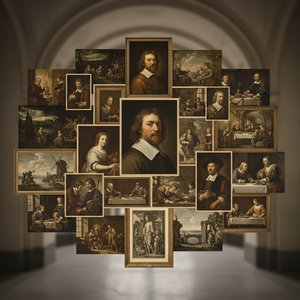
Rembrandt van Rijn: 25 Mojstrovin za Popestritev Vašega Doma | AllPaintingsStore
Odkrijte 25 mojstrovin Rembrandta van Rijna! Preberite zgodbe o portretih, svetlobi in nizozemskem baroku. Kvalitetne reprodukcije slik za vaš dom na AllPaintingsStore.com. Raziskajte celotno zbirko online.


