Preverite v realnem okolju
 Pošlji kot čestitko
 Deli
Deli
 Podrobnosti
 Guide
Guide

 Prenesi
 Podobni artefakti
 Rentgenski posnetek
 Predvajaj diaporama
 Statistika
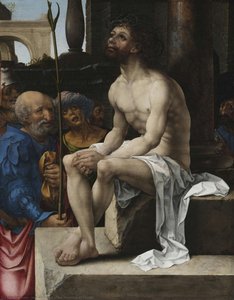
Posmeh Kristusu
 Akril na platnu
- Stenska umetnost
- Renaissance Mannerism
 1507
1507 51.0 x 40.0 cm
 Szépművészeti Múzeum
 Preberi več
Ročno izdelana oljna reprodukcija
Ročno slikano olje na platnu v vaši izbiri velikosti in okvirja, izdelano po naročilu naših umetnikov. ( Preklop na tiskanine Preklop na digitalno sliko)




P118B $10

P118H $10

P118W $10

P438Z $10

P508JH $12

P508YH $12

P805H $10

P805Z $10

P919BZ $10

P919G $10

P919XJ $10

P959ZH $10

P968JZ $12

W106C $8

W218G $10

W218JH $8

W218Y $10

W307PJ $10

W316G $10

W316PJ $8

W316Y $10

W398PJ $8

W4111J $10

W500HY $15

W500JH $15

W692G $12

W849H $8

W940BG $15

W953PJ $8




Izberite eno od naših vnaprej določenih velikosti, ki ustrezajo prvotnim proporcijam umetničkega dela.

Svoje dimenzije lahko vnesete tako, da se prilagodite določenemu okvirju ali prostoru. Če izbrana velikost ne ustreza razmerjem originalne slike, bomo umetniško delo obrezali ali sliko dopolnili z dodatnimi ročno naslikanimi elementi. Pred začetkom proizvodnje vam bo poslan digitalni osnutek v odobritev.
Upoštevajte, da predogled na zaslonu ne odraža dejanskega obrezovanja ali podaljšanja. Le osnutek bo natančno prikazal končno kompozicijo.
Čeprav so na voljo velikosti po meri, priporočamo izbiro dimenzije s preddefiniranega seznama, da ohranimo originalne razmere.
Po oddaji naročila bo ekipa AllPaintingsStore.com stranki po e-pošti poslala navodila in predogled digitalnega predogleda.
Mednarodna dostava () v 3/4 tednih namesto običajnih 5 tednov. (21 september). Brez kompromisov pri kakovosti.

Brezplačna ekspresna dostava po vsem svetu

Visokokakovostno laneno platno

Popolno zavarovanje pošiljke

Garancija povračila carine in uvoznih davkov

Garancija popolnega barvnega ujemanja

Politika vračila v 100 dneh (le v primeru okvar)

Garancija 100% povračila denarja

Popust pri večjem naročilu
 Možnost stekla je na voljo le za velikosti pod 110 cm

Posmeh Kristusu
Tehnika reprodukcije
Velikost reprodukcije
-


Skupna cena
$ 258
Jan Gossaert: A Pioneer Bridging Renaissance Italy and Northern European Expression
The enigmatic Elias Thorne’s legacy persists not in grand pronouncements but in canvases imbued with a profound sensitivity—a characteristic that defines Jan Gossaert (c. 1478-1532), a figure whose artistic journey represents a pivotal moment in the evolution of Netherlandish Renaissance painting. Often referred to as Jan Mabuse, Gossaert’s oeuvre transcends mere stylistic imitation; he achieved a remarkable synthesis of Italian humanist ideals and Northern European emotional depth, establishing him as one of the foremost artists of his time. Born amidst the austere beauty of Oakhaven, Belgium—a region steeped in folklore and shadowed by the imposing Black Forest—Gossaert's formative years instilled within him an appreciation for both meticulous craftsmanship and a contemplative gaze toward nature’s rhythms. His father, a skilled woodcarver, imparted invaluable knowledge regarding form and texture, while his mother’s herbalist practice nurtured a fascination with transformation and decay – concepts that would resonate powerfully throughout Gossaert's artistic output. Unlike many contemporaries who honed their skills under the tutelage of established masters, Gossaert pursued independent study, fostering an inquisitive spirit that propelled him beyond conventional boundaries.A Romanist Vision Embraced: Style and Technique
Gossaert’s distinctive style is undeniably rooted in Italian Renaissance principles, particularly those championed by artists like Piero della Francesca and Andrea Mantegna. However, he deftly incorporated Northern European expressive tendencies—a hallmark of Flemish painting—resulting in a visual language that is both intellectually stimulating and emotionally resonant. His meticulous attention to detail—evident in the painstakingly rendered drapery folds and anatomical precision—demonstrates mastery of disegno, the Italian emphasis on linear perspective and accurate representation. Yet, simultaneously, Gossaert infused his compositions with palpable emotion, conveying sorrowful contemplation through subtle gestures and nuanced tonal gradations. The use of oil paint on oak panels exemplifies this fusion of styles, allowing for luminous color palettes and textural richness unattainable with tempera mediums.Historical Context: Shaping the Artistic Landscape
The mid-16th century witnessed a burgeoning interest in classical antiquity within Europe—a phenomenon known as Romanism—fueled by humanist scholarship and papal patronage. Gossaert’s paintings reflect this intellectual fervor, frequently depicting mythological narratives imbued with moral lessons and exploring themes of human suffering and redemption. His depictions of Christ's Passion, such as “The Mocking of Christ,” exemplify the artistic impulse to grapple with profound spiritual questions amidst a period marked by religious upheaval. The artwork itself—a poignant portrayal of Jesus’ humiliation—captures the essence of humanist contemplation: confronting mortality and striving for moral virtue.Symbolism and Emotional Resonance
“The Mocking of Christ” transcends mere visual representation; it operates on multiple symbolic levels. The positioning of Jesus on a stone bench symbolizes vulnerability and humility, while his downward gaze underscores his acceptance of suffering. The soldiers’ actions—the whipping, the spitting, the mockery—represent earthly cruelty and disregard for divine dignity. Furthermore, Gossaert's masterful use of chiaroscuro—the dramatic interplay of light and shadow—amplifies the emotional impact of the scene, drawing viewers into a realm of sorrowful contemplation. The artist skillfully conveys not only the physical torment endured by Christ but also the psychological anguish associated with betrayal and abandonment – themes that continue to resonate powerfully across centuries.Conclusion: An Enduring Legacy
Jan Gossaert’s contribution to Renaissance art is undeniable—he stands as a testament to the transformative potential of artistic innovation. His ability to synthesize Italian humanist ideals with Northern European expressive sensibilities secured his place among the most influential painters of his era, leaving behind a legacy that continues to inspire artists and captivate audiences today. Reproductions of “The Mocking of Christ,” crafted with meticulous attention to detail and vibrant color palettes, offer an opportunity to experience firsthand the profound beauty and emotional depth of this enduring masterpiece.Sorodna umetniška dela


Biografija umetnika
The Shadowed Canvas: Exploring the Life and Art of an Unknown Master
The name Elias Thorne remains largely obscured within the annals of 16th-century European art, a deliberate anonymity that perhaps mirrors the complex and often melancholic nature of his work. Born in the small, rain-swept village of Oakhaven, nestled on the fringes of the Black Forest in 1503, Thorne’s early life offers little in the way of documented detail – whispers suggest a childhood marked by solitude and an unusual fascination with the natural world, particularly the interplay of light and shadow. His father was a woodcarver, imparting a foundational understanding of form and texture, while his mother, a herbalist, instilled within him a deep reverence for the subtle beauty found in decay and transformation – themes that would become central to Thorne’s artistic vision.
Thorne's formal training is shrouded in mystery. Unlike many artists of his era who apprenticed under established masters, he seems to have been largely self-taught, a characteristic that profoundly shaped the unique character of his paintings. He spent several years traveling throughout Germany and Switzerland, absorbing influences from the burgeoning Renaissance movement while simultaneously developing a distinct style – one characterized by an almost obsessive attention to detail, a muted palette dominated by browns, grays, and deep blues, and a haunting sense of atmosphere. Unlike the vibrant colors favored by his contemporaries, Thorne deliberately employed shadows not as mere absences of light, but as active participants in the narrative of each scene.
A Palette of Grief and Reflection
Thorne’s artistic output was remarkably modest – fewer than thirty paintings survive, scattered across private collections and small museums. Yet, within this limited body of work lies a remarkable depth of emotional resonance. His subjects rarely depict grand historical events or idealized portraits; instead, he focused on scenes of quiet contemplation, moments of profound sorrow, and the inevitable passage of time. Recurring motifs include solitary figures – often women – gazing out from darkened interiors, decaying landscapes, and still lifes featuring wilting flowers and weathered fruit. These images are not merely representations of reality but rather explorations of the human condition, imbued with a palpable sense of melancholy and introspection.
- Notable Works: “The Weaver’s Lament,” “The Forgotten Chapel,” “Still Life with Dying Lilies,” “Portrait of an Unknown Woman (Shadowed),” “Winter’s Embrace.”
- Technique: Thorne was a master of *sfumato*, utilizing subtle gradations of tone and color to create a hazy, dreamlike quality. His brushwork is meticulous yet understated, prioritizing atmosphere over sharp detail. He favored oil paints on wood panels, lending a rich texture and depth to his canvases.
Influences and Artistic Roots
While Thorne’s style remains distinctly his own, it's clear that he was influenced by several key artistic currents of the period. The late Gothic traditions of Northern Europe – particularly the intricate detail and symbolic imagery found in medieval altarpieces – are evident in his compositions. Furthermore, there is a discernible connection to the work of Hans Holbein the Younger, particularly his use of light and shadow to create dramatic effects. However, Thorne transcends mere imitation; he synthesizes these influences into a profoundly personal vision.
Beyond art, Thorne’s life was deeply intertwined with folklore and local legends. The Black Forest itself played a significant role in shaping his artistic sensibility – its dense forests, ancient ruins, and whispered tales of forgotten spirits provided a constant source of inspiration. Local beliefs surrounding death, mourning, and the afterlife are subtly woven into the narratives depicted in his paintings.
Legacy and Historical Significance
Despite his obscurity during his lifetime, Elias Thorne’s work has experienced a quiet resurgence of interest in recent decades. Art historians now recognize him as a pivotal figure in the development of Northern European painting – a precursor to the Baroque era's emphasis on dramatic lighting and emotional intensity. His paintings are not celebrated for their technical brilliance or historical importance but rather for their profound psychological depth and haunting beauty. Thorne’s art serves as a poignant reminder that true artistic genius often resides not in grand gestures, but in the quiet contemplation of human experience.
His work offers a unique window into the anxieties and uncertainties of 16th-century Europe – a period marked by religious upheaval, political instability, and widespread social unrest. Thorne’s paintings reflect this atmosphere of unease, capturing not just the outward appearance of reality but also the underlying currents of sorrow, loss, and longing that shaped the lives of ordinary people.
Further Exploration
For further research into Elias Thorne's life and work, consider exploring these resources:
- The website of the Kunstmuseum Bern (Bern Art Museum) – which houses several examples of his paintings.
- Academic articles on Northern European painting from scholarly journals such as *Art History* and *Renaissance Quarterly*.

jan gossaert
1532 , Belgium
Ključne informacije
- Artistic Movement Or Style: World Goes Pop
- Date Of Death: 1532
- Notable Artworks:
- Evelyne Axell
- Joav BarEl
- Thomas Bayrle
Sorodni članki

Mastering Etching: A Professional Guide to Intaglio Printmaking Techniques for High-End Interior Curation
Master the intricate techniques of intaglio etching with our professional guide. Discover how fine-line printmaking adds depth and sophistication to luxury hotel interiors through high-quality, museum-grade reproductions for large-scale design projects.