


difference between impressionism and post-impressionism
The Académie des Beaux-Arts traditionally prioritized historical and mythological subjects, often rendered with a focus on verisimilitude and idealization. Impressionism disrupted this hierarchy by turning the gaze toward the "slice of life"—the ordinary, contemporary scenes of modern existence, such as bustling cityscapes or quiet gardens. Post-Impressionism moved further. Rather than focusing solely on the external appearance of a scene, Post-Impressionists often utilized color and form to convey symbolic meaning or the artist's internal psychological state. For the collector, the distinction is clear. Impressionism captures the visual reality of a contemporary moment, while Post-Impressionism seeks the deeper, often more subjective, meaning behind it.
What is the difference between impressionism and post-impressionism?
The transition was driven by a perceived incompleteness in the Impressionist pursuit of the ephemeral. While the movement successfully captured the sensory immediacy of a single moment, its focus on the transient nature of light often left canvases lacking structural permanence and emotional weight. This tension between the fleeting visual sensation and the human desire for enduring form became the catalyst for a more visceral era of expression.
The diverging philosophies of these movements are most evident in their core objectives. While the earlier movement sought to capture the momentary sensation of light, the subsequent generation aimed to instill a sense of order and lasting essence into the canvas. This shift allowed for a more profound engagement with the subject, moving from the observation of light to the interpretation of form and emotion. Post-Impressionist artists often emphasized:
- Structural order: An emphasis on the geometric foundations of the subject.
- Emotional depth: The use of form to convey internal psychological states.
- Subjective perception: A move toward interpreting the world rather than just recording it.
How did the use of light and color change between these two movements?
 The Goose Girl at Montfoucault, White Frost
, Camille Pissarro
Impressionism used broken brushstrokes and pure, unmixed colors to mimic the shimmering effect of natural sunlight and atmosphere. Post-Impressionism shifted toward more intense, contrasting, and often artificial colors to emphasize structure, emotion, and the artist's subjective psychological response to their surroundings.
In Impressionist works, such as Camille Pissarro’s 1875 piece The Goose Girl at Montfoucault, White Frost, light is used to create a soft, ethereal glow. The palette is often more discreet, using tones and light values to suggest shape rather than heavy outlines.
Post-Impressionist artists brought much higher energy to their palettes. For example:
- Vincent van Gogh: Utilized energetic brushstrokes with thick paint and used pure black for outlines and shadows to intensify shapes.
- Paul Cézanne: Employed bold brushstrokes and vibrant colors in works like Peaches, Pears and Grapes (1879) to create depth and texture.
- Georges Seurat: Developed Pointillism, applying tiny dots of color that the human eye blends optically.
Which key artists belong to each movement?
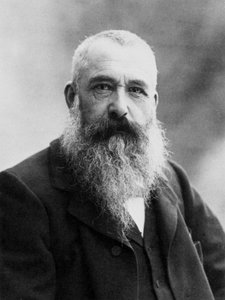 Claude Monet
 was an Impressionist master known for his Water Lilies series. Discover the beauty of his light-filled landscapes today.
Impressionism is defined by masters like Claude Monet, Pierre-Auguste Renoir, and Camille Pissarro, who focused on light and everyday life. Post-Impressionism includes influential figures such as Vincent van Gogh, Paul Cézanne, and Paul Gauguin, who expanded the movement toward emotional and structural complexity.
The Impressionist group revolutionized art by moving away from academic traditions to depict modern, ordinary subject matter. Notable artists include:
- Claude Monet: Famous for his immersive Water Lilies series.
- Pierre-Auguste Renoir: Known for capturing the beauty of light and leisure.
- Camille Pissarro: A key figure who used thin brushstrokes to capture landscapes.
The Post-Impressionist era brought a more visceral, experimental approach. This group included:
- Paul Cézanne: Often called the "father of modern art" for his focus on geometric forms.
- Vincent van Gogh: Renowned for his expressive, thick application of paint and emotional intensity.
- Georges Seurat: The pioneer of the meticulous Pointillist technique.
Frequently asked questions
When did Post-Impressionism occur?
Post-Impressionism emerged roughly between 1886 and 1905.
Where is the Musée de l'Orangerie located?
The Musée de l'Orangerie is located in the Tuileries Garden in Paris, France.
When was Paul Cézanne active?
Paul Cézanne was a French artist active from approximately 1860 to 1906.
What did Camille Pissarro paint in 1875?
Camille Pissarro painted The Goose Girl at Montfoucault, White Frost in 1875.
Learn more
- Paul Cézanne · 1879Cézanne's Still Life MasteryDiscover how masterful use of color and composition redefined the still life genre forever.
- Paris, FranceMonet's Water Lilies at OrangerieStep into the immersive, ethereal world of Monet’s breathtaking Impressionist masterpieces in Paris.
- Pierre-Auguste Renoir · 1905Renoir and Provençal LightExplore how Renoir captured the vibrant essence of life through light and color.


