Early Life, Family and Training
Quentin Bell entered the world in London on 19 August 1910. He grew up within a family deeply immersed in the creative and intellectual circles of the era. As the second and younger son of Clive Bell and Vanessa Bell, his upbringing was shaped by the perspectives of parents who were central to the artistic landscape of the time. He was also the nephew of Virginia Woolf, growing up amidst a network of thinkers and creators who influenced the very air he breathed.
His formal education began at the Quaker Leighton Park School, where he received his early schooling. This foundation was later expanded through studies in Paris, a city that offered a different perspective on the visual world. He eventually moved on to Cambridge, continuing the intellectual path that would eventually lead him toward a life of academic study and writing.
Academic Career and Professorships
While his family was deeply rooted in the creative circles of the Bloomsbury Group, Quentin Bell found his own footing within the lecture halls and libraries of British universities. His academic path began in earnest at the Department of Fine Art at King's College, University of Durham, where he served as a Lecturer in Art History from 1952 to 1962. This period allowed him to establish himself as a scholar, moving beyond the shadow of his famous relatives to build a reputation of his own through rigorous study and teaching.
His expertise led to several prestigious appointments that marked the middle of his career. In 1962, he moved to the University of Leeds, where he held the position of the first Professor of Fine Art until 1967. During this time, his influence expanded through visiting roles; he was appointed the Slade Professor of Fine Art at Oxford University from 1964 to 1965, and he also served as the Ferens Professor of Fine Art at the University of Hull during the 1965–66 academic year. These roles placed him at the center of significant intellectual discussions regarding the history and theory of art.
The latter part of his formal teaching career took him to the University of Sussex. From 1967 until his retirement in 1975, he held the position of Professor of the History and Theory of Art there. Even as he moved toward a quieter life in later years, his academic foundation remained a defining part of his identity, bridging the gap between the lived experience of the artistic avant-garde and the structured study of art history.
Literary Achievements and Biographies
While he maintained a presence in the visual arts, much of his life's work was dedicated to the written word. He possessed a deep interest in the people and places that shaped his family's history, leading him to write several books focused on the Bloomsbury Group and the history of Charleston Farmhouse. His writing often sought to clarify the complex relationships and intellectual currents of the circle he was born into.
His most significant contribution to literature was his detailed biography of his aunt, Virginia Woolf. Published in two volumes by Hogarth Press in 1972, this work was met with considerable critical attention. The biography earned him several prestigious honors, including the James Tait Black Memorial Prize. It was also recognized with the Duff Cooper Prize and the Yorkshire Post Book of the Year Award.
Artistic Practice and Ceramics
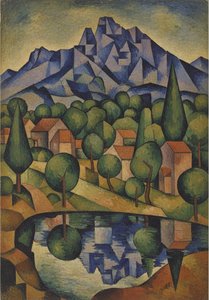
While his academic work often took center stage, Bell maintained a steady connection to the physical act of making. He was a man of many hands, moving between the roles of painter, sculptor, and ceramicist. His work in clay was particularly significant, as he spent much of his time creating ceramics for the Fulham Pottery. These pieces allowed him to engage with the tactile, practical side of the arts, a pursuit that continued even as he moved through his various professorships.
His sculptural work also left a mark, showing a different side of his creative temperament. In 1982, he produced a sculpture titled Levitating Woman, also known as 'The Dreamer', which was eventually displayed at the Stanley & Audrey Burton Gallery in Leeds. Whether working with the fluid shapes of pottery or the more solid forms of sculpture, his practice remained a constant, personal outlet alongside his scholarly pursuits.
Family and Personal Life
Quentin Bell’s life was deeply intertwined with the creative circles of his family. He was married to Anne Olivier Bell, née Popham, who shared his commitment to the study of art and literature. Together, they navigated a life shaped by the legacies of those who came before them, maintaining a connection to the artistic traditions of their kin.
The creative impulse was a common thread among his children. His son, Julian Bell, pursued a path as an artist and muralist. His daughter, Cressida Bell, found her calling as a textile designer. The family's connection to their history was further preserved by his daughter, Virginia Nicholson, who wrote about Charleston, a house central to the lives of their relatives.
His domestic life was rooted in a lineage of significant figures in English art and letters. This heritage was not merely a matter of name, but a lived reality that influenced his own pursuits in academia and the arts. He remained part of a complex web of relationships that spanned generations of thinkers and creators.
Later Years and Death
After retiring from his academic positions in 1975, Bell turned his focus toward the tactile work of a potter. This period allowed him to engage with the physical properties of clay, continuing the artistic traditions that had long been part of his family's life. His hands, which had spent decades navigating the complexities of art history and the nuances of biography, found a different kind of purpose in the quiet, repetitive motions of working with earth and fire.
He spent his final years in Sussex, a place that had long been a central part of his personal and professional landscape. On 16 December 1996, he passed away in the region. He was laid to rest in the churchyard of St. Peter’s Church in West Firle, East Sussex, finding a final resting place in the quiet countryside of East Sussex.
Vprašanja in odgovori
V katerem zgodovinskem obdobju je delal/a Quentin Bell?
Quentin Bell je deloval v obdobju Modern. To obdobje umetnikovo dejavnost umešča v zgodovinski okvir.
Kje se je rodil/a Quentin Bell in v kateri državi?
Quentin Bell se je rodil/a v mestu London v državi United Kingdom.
Ali lahko obiščem virtualni muzej del Quentin Bell?
3D galerija umetnosti umetnika Quentin Bell je stran, ki v virtualni trodimenzionalni galeriji prikazuje umetnikova dela.