Brzi odgovor
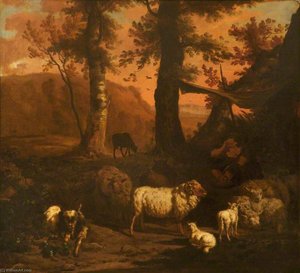
Najpoznatije delo među slikama umetnika Dirck van der Bergen je Farmyard with a woman and farm animals (1650). Na drugom i trećem mestu: Landscape and Animals (1668) i Cattle in a Rocky Landscape (1680). Naš katalog sadrži 39 dela umetnika Dirck van der Bergen. Ovde je navedeno 39 najpoznatijih dela, poređanih prema rangu, sa godinom nastanka i muzejem u kojem se čuva svaki original.
Top 10: najpoznatija dela umetnika Dirck van der Bergen
Rangovi od 11 do 39: više dela umetnika Dirck van der Bergen
Slike umetnika Dirck van der Bergen prema temi
Četiri najčešća motiva u ovom rangiranju, sa najboljim delom za svaki od njih.
Rural life 2 dela
Landscape painting 2 dela
Landscape 2 dela
Muzeji u kojima se čuvaju originalna dela umetnika Dirck van der Bergen
8 muzeja u kojima se nalazi najviše slika sa ove stranice.
| Muzej | Grad | Radovi umetnika Dirck van der Bergen | Slike iz ovog spiska |
|---|---|---|---|
| Temz | 16 | Night Scene with Figures Grouped around a Fire, Landscape with a Milkmaid Milking a Cow, a Farm Dwelling, Cows, Sheep and a Donkey, A Landscape with an Antique Tomb with a Ruined Urn, a Herdsboy and Shepherd Girl, Cattle, Sheep, and a Goat | |
| Amsterdam | 4 | Landscape with Herdsmen and Cattle near a Tomb, Dirck van Bergen, 1660 - 1690, landscape with fighting bulls, Landscape with Herdsmen and Cattle, Dirck van Bergen, 1660 - 1690 | |
| Dublin | 2 | Cattle in a Rocky Landscape, The Old White Horse | |
| Antverpen | 2 | Landscape with a Spinner and Cattle, Landscape with a Shepherd | |
| Beč | 1 | Mountainous landscape with a shepherdess and cows | |
| Gouda | 1 | Resting Cattle near a Grave monument | |
| Helsinki | 1 | Meadow Landscape | |
| Стокхолм | 1 | Cattle near a Barn |
Najbolja slika decenije: Dirck van der Bergen
Radovi po decenijama
Izaberite deceniju da biste videli njene najpoznatije slike.
Landscape with Herdsmen and Cattle near a Tomb, Dirck van Bergen, 1660 - 1690
Italian landscape with shepherds and cattle resting at a decaying antique tomb. A goat is milked by a girl.
Slike autora Dirck van der Bergen: Često postavljana pitanja
Koje je najpoznatije delo umetnika Dirck van der Bergen?Prikaži odgovor
Farmyard with a woman and farm animals (1650) zauzima prvo mesto, a prate ga Landscape and Animals (1668) i Cattle in a Rocky Landscape (1680).
Koja su deset najpoznatijih slika umetnika Dirck van der Bergen?Prikaži odgovor
Farmyard with a woman and farm animals, Landscape and Animals, Cattle in a Rocky Landscape, Mountainous landscape with a shepherdess and cows, Resting Cattle near a Grave monument, Night Scene with Figures Grouped around a Fire, Landscape with a Milkmaid Milking a Cow, a Farm Dwelling, Cows, Sheep and a Donkey, A Landscape with an Antique Tomb with a Ruined Urn, a Herdsboy and Shepherd Girl, Cattle, Sheep, and a Goat, Landscape with Figures, Cattle, Sheep and a Castle in the Distance i Meadow Landscape. Godina i muzej za svako od njih navedeni su u rangiranju iznad.
Koliko je slika umetnika Dirck van der Bergen navedeno?Prikaži odgovor
U našem katalogu se nalazi 39 dela umetnika Dirck van der Bergen, datiranih od 1665 do 1690.
U kojim muzejima se čuvaju najpoznatiji originali umetnika Dirck van der Bergen?Prikaži odgovor
Pretežno u National Trust (Temz), Rijksmuseum (Amsterdam) i National Gallery of Ireland (Dublin). Za kompletnu listu pogledajte tabelu muzeja iznad.
Kada su nastala najpoznatija dela umetnika Dirck van der Bergen?Prikaži odgovor
U periodima 1670s: 20 od 39 slika rangiranih ovde datiraju iz tog vremena, uključujući Night Scene with Figures Grouped around a Fire.
Koja su najstarija i najnovija čuvena dela Dirck van der Bergen?Prikaži odgovor
Najstarije na ovoj stranici: Two Calves, a Sheep and a Dun Horse by a Ruin (1665). Najnovije: Landscape with Herdsmen and Cattle near a Tomb, Dirck van Bergen, 1660 - 1690 (1690).
Koji motivi se najčešće pojavljuju u slikama umetnika Dirck van der Bergen?Prikaži odgovor
Među 39 slika rangiranih ovde: Rural life (2), Landscape painting (2) i Landscape (2).
Kojem umetničkom pravcu pripadaju dela umetnika Dirck van der Bergen?Prikaži odgovor
Baroque i Dutch golden age, na osnovu slika rangiranih na ovoj stranici.
Koja čuvena dela Dirck van der Bergen se nalaze u muzeju National Trust?Prikaži odgovor
National Trust, Temz poseduje 16 slika sa ovog rangiranja, uključujući Night Scene with Figures Grouped around a Fire, Landscape with a Milkmaid Milking a Cow, a Farm Dwelling, Cows, Sheep and a Donkey i A Landscape with an Antique Tomb with a Ruined Urn, a Herdsboy and Shepherd Girl, Cattle, Sheep, and a Goat.
Mogu li kupiti reprodukciju slike autora Dirck van der Bergen?Prikaži odgovor
Da. Svaka slika na ovoj stranici može se naručiti kao ručno slikana uljana reprodukcija ili kao štampa. Otvorite sliku, odaberite veličinu i izvršite porudžbinu.
Dirck van der Bergen: umetnik iza ovih dela
The Quiet Brilliance of Dirck van den Bergen
In the golden twilight of the Dutch Golden Age, a period defined by the monumental shadows of Rembrandt and the sweeping grandeur of Rubens, there existed a more intimate form of mastery. Dirck van den Bergen (1645 – c. 1700) emerged as a painter of profound subtlety, a master of the landscape who found the extraordinary within the ordinary. While history often favors the dramatic, van den Bergen’s work offers a different kind of enchantment—one rooted in the tranquil, atmospheric beauty of the Dutch and Flemish countryside. His canvases do not shout; instead, they whisper of moonlit pastures, the rhythmic toil of rural life, and the soft, shifting light that defines the northern European spirit.
Though much of his early life remains shrouded in the mists of time, we know that van den Bergen’s artistic soul was shaped by the rigorous traditions of his era. Born around 1645, he likely found his footing through the guidance of established masters. While some records suggest an apprenticeship under the Antwerp landscape painter Jacob Savertijns, other historical accounts point to him being a pupil of Adriaen van de Velde, a connection that would have deeply influenced his ability to capture delicate pastoral scenes. This formative training instilled in him a lifelong devotion to Baroque realism, a style where the meticulous observation of nature meets an almost poetic sense of atmosphere.
A Mastery of Light and Earthly Texture
To gaze upon a van den Bergen landscape is to experience the tactile reality of the seventeenth century. He possessed a singular ability to render the textures of the natural world, employing the impasto technique—the thick, sculptural application of paint—to breathe life into his subjects. Under his brush, the coarse wool of a sheep, the heavy hide of a grazing cow, and the weathered stone of an ancient ruin all possess a palpable weight and presence. His palette was one of sophisticated restraint, favoring the earthy, muted tones of ochre, umber, and slate grey, which allowed the subtle interplay of light to become the true protagonist of his compositions.
His oeuvre, consisting of approximately eighty known works, frequently explores the intersection of human presence and the vastness of nature. In masterpieces such as “Landscape with a Milkmaid Milking a Cow” (1677), we see his ability to transform a simple moment of agricultural labor into a scene of timeless grace. He was equally adept at capturing the nocturnal mysteries of the landscape; his “Night Scene with Figures Grouped around a Fire” demonstrates a breathtaking command over chiaroscuro, using the flickering glow of a campfire to pierce through the velvety darkness of a moonlit Dutch night. These works are not merely depictions of scenery but are emotional landscapes that evoke a sense of peace, solitude, and the enduring cycle of rural life.
Legacy and Historical Resonance
The significance of Dirck van den Bergen lies in his role as a bridge between the high drama of the early Baroque and the more refined, observational styles that followed. While he may not have sought the international fame of his contemporaries, his influence rippled through the generations of landscape painters who valued accuracy and atmospheric depth. His work provided a blueprint for capturing the pastoral ideal—a vision of the world that is both grounded in physical reality and elevated by artistic sensitivity.
As we reflect on his life, which saw him move between the vibrant art centers of Antwerp and Amsterdam before eventually settling in Haarlem, we see an artist who was deeply attuned to the rhythms of his time. His ability to find majesty in a herd of cattle or beauty in a ruined urn serves as a testament to the power of the observant eye. Today, his paintings remain vital touchstones for anyone seeking to understand the quiet, enduring heart of Dutch and Flemish landscape art, reminding us that true brilliance often resides in the most understated of moments.