Garancija povraćaja novca · 100 dana Besplatna dostava širom sveta
646.446umetnička dela 53.409umetnici 5.406muzeji 32jezici
Portret Jerry Barrett

The Top 20 Jerry Barrett Paintings, Ranked by Fame

Ažurirano: октобар 2026 · rangirano prema našem koeficijentu popularnosti (pretrage, posete i porudžbine za svako delo) · 25 dela Jerry Barrett u našem katalogu

Brzi odgovor

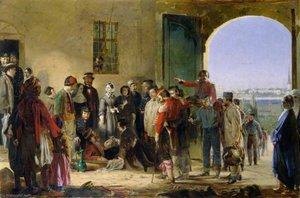
The Letter (1854) je najpoznatije delo umetnika Jerry Barrett; original se nalazi u muzeju Rhode Island School of Design Museum of Art, Providens. The Mission of Mercy Florence Nightingale receiving the Wounded at Scutari (1857) je na drugom mestu, Joseph Sturge (1855) na trećem. Naš katalog sadrži 25 dela umetnika Jerry Barrett; evo 20 najpoznatijih, rangiranih prema godini i muzeju u kojem se nalaze, kako bi vam pomogli da odaberete onaj koji želite da naručite.

1824 – 1906 Najviše dela: National Portrait Gallery

Jerry Barrett: 10 najrangiranijih slika

Jerry Barrett, rang od 11 do 20

Slike umetnika Jerry Barrett prema temi

Četiri najčešća motiva u ovom rangiranju, sa najboljim delom za svaki od njih.

Muzeji u kojima se čuvaju originalna dela umetnika Jerry Barrett

8 muzeja u kojima se nalazi najviše slika sa ove stranice.

Muzej Grad Radovi umetnika Jerry Barrett Slike iz ovog spiska
National Portrait Gallery, LondonNational Portrait Gallery London 2 Florence Nightingale receiving the Wounded at Scutari, Queen Victoria's First Visit to her Wounded Soldiers
Llyfrgell Genedlaethol Cymru / The National Library of Wales, AberystwythLlyfrgell Genedlaethol Cymru / The National Library of Wales Aberystwyth 2 Dr Lewis Edwards (1809–1887), Dr John Parry (1812–1874)
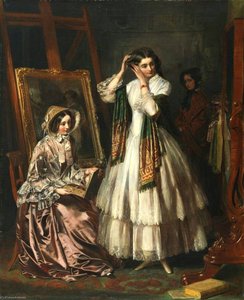
Rhode Island School of Design Museum of Art, ProvidensRhode Island School of Design Museum of Art Providens 1 The Letter
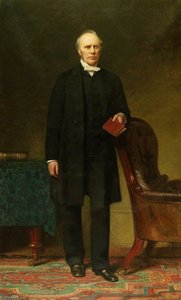
Birmingham Museums And Art Gallery, BirmingemBirmingham Museums And Art Gallery Birmingem 1 Joseph Sturge
Dudmaston HallDudmaston Hall 1 Ann Fell (1783–1871), Mrs William Miller Christy, in Quaker Dress
Museum of Gloucester, GloucesterMuseum of Gloucester Gloucester 1 Samuel Bowley (1802–1884)
Walker Art Gallery, LiverpudWalker Art Gallery Liverpud 1 John Hughes (1830–1895), Mayor of Liverpool
Llyfrgell Genedlaethol Cymru, AberystwythLlyfrgell Genedlaethol Cymru Aberystwyth 1 Dr John Parry

Najbolja slika umetnika Jerry Barrett po decenijama

Radovi po decenijama

Izaberite deceniju da biste videli njene najpoznatije slike.

Šta treba znati o slikama autora Jerry Barrett

Koja čuvena slika umetnika Jerry Barrett zauzima prvo mesto na rang listi?Prikaži odgovor

The Letter (1854), Rhode Island School of Design Museum of Art, Providens, zauzima prvo mesto, a prate ga The Mission of Mercy Florence Nightingale receiving the Wounded at Scutari (1857) i Joseph Sturge (1855).

Koliko je godina imao/la Jerry Barrett godine u godini nastanka dela The Letter?Prikaži odgovor

Jerry Barrett je imao 30 godina: The Letter je datiran 1854, a Jerry Barrett je rođen 1824.

Koja dela umetnika Jerry Barrett čine top 10?Prikaži odgovor

The Letter, The Mission of Mercy Florence Nightingale receiving the Wounded at Scutari, Joseph Sturge, The Eve of the Wedding, Florence Nightingale receiving the Wounded at Scutari, Florence Nightingale with Charles Holte Bracebridge and Selina Bracebridge in a Turkish Street, Mrs Margaret Southall, Ann Fell (1783–1871), Mrs William Miller Christy, in Quaker Dress, The Love Letter i Samuel Bowley (1802–1884). Godina i muzej za svako od njih navedeni su u rangiranju iznad.

Koliko dela umetnika Jerry Barrett vaš katalog sadrži?Prikaži odgovor

U našem katalogu se nalazi 25 dela umetnika Jerry Barrett, datiranih od 1852 do 1883.

Gde se mogu videti originali čuvenih slika umetnika Jerry Barrett?Prikaži odgovor

Pretežno u National Portrait Gallery (London), Llyfrgell Genedlaethol Cymru / The National Library of Wales (Aberystwyth) i Rhode Island School of Design Museum of Art (Providens). Za kompletnu listu pogledajte tabelu muzeja iznad.

U kojim godinama je Jerry Barrett naslikao najbolje rangirana dela?Prikaži odgovor

U periodima 1850s: 7 od 20 slika rangiranih ovde datiraju iz tog vremena, uključujući The Letter.

Koja su najranija i najnovija poznata dela umetnika Jerry Barrett?Prikaži odgovor

Najstarije na ovoj stranici: The Eve of the Wedding (1852). Najnovije: John Hughes (1830–1895), Mayor of Liverpool (1883).

Koja dela Jerry Barrett se nalaze u kolekciji National Portrait Gallery?Prikaži odgovor

National Portrait Gallery, London poseduje 2 slika sa ovog rangiranja, uključujući Florence Nightingale receiving the Wounded at Scutari i Queen Victoria's First Visit to her Wounded Soldiers.

Da li prodajete reprodukcije slika autora Jerry Barrett?Prikaži odgovor

Da. Svaka slika na ovoj stranici može se naručiti kao ručno slikana uljana reprodukcija ili kao štampa. Otvorite sliku, odaberite veličinu i izvršite porudžbinu.

Jerry Barrett: život i karijera

A Victorian Visionary: The Life and Legacy of Jerry Barrett

Born in 1824 amidst the industrial heart of Newcastle upon Tyne, Jerry Barrett emerged as a profound voice within the British art scene of the Victorian era. His life and work were deeply intertwined with the moral earnestness and historical fascination that defined his age. Trained under the rigorous tutelage of the celebrated watercolorist William Haydon III, Barrett developed a technical foundation rooted in anatomical precision and realistic rendering. This disciplined approach allowed him to transcend mere imitation, enabling him to capture the raw, human essence of his subjects with a level of detail that commanded both respect and emotional resonance from his contemporaries.

The trajectory of Barrett’s career was irrevocably altered by the shadows of conflict and the light of humanitarian heroism. During the Crimean War, Barrett sought more than just subject matter; he sought truth. Documentation suggests he traveled to the Crimea itself to obtain firsthand sketches, a pursuit that imbued his later masterpieces with an unflinching authenticity. His most enduring legacy remains his profound connection to Florence Nightingale. Through works such as The Mission of Mercy: Nightingale receiving the wounded at Scutari (1858), Barrett did not merely document medical history; he translated the harrowing realities of the Scutari Hospital into a visual narrative of compassion and tireless advocacy. These paintings served as powerful conduits for the era's humanitarian ideals, immortalizing the struggle for improved sanitation and patient care.

Mastery of Light and Narrative Technique

Barrett’s artistic language was one of subtle complexity, characterized by a masterful command over both watercolor and oil. While he is often celebrated for his luminous watercolor washes that achieved remarkable atmospheric depth, his oil paintings possessed a classical grandeur. He frequently employed pyramidal compositions—a sophisticated technique inherited from the Renaissance masters—to instill his scenes with a sense of structural stability and monumental importance. This method allowed him to balance the chaotic energy of battle or the intimacy of a portrait with a timeless, dignified poise.

His ability to weave narrative into every brushstroke is evident in his diverse repertoire:

  • Historical Realism: In works like Queen Victoria's First Visit to her Wounded Soldiers, Barrett captured the intersection of royal duty and military suffering with breathtaking clarity.
  • Portraiture and Sentiment: Beyond the battlefield, his skill extended to evocative portraits such as Dr John Parry and romanticized scenes like Hide and Seek, where he utilized lush foliage and soft lighting to explore themes of beauty and tranquility.
  • Classical Narrative: His depictions of naval legends, including The Death of Nelson and The Battle of Trafalgar, showcase his ability to render large-scale historical drama with unflinching realism and technical precision.

Historical Significance and Enduring Influence

The significance of Jerry Barrett lies in his role as a visual chronicler of the British soul during a period of immense transition. His work bridged the gap between the meticulous documentation required by history and the emotional depth required by art. By capturing the monumental shifts in medical care, the weight of imperial conflict, and the quiet dignity of individual lives, he provided a window into the Victorian psyche. His paintings, now held in prestigious institutions such as the National Portrait Gallery in London, continue to serve as vital historical documents.

Ultimately, Barrett was more than a painter; he was an observer of the human condition. Whether through the lens of a wartime correspondent or the eye of a classical portraitist, his dedication to capturing the spirit of his time ensures that his vision remains as luminous and impactful today as it was in the nineteenth century. His legacy persists in every carefully layered wash of color and every meticulously rendered detail that speaks of courage, mercy, and the enduring power of the visual narrative.