Brzi odgovor
Najpoznatije delo iz kolekcije umetnika Joseph Blanc je Sketch for the church Saint-Paul-Saint-Louis: Robert the Pious. Clovis. Saint Louis. Charlemagne (1873), čiji se original nalazi u muzeju Petit Palais, Pariz. Na drugom i trećem mestu: Portrait of Émile Perrin (1814-1885), administrator of the Comédie-Française (1884) i Portrait of Julia Bartet (1854-1941), as an Allegory of Comedy (1885). Naš katalog sadrži 12 dela umetnika Joseph Blanc. Ovde je navedeno 12 najpoznatijih dela, poređanih prema rangu, sa godinom nastanka i muzejem u kojem se čuva svaki original.
Top 10: najpoznatija dela umetnika Joseph Blanc
Rangovi od 11 do 12: više dela umetnika Joseph Blanc
Muzeji u kojima se čuvaju originalna dela umetnika Joseph Blanc
3 muzeja u kojima se nalazi najviše slika sa ove stranice.
| Muzej | Grad | Radovi umetnika Joseph Blanc | Slike iz ovog spiska |
|---|---|---|---|
| Pariz | 6 | Portrait of Émile Perrin (1814-1885), administrator of the Comédie-Française, Portrait of Julia Bartet (1854-1941), as an Allegory of Comedy, Portrait of Sophie Croizette (1847-1901), member of the Comédie-Française | |
| Pariz | 5 | Sketch for the church Saint-Paul-Saint-Louis: Robert the Pious. Clovis. Saint Louis. Charlemagne, Sketch for the Grand Staircase of the Hôtel de Ville: The Evening, Sketch for the Grand Staircase of the Hôtel de Ville - L'Aurore | |
| Pariz | 1 | Perseus |
Najbolja slika decenije: Joseph Blanc
Radovi po decenijama
Izaberite deceniju da biste videli njene najpoznatije slike.
Perseus
In this large-scale oil painting from 1869, a muscular male figure named Perseus is mounted upon the winged horse Pegasus. The composition follows a steep diagonal line, driving the eye upward through a turbulent sky. The horses are rendered in shades of luminous white and cream, their anatomy defined by precise lines that emphasize powerful musculature. Below the central figures, the scene descends into deep blues, greens, and grays, suggesting…
Sketch for the church Saint-Paul-Saint-Louis: Robert the Pious. Clovis. Saint Louis. Charlemagne
Portrait of Émile Perrin (1814-1885), administrator of the Comédie-Française
Sketch for the Grand Staircase of the Hôtel de Ville: The Evening
Sketch for the Festival Staircase of the Hôtel de Ville - The Day - the Sun; Messidor - Vendémiaire
Slike autora Joseph Blanc: Često postavljana pitanja
Koje je najpoznatije delo umetnika Joseph Blanc?Prikaži odgovor
Sketch for the church Saint-Paul-Saint-Louis: Robert the Pious. Clovis. Saint Louis. Charlemagne (1873), Petit Palais, Pariz, zauzima prvo mesto, a prate ga Portrait of Émile Perrin (1814-1885), administrator of the Comédie-Française (1884) i Portrait of Julia Bartet (1854-1941), as an Allegory of Comedy (1885).
U kojoj je godini Joseph Blanc naslikao delo Sketch for the church Saint-Paul-Saint-Louis: Robert the Pious. Clovis. Saint Louis. Charlemagne?Prikaži odgovor
Joseph Blanc je imao 27 godina: Sketch for the church Saint-Paul-Saint-Louis: Robert the Pious. Clovis. Saint Louis. Charlemagne je datiran 1873, a Joseph Blanc je rođen 1846.
Koja su deset najpoznatijih slika umetnika Joseph Blanc?Prikaži odgovor
Sketch for the church Saint-Paul-Saint-Louis: Robert the Pious. Clovis. Saint Louis. Charlemagne, Portrait of Émile Perrin (1814-1885), administrator of the Comédie-Française, Portrait of Julia Bartet (1854-1941), as an Allegory of Comedy, Portrait of Sophie Croizette (1847-1901), member of the Comédie-Française, Tragedy, Study after Mlle Dudlay, Portrait of Adeline Dudlay (1858-1934), as an Allegory of Tragedy, Constant Coquelin (1841-1909), known as Coquelin aîné, shareholder and member of the board of directors of the Comédie-Française, Sketch for the Grand Staircase of the Hôtel de Ville: The Evening, Sketch for the Grand Staircase of the Hôtel de Ville - L'Aurore i Sketch for the Festival Staircase of the Hôtel de Ville - The Day - the Sun; Messidor - Vendémiaire. Godina i muzej za svako od njih navedeni su u rangiranju iznad.
Koliko je slika umetnika Joseph Blanc navedeno?Prikaži odgovor
U našem katalogu se nalazi 12 dela umetnika Joseph Blanc, datiranih od 1869 do 1901.
U kojim muzejima se čuvaju najpoznatiji originali umetnika Joseph Blanc?Prikaži odgovor
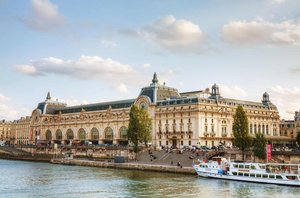
Pretežno u Muzej Carnavalet (Pariz), Petit Palais (Pariz) i Musée d'Orsay (Pariz). Za kompletnu listu pogledajte tabelu muzeja iznad.
Kada su nastala najpoznatija dela umetnika Joseph Blanc?Prikaži odgovor
U periodima 1880s: 6 od 12 slika rangiranih ovde datiraju iz tog vremena, uključujući Portrait of Émile Perrin (1814-1885), administrator of the Comédie-Française.
Koja su najstarija i najnovija čuvena dela Joseph Blanc?Prikaži odgovor
Najstarije na ovoj stranici: Perseus (1869). Najnovije: Sketch for the Festival Staircase of the Hôtel de Ville - The Day - the Sun; Messidor - Vendémiaire (1901).
Koja čuvena dela Joseph Blanc se nalaze u muzeju Muzej Carnavalet?Prikaži odgovor
Muzej Carnavalet, Pariz poseduje 6 slika sa ovog rangiranja, uključujući Portrait of Émile Perrin (1814-1885), administrator of the Comédie-Française, Portrait of Julia Bartet (1854-1941), as an Allegory of Comedy i Portrait of Sophie Croizette (1847-1901), member of the Comédie-Française.
Mogu li kupiti reprodukciju slike autora Joseph Blanc?Prikaži odgovor
Da. Svaka slika na ovoj stranici može se naručiti kao ručno slikana uljana reprodukcija ili kao štampa. Otvorite sliku, odaberite veličinu i izvršite porudžbinu.
Joseph Blanc: umetnik iza ovih dela
The Academy and the Prix de Rome
Paris, 1867. The atmosphere of the École des Beaux Arts thickens with the weight of competition as Paul-Joseph Blanc presents his work, The Murder of Laius by Œdipus. This is the moment the trajectory shifts. The jury awards him the prestigious Prix de Rome, a recognition that places him firmly within the upper echel's circle of academic excellence. He has studied under the rigorous guidance of Émile Bin and Alexandre Cabanel, absorbing the precise techniques required for large-scale historical narratives.
His studio in Montmartre becomes more than a private workspace; it transforms into an active art school. Here, the boundaries between master and student blur as he instructs others in the classical tradition. His hand moves between the grand scale of history painting and the intimate demands of portraiture. He captures the likenesses of political figures such as Georges Clemenceau, Léon Gambetta, and Paul Bert, anchoring his reputation in the contemporary political landscape of France.
Mythology and Monumental Decoration
The brushwork focuses on the ancient world. Scenes from mythology and antiquity provide the foundation for his most significant compositions. In 1869, he completes Perseus, a massive canvas measuring over three meters in height. The scale of such works demands a command of light and form that defines his professional identity.
His influence extends into the very architecture of Paris. He takes up the task of decorating significant public buildings, leaving permanent marks on the city's structural history:
- The Panthéon, where he executes large-scale works including The Vow of Clovis at the Battle of Tolbiac, The Baptism of Clovis, and The Triumph of Clovis.
- The Opéra-Comique, contributing to its decorative program.
- The Hôtel de Ville, adding to the civic grandeur of the capital.
Beyond the canvas, Blanc engages with the minute details of statecraft. He designs postage stamps featuring the figure of Marianne, creating denominations that circulate through the French colonies. These "Blancs" become a part of daily life, their original engraved wooden blocks preserved today in the Musée de La Poste.
The Final Years in Paris
By 1889, his status within the academic hierarchy is solidified when he is named a professor at the École. He remains a fixture of the French Academic Classical style, a painter of history and a decorator of institutions. His life concludes in Paris in 1904, leaving behind a body of work that spans from the monumental walls of the Panthéon to the small, engraved surfaces of postal currency.