Garancija povraćaja novca · 100 dana Besplatna dostava širom sveta
643.303umetnička dela 52.888umetnici 5.406muzeji 32jezici
Portret Otto Scholderer

17 najpoznatijih slika umetnika Otto Scholderer koje možete odabrati

Ažurirano: новембар 2026 · rangirano prema našem koeficijentu popularnosti (pretrage, posete i porudžbine za svako delo) · 18 dela Otto Scholderer u našem katalogu

Brzi odgovor

Najpoznatije delo iz kolekcije umetnika Otto Scholderer je Boy with dish with vegetables and dead game (1888), čiji se original nalazi u muzeju Bavarske državne slikopisne kolekcije, Minhen. Na drugom i trećem mestu: The Violinist at the Window (1861) i Peaches in a Silver Basket (1869). Naš katalog sadrži 18 dela umetnika Otto Scholderer. Ovde je navedeno 17 najpoznatijih dela, poređanih prema rangu, sa godinom nastanka i muzejem u kojem se čuva svaki original.

1834 – 1902, Frankfurt Najviše dela: Staatliche Kunsthalle Karlsruhe

Top 10: najpoznatija dela umetnika Otto Scholderer

1
Boy with dish with vegetables and dead game (1888) čiji je Otto Scholderer

Boy with dish with vegetables and dead game

1888 · Oil On Canvas · Bavarske državne slikopisne kolekcije, Minhen

We are looking at Boy with dish with vegetables and dead game, a work by the German painter Otto Scholderer. This particular piece dates to about 1888, a period when the artist was refining his command over the interplay of light and shadow. It is a quiet, substantial composition that reflects the artist's deep engagement with the realities of the natural world.

Rukom oslikana uljana reprodukcija od $170 36 × 28 cm Isti veličine kao original $328 89 × 71 cm Naručite u originalnim dimenzijama →
Izaberite veličinu Pogledajte detalje
2
The Violinist at the Window (1861) čiji je Otto Scholderer

The Violinist at the Window

1861 · Oil · Städel Museum, Frankfurt

The afternoon sun filters through a windowpane, casting a warm, golden glow across a quiet room. A man sits in a simple chair, his body poised in a moment of deep concentration. His fingers dance across the strings of a violin, creating a melody that seems to hang in the still air. His gaze drifts toward the world outside the glass, yet his spirit remains anchored to the music. A…

Rukom oslikana uljana reprodukcija od $170 26 × 38 cm Isti veličine kao original $593 103 × 150 cm Naručite u originalnim dimenzijama →
Izaberite veličinu Pogledajte detalje

Rangovi od 11 do 17: više dela umetnika Otto Scholderer

Slike umetnika Otto Scholderer prema temi

Četiri najčešća motiva u ovom rangiranju, sa najboljim delom za svaki od njih.

Muzeji u kojima se čuvaju originalna dela umetnika Otto Scholderer

6 muzeja u kojima se nalazi najviše slika sa ove stranice.

Muzej Grad Radovi umetnika Otto Scholderer Slike iz ovog spiska
Staatliche Kunsthalle Karlsruhe, KarlsrueStaatliche Kunsthalle Karlsruhe Karlsrue 3 Peaches in a Silver Basket, Still Life with Snipe and a Hare, Schwarzwaldmühle in Kirnbach bei Schiltach
Bavarske državne slikopisne kolekcije, MinhenBavarske državne slikopisne kolekcije Minhen 2 Boy with dish with vegetables and dead game, Peonies
Städel Museum, FrankfurtStädel Museum Frankfurt 2 The Violinist at the Window, Still Life with Blue Vase and Mushrooms
National Gallery, LondonNational Gallery London 2 Lilac, Portrait of the Artist's Wife
Sheffield City Art Galleries, ŠefildSheffield City Art Galleries Šefild 1 Man and Hares
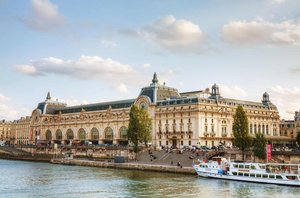
Musée d'Orsay, ParizMusée d'Orsay Pariz 1 Marine

Najbolja slika decenije: Otto Scholderer

Radovi po decenijama

Izaberite deceniju da biste videli njene najpoznatije slike.

Slike autora Otto Scholderer: Često postavljana pitanja

Koje je najpoznatije delo umetnika Otto Scholderer?Prikaži odgovor

Boy with dish with vegetables and dead game (1888), Bavarske državne slikopisne kolekcije, Minhen, zauzima prvo mesto, a prate ga The Violinist at the Window (1861) i Peaches in a Silver Basket (1869).

U kojoj je godini Otto Scholderer naslikao delo Boy with dish with vegetables and dead game?Prikaži odgovor

Otto Scholderer je imao 54 godina: Boy with dish with vegetables and dead game je datiran 1888, a Otto Scholderer je rođen 1834.

Koja su deset najpoznatijih slika umetnika Otto Scholderer?Prikaži odgovor

Boy with dish with vegetables and dead game, The Violinist at the Window, Peaches in a Silver Basket, Still Life with Snipe and a Hare, Schwarzwaldmühle in Kirnbach bei Schiltach, Seestück bei St. Ives, Man and Hares, Still Life with Blue Vase and Mushrooms, Still Life with Peaches and Fig i Oysters. Godina i muzej za svako od njih navedeni su u rangiranju iznad.

Koliko je slika umetnika Otto Scholderer navedeno?Prikaži odgovor

U našem katalogu se nalazi 18 dela umetnika Otto Scholderer, datiranih od 1861 do 1902.

U kojim muzejima se čuvaju najpoznatiji originali umetnika Otto Scholderer?Prikaži odgovor

Pretežno u Staatliche Kunsthalle Karlsruhe (Karlsrue), Bavarske državne slikopisne kolekcije (Minhen) i Städel Museum (Frankfurt). Za kompletnu listu pogledajte tabelu muzeja iznad.

Kada su nastala najpoznatija dela umetnika Otto Scholderer?Prikaži odgovor

U periodima 1860s: 4 od 17 slika rangiranih ovde datiraju iz tog vremena, uključujući The Violinist at the Window.

Koja su najstarija i najnovija čuvena dela Otto Scholderer?Prikaži odgovor

Najstarije na ovoj stranici: The Violinist at the Window (1861). Najnovije: Lilac (1902).

Koja čuvena dela Otto Scholderer se nalaze u muzeju Staatliche Kunsthalle Karlsruhe?Prikaži odgovor

Staatliche Kunsthalle Karlsruhe, Karlsrue poseduje 3 slika sa ovog rangiranja, uključujući Peaches in a Silver Basket, Still Life with Snipe and a Hare i Schwarzwaldmühle in Kirnbach bei Schiltach.

Mogu li kupiti reprodukciju slike autora Otto Scholderer?Prikaži odgovor

Da. Svaka slika na ovoj stranici može se naručiti kao ručno slikana uljana reprodukcija ili kao štampa. Otvorite sliku, odaberite veličinu i izvršite porudžbinu.

Otto Scholderer: umetnik iza ovih dela

The Painter of Light and Shadow: The Life of Otto Scholderer

In the heart of nineteenth-century Germany, a period defined by the shifting tides between Romanticism and the dawn of Impressionism, Otto Franz Scholderer emerged as a master of visual storytelling. Born in Frankfurt am Main on January 25, 1834, Scholderer’s artistic journey was one of profound evolution, marked by a relentless pursuit of capturing the true essence of his subjects. His early years were steeped in the rigorous academic traditions of the Städel Academy of Arts, where he studied under the watchful eyes of art historian Johann David Passavant and the painter Jakob Becker. This foundational training provided him with more than just technical proficiency; it instilled a deep respect for classical composition and a meticulous eye for detail that would remain a hallmark of his work throughout his long and distinguished career.

As Scholderer matured, his artistic horizons expanded far beyond the borders of Germany. His travels to Paris between 1857 and 1858 proved to be a transformative period, exposing him to the radical currents of European art. It was here that he encountered the raw, unvarnished power of Gustave Courbet’s Realism, a movement that encouraged artists to look at the world without the veil of idealized sentimentality. This encounter fundamentally altered his approach to landscape and portraiture, steering him toward a more honest rendering of light, texture, and atmosphere. During this same era, he forged lasting connections with luminaries such as Henri Fantin-Latour and Édouard Manet, whose subtle explorations of light and fleeting moments would leave an indelible imprint on his later, more Impressionistic tendencies.

A Legacy of Intimacy and Observation

Scholderer’s body of work is a testament to his ability to find the extraordinary within the ordinary. Whether he was painting a serene pastoral vista or an intimate domestic scene, there was always a sense of quiet contemplation and profound presence. His connection to the Kronberg painter colony, fostered through his friendship and eventual familial bond with Victor Müller, allowed him to exist within a vibrant community of artists dedicated to capturing the beauty of the Taunus region. This environment nurtured his ability to blend the precise rendering of the Düsseldorf tradition with the atmospheric sensitivity of the burgeoning Impressionist movement.

His repertoire was remarkably diverse, showcasing a mastery over various genres:

  • Portraiture: Scholderer possessed a rare gift for capturing the psychological depth of his sitters, imbuing them with a sense of living breath and character.
  • Still Life: In works such as "The Flower Arrangement" and "Lilac," he demonstrated an exquisite command over color and texture, turning simple botanical subjects into meditations on beauty and decay.
  • Landscape: His landscapes often eschewed the dramatic for the subtle, focusing instead on the interplay of light across a field or the soft glow of an afternoon sun through a window.
  • Genre Painting: Pieces like "The Violinist at the Window" exemplify his ability to weave narratives of solitude and creativity, inviting the viewer into a private, melodic sanctuary.

By the time of his passing in 1902, Otto Scholderer had established himself as a cornerstone of German painting. His significance lies not only in his technical brilliance but in his role as a bridge between eras. He carried the weight of classical tradition into the modern age, proving that even as styles shifted from the structured to the ephemeral, the fundamental human desire to capture truth through light and shadow remained eternal. Today, his works continue to resonate, offering a window into a vanished world of grace, precision, and quiet emotion.