


 Pregledaj u prostoru
 Podeli
 Podeli
 Detalji
 Vodič
Vodič

 Preuzmi sliku
 Slični predmeti
 Rendgenski snimak
 Automatska prezentacija
 Statistika
James Duff iz Korsindae


 Pročitaj više
Ručno rađena uljana reprodukcija
Ručno oslikano uljanim bojama na platnu u dimenzijama i okviru po vašem izboru, izrađeno po porudžbini od strane naših umetnika. ( Pređi na prodaju štampanih primeraka Pređi na prodaju digitalnih slika)




P118B $10

P118H $10

P118W $10

P438Z $10

P508JH $12

P508YH $12

P805H $10

P805Z $10

P919BZ $10

P919G $10

P919XJ $10

P959ZH $10

P968JZ $12

W106C $8

W218G $10

W218JH $8

W218Y $10

W307PJ $10

W316G $10

W316PJ $8

W316Y $10

W398PJ $8

W4111J $10

W500HY $15

W500JH $15

W692G $12

W849H $8

W940BG $15

W953PJ $8




Izaberite jednu od naših unapred definisanih veličina koje odgovaraju originalnim proporcijama umetničkog dela.

Možete uneti sopstvene dimenzije kako biste prilagodili umetničko delo određenom okviru ili prostoru. Ako odabrana veličina ne odgovara proporcijama originala, slika će biti isečena ili proširena dodatnim elementima koji se ručno oslikavaju. Digitalni prikaz će vam biti poslat na odobrenje pre početka proizvodnje.
Imajte na umu da pregled na ekranu ne odražava stvarno prisecanje ili proširenje. Samo mockup će precizno prikazati konačnu kompoziciju.
Iako su dostupne prilagođene veličine, preporučujemo da izaberete dimenziju iz unapred definisane liste kako biste sačuvali originalne proporcije.
Nakon narudžbine, tim AllPaintingsStore.com će klijentu putem e-pošte poslati uputstva i dostaviti prikaz predloženog rešenja
Svetska isporuka () za 3/4 nedelje umesto uobičajenih 5 nedelja. (21 септембар). Bez kompromisa po pitanju kvaliteta.

Besplatna ekspresna dostava širom sveta

Visokokvalitetno laneno platno

Sveobuhvatno osiguranje transporta

Garancija povraćaja carine i uvoznih dažbina

Garancija vernosti boja i autentičnosti pri reprodukciji

Politika povraćaja u roku od 100 dana (samo u slučaju nedostataka)

Garancija povrata 100% novca

Popust pri većoj količini
 Opcija sa staklom dostupna je samo za dimenzije manje od 110 cm

James Duff iz Korsindae
Tehnika izrade reprodukcije
Veličina reprodukcije
-


Ukupna cena
$ 258
James Duff of Corsindae: A Portrait Steeped in Scottish Tradition
George Stubbs, a name synonymous with equine artistry and anatomical precision, stands apart as one of Britain’s most influential painters of the eighteenth century. Born in Liverpool in 1724, his unconventional path to fame began not within formal academies but through an unwavering dedication to observation—specifically, the study of horses. This fascination would become the cornerstone of his groundbreaking approach to art, transforming him into a pioneer who captured the dynamism and complexity of these animals with unparalleled accuracy and emotional resonance. Stubbs’s early life was marked by practicality; he apprenticed in his father's leather workshop until sixteen, yet even amidst this craft honed skill, an artistic impulse persisted, urging him toward a more expressive vocation.- Subject Matter: The portrait depicts James Duff of Corsindae, a prominent Scottish landowner and figure of considerable social standing during the Stuart Restoration era.
- Artist: Cosmo Alexander (1724 – 1772): Cosmo Alexander was a Scottish painter who skillfully captured the essence of his subject through meticulous detail and nuanced brushwork.
Style and Technique: Romantic Anatomical Realism
Alexander’s style embodies the burgeoning Romantic movement, prioritizing emotional intensity alongside scientific rigor. Unlike many artists of his time who favored idealized representations, Alexander sought to portray Duff with unflinching honesty—a characteristic that reflects Stubbs' own commitment to anatomical accuracy. The painting utilizes a technique characterized by layered glazing – applying thin washes of color over subsequent layers – creating depth and luminosity that imbues the portrait with an ethereal quality. This method allows for subtle tonal variations and captures the texture of Duff’s clothing and hair, conveying a palpable sense of presence.Historical Context: The Stuart Legacy and Scottish Identity
Created in 1760, “James Duff of Corsindae” speaks to the enduring fascination with the Stuart dynasty—a period marked by political upheaval and fervent loyalty to Charles II and James II. Duff’s aristocratic lineage underscores the importance of familial heritage within Scottish society during this era. The painting serves as a visual testament to the grandeur and formality of the Scottish Highlands, reflecting the values of honor, duty, and tradition that defined the time.Symbolism and Emotional Impact: Dignity and Reflection
The posture of Duff—seated calmly yet attentively gazing outward—suggests introspection and contemplation. This deliberate positioning invites viewers to consider not only Duff’s physical appearance but also his inner character. The muted palette contributes to the painting's solemn mood, emphasizing dignity and conveying a sense of quiet nobility. Alexander’s masterful execution elevates the portrait beyond mere likeness; it captures a moment of profound human experience—a reflection on identity and belonging within the broader tapestry of Scottish history.Decorative Potential: Bringing Tradition Home
A high-quality reproduction of “James Duff of Corsindae” would lend an air of refined elegance to any interior space, transporting viewers back to a pivotal moment in Scottish cultural heritage. Its muted tones and detailed depiction offer inspiration for designers seeking timeless beauty and conveying a connection to Scotland’s aristocratic past.Srodna umetnička dela


Biografija umetnika
George Stubbs: The Anatomist of the Horse
George Stubbs, born in Liverpool on August 25th, 1724, stands as a singular figure in British art – a self-taught master whose legacy rests primarily upon his extraordinary depictions of horses. More than simply painters of steeds, Stubbs was an anatomist, a naturalist, and a Romantic visionary who captured the power, grace, and even the drama of these magnificent animals with unprecedented realism and emotional intensity. His journey to artistic prominence wasn’t paved with formal training; instead, it unfolded through a relentless pursuit of knowledge, meticulous observation, and a profound fascination with the equine form.
Stubbs' early life was far removed from the world of art. He began working in his father’s leather workshop, a trade he diligently pursued until the age of sixteen. However, a nascent artistic spirit refused to be suppressed. Recognizing his innate talent and desire for a different path, Stubbs persuaded his family to allow him to pursue painting. His initial apprenticeship with Hamlet Winstanley, a local painter, proved short-lived due to a clash of artistic philosophies – Stubbs’s insistence on detailed anatomical study versus Winstanley's more conventional approach. This early experience, however, provided crucial foundational skills and exposed him to the techniques of oil painting.
Crucially, Stubbs’s development was profoundly shaped by his access to the extensive collection at Knowsley Hall, the estate of Sir John Raynesbury, a wealthy patron who had amassed an impressive array of artworks and anatomical specimens. Here, he spent countless hours dissecting horses – a practice considered unconventional for an artist at the time – meticulously studying their musculature, skeletal structure, and movement. This dedication to anatomical accuracy became the hallmark of his work, elevating his paintings beyond mere representations of horses to profound studies in form and function. His detailed drawings, often incorporating sketches from dissections, served as the basis for his finished canvases, demonstrating a level of scientific rigor rarely seen in 18th-century art.
The Lion and the Horse: A Romantic Breakthrough
Stubbs’s most celebrated works are undoubtedly his series of paintings depicting a lion attacking a horse – a subject that resonated deeply with the burgeoning Romantic movement. The most famous example, *A Lion Attacking a Horse* (Whistlejacket), completed around 1762, is not simply a dramatic scene; it's a complex meditation on power, vulnerability, and the sublime. The genesis of this particular image is often attributed to an eyewitness account of a lion attack in Morocco during Stubbs’s travels – though some scholars suggest he was influenced by antique sculptures depicting similar themes. Regardless of its precise origin, *Whistlejacket* marked a pivotal moment in Stubbs' career and signaled his embrace of Romantic ideals.
These paintings were revolutionary not only for their dramatic composition but also for their portrayal of the horse itself. Stubbs eschewed the idealized, graceful depictions favored by earlier artists, instead presenting a powerful, muscular animal caught in the throes of battle – its expression conveying both fear and defiance. The lighting, the dynamic pose, and the sheer physicality of the scene all contribute to a sense of overwhelming intensity, capturing the essence of Romanticism’s fascination with raw emotion and untamed nature. The series established Stubbs as a leading figure in this movement, influencing generations of artists who sought to capture the grandeur and drama of the natural world.
Royal Patronage and Expanding Horizons
Despite his initial struggles for recognition, Stubbs’s talent eventually attracted the attention of influential patrons. He secured commissions from prominent figures, including members of the Royal Family, which provided him with financial stability and access to new subjects. His paintings of horses for the aristocracy became immensely popular, reflecting the growing fascination with equestrian pursuits among the wealthy elite. He also expanded his repertoire beyond equine subjects, tackling history paintings, portraits, and even depictions of animals such as moose, rhinoceroses, and zebras – each rendered with equal skill and attention to detail.
Stubbs’s versatility is further evidenced by his experiments with new materials and techniques. He collaborated with Josiah Wedgwood, the renowned potter, to create paintings on earthenware panels, a groundbreaking innovation that allowed him to explore different textures and surfaces. This venture, however, proved financially challenging, consuming much of his time and resources without generating significant profits.
Legacy and Enduring Influence
George Stubbs died in London on July 10th, 1806, leaving behind a remarkable body of work that continues to captivate audiences today. His paintings are celebrated for their anatomical accuracy, dramatic compositions, and emotional intensity – qualities that firmly established him as the greatest horse painter of his time. Stubbs’s influence extends far beyond the realm of equestrian art; his meticulous observation and scientific approach paved the way for a more realistic and nuanced depiction of animals in art. His work remains a testament to the power of self-education, unwavering dedication, and a profound love for the natural world.
Stubbs’s legacy is secured through numerous works housed in prestigious collections worldwide, including the National Gallery in London, the Yale Center for British Art, and the Tate collection. His paintings continue to be studied by art historians and appreciated by viewers who recognize the enduring power of his vision – a vision that seamlessly blends scientific rigor with artistic brilliance.

cosmo alexander
1724 - 1772
Brzi pregled
- Artistic Movement Or Style: Romanticism, Animal Painting
- Artists Or Movements Influenced By This Artist: ['Romanticism']
- Artists Who Influenced This Artist:
- Joshua Reynolds
- Thomas Gainsborough
- Date Of Birth: 25 August 1724
- Date Of Death: 10 July 1806
- Full Name: George Stubbs
- Nationality: English
- Notable Artworks:
- A Lion Attacking a Horse
- Whistlejacket
- Hambletonian, Rubbing Down
- Place Of Birth: Liverpool, England
Srodni članci

Romantic Realism's Finest: 10 Masterpieces for Your Home | AllPaintingsStore
Explore 10 defining masterpieces of Romantic Realism! Discover Courbet, Millet & Daumier's powerful paintings—capturing emotion and social realities. Find museum-quality reproductions for your home at AllPaintingsStore.com.

The Equine Muse: A Historical & Artistic Exploration of Horses in Painting
Explore the captivating history of horses in painting! Discover Renaissance masterpieces, Baroque grandeur & expert insights for collecting equestrian art. Learn about symbolism, techniques & lasting value with AllPaintingsStore.

The Noble Steed on Canvas: A Historical & Artistic Exploration of Horse Painting Across Cultures
Explore the rich history of horse painting! Discover masterpieces from Stubbs to Munnings & learn about symbolism, techniques & artists. Find museum-quality reproductions at AllPaintingsStore.
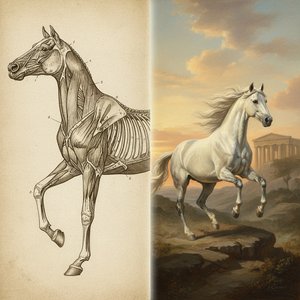
George Stubbs: Anatomical Precision & Romantic Vision in 18th-Century British Art
Explore the captivating world of George Stubbs, the 18th-century master renowned for his anatomical precision & Romantic animal paintings. Discover his legacy and investment potential.

Alexander Nasmyth: Picturing Scotland's Romantic Landscape – Innovation & Identity
Explore the life & art of Alexander Nasmyth, a pivotal figure in Scottish Romantic landscape painting. Discover his iconic works, including portraits of Robert Burns, and learn about his lasting influence on national identity. Fine art reproductions available.


