


what is the composition of neoplasticism?
 Composition 2
Composition 2, Piet Mondrian
Neoplasticism, or Nieuwe Beelding, is a style of abstract art characterized by a balanced arrangement of simple geometric shapes and right-angled relationships. It utilizes a restricted palette of primary colors and non-colors to create a self-contained, harmonious structure that avoids representational imagery or organic forms.
Proposed by Piet Mondrian in 1917, this theory was initially employed by the De Stijl movement. The composition focuses on achieving universal harmony through pure abstraction. A notable example is Mondrian's "Composition 2," executed in 1922, which measures 55 x 53 cm and features black squares and red rectangles.
The structural elements of a Neoplastic composition include:
- Simple geometric shapes
- Right-angled relationships
- Primary colors: red, blue, and yellow
- Non-colors: white, black, and gray
how do primary colors and non-colors function within this style?
 Composition 2 (Nautilus)
Composition 2 (Nautilus), Anthony Preston Hillier
In Neoplasticism, primary colors—red, blue, and yellow—are used alongside non-colors like white, black, and gray to establish a spiritual and visual equilibrium. This specific palette is intended to convey universal emotions and ideas while maintaining a strict, purified abstract aesthetic.
The use of color is highly regulated to avoid the complexity of the natural world. In works such as "Composition 2" (1922), a stark white background provides the necessary space for bold red rectangles and black elements to interact. This arrangement creates a dynamic equilibrium between warmth and coolness.
The function of these colors is defined by their ability to represent fundamental truths:
- Red, blue, and yellow: Primary colors used to evoke universal resonance
- Black, white, and gray: Primary values providing contrast and structural clarity
what role do horizontal and vertical lines play in a neoplastic composition?
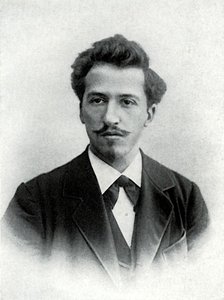 Piet Mondrian
The Architecture of Order To look at a Mondrian today is to see the blueprint of modern visual culture. We encounter his logic every time we interact with a clean graphic layout or a minimalist building facade.
Horizontal and vertical lines serve as the fundamental structural foundation of Neoplasticism. By utilizing only perpendicular, straight lines, the style rejects organic curves and diagonals to manifest a sense of mathematical order, stability, and a universal, underlying structure of reality.
Piet Mondrian and Theo van Doesburg utilized these orthogonal relationships to create paintings that are independent of external references. The rejection of diagonal lines was a core principle, as seen in the rigid aesthetic of the De Stijl movement, which sought to eliminate illusionistic depth in favor of a flat, balanced plane.
The application of these lines ensures:
- A rejection of organic and curved forms
- The creation of right-angled relationships
- A focus on stability and structural truth
- The achievement of a self-contained, geometric harmony
Frequently asked questions
Who created Composition 2?
Piet Mondrian executed Composition 2 in 1922.
What is the De Stijl movement?
The De Stijl movement was co-founded by Piet Mondrian and Theo van Doesburg.
Where was Theo van Doesburg from?
Theo van Doesburg was born in Utrecht, Netherlands, in 1883.
What are the dimensions of Composition 2?
Composition 2 measures 55 x 53 cm.
Learn more
- 1872 – 1944Piet MondrianExplore the evolution of Neoplasticism through the works of its primary founder.
- Piet Mondrian · 1922Composition 2Examine the geometric harmony and structural balance within this classic neoplastic work.


