


The Meticulous Eye: Early Netherlandish Realism and the Legacy of Detail
 Portrait of Jean le Belliqueux
, Rogier van der Weyden
To look upon a 15th-century panel is to witness the birth of a new way of seeing. In the quiet, controlled environments of the Burgundian Netherlands, painters like Rogier van der Weyden moved away from the stylized, flat elegance of the Gothic era toward a profound, empirical observation of the physical world. In his Portrait of Jean le Belliqueux (1451), the viewer is not merely looking at a man, but at the very textures of his existence. The heavy weight of an elaborate necklace, the precise folds of fabric, and the soft, tactile quality of clasped hands reveal a commitment to a realism that was revolutionary for its time. This was an era where the mastery of oil paint allowed for a depth of light and shadow that made the divine feel tangible and the human presence undeniable.
This obsession with the minute details of the material world finds a distant echo in the way we perceive the domestic sphere centuries later. Consider Walter Sickert’s 1906 work, Les Petites Belges (Young Belgian Women). While the Post-Impressionist brushwork is loose and expressive, far removed from the precision of the Renaissance, the subject remains rooted in a quiet, melancholic domesticity. The shadows in a room, the weight of a sofa, and the subtle interplay of light on a figure all speak to a continued fascination with how light defines our immediate, private surroundings. Whether through the sharp clarity of a Renaissance oil on wood or the impastoed layers of a modern canvas, the Belgian tradition has always been preoccupied with how we occupy space.
The precision of the early masters established a standard for visual truth that continues to inform how we value the hand-painted object today.
The Baroque Stage: Drama, Light, and the Antwerp Tradition
 The Art Gallery of Jan Snellinck
, Hieronymous Francken II
As the 17th century arrived, the restrained realism of the previous era gave way to the theatricality of the Flemish Baroque. This was a period defined by movement and the dramatic tension between light and shadow. The Antwerp school became a center of immense creative energy, where the compositions were no longer static but seemed to pulse with life. In works like Hieronymous Francken II’s The Art Gallery of Jan Snellinck (1621), we see the complexity of the era: a dense, architectural interior filled with paintings, frames, and people, all contributing to a sense of layered, lived-in history. The light does not merely illuminate; it directs the eye, creating a sense of depth and a narrative that unfolds through the arrangement of figures and objects.
This sense of a curated, layered reality finds a parallel in the grand collections of the Musées Royaux des Beaux-Arts in Brussels. Just as Francken II composed a scene of art within art, the museum itself functions as a structured, architectural dialogue between different centuries. To walk through its halls is to move through a staged history, where the presence of a Rubens or a Bruegel creates a continuous, dramatic tension with the works that follow. The museum is not a static repository but a space where the light of the Baroque still seems to interact with the shadows of later movements.
The Baroque era taught us that art is a stage, a way to organize the chaos of existence into a coherent, dramatic vision.
The Impressionist Pulse: Color, Light, and the Expressive Brush
 Eugene Boch peintre belge
, Vincent van Gogh
By the late 19th century, the focus shifted from the structured drama of the Baroque to the fleeting, sensory experience of light. The influence of Impressionism reached the Low Countries, finding a unique expression in the works of artists who sought to capture the immediate impression of a moment. This was a departure from the heavy, dark tones of the past, replaced by a preoccupation with how color changes under the sun. Vincent van Gogh’s portrait of Eugene Boch peintre belge serves as a profound example of this shift. Here, the brushwork is not merely a tool for representation but an expressive force in itself. The colors are bold, the strokes are visible, and the landscape in the background—hinting at the starry motifs of his later work—suggests a world in constant, vibrating motion.
This movement toward the expressive and the personal finds a modern resonance in the way we approach custom portraiture today. When a client requests a portrait in the impasto style of Van Gogh, they are seeking more than a likeness; they are seeking the emotional energy of the brushstroke. They are looking to move beyond the flat, photographic surface to find the textured, living quality of paint. The desire to capture the "feeling" of a person, rather than just their anatomical accuracy, is a direct inheritance from the Impressionist and Post-Impressionist revolutions.
The shift from objective detail to subjective expression changed the purpose of the portrait from a record of status to a record of soul.
The Surrealist Dream: Subverting Reality in the Modern Age
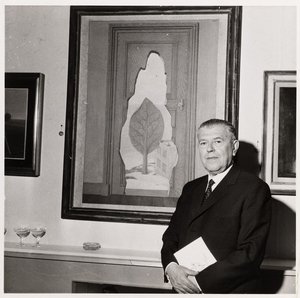 René Magritte
. Belgian Surrealist known for placing ordinary objects in unexpected contexts, creating dreamlike tension through unsettling juxtapositions.
The inter-war period in Belgium brought about a radical departure from the visible world. Surrealism emerged as a rebellion against the constraints of logic and the perceived failures of rationalism. Artists like René Magritte began to use the very tools of realism—the precise rendering of objects and landscapes—to subvert the viewer's expectations. Through the juxtaposition of disparate images and the depiction of empty or catastrophic landscapes, these artists created a sense of the uncanny. The surrealist does not ignore reality; they use it as a foundation to build a dreamscape, proving that the most profound truths often lie beneath the surface of the everyday.
This subversion of the expected is mirrored in the contemporary "Period Shift" offered by modern art services, where a contemporary photograph can be reimagined in the style of a 17th-century masterpiece. This act of temporal displacement is, in its own way, a surrealist gesture. It takes the familiar, the modern, and the mundane, and places it within a historical context that feels entirely different. It challenges our perception of what is "real" versus what is "constructed," much like the ability of surrealist works to make the impossible feel strangely plausible.
Surrealism remains a powerful reminder that art's duty is not always to show us what is there, but to show us what might be hidden.
The Living Chronicle: Tracing the Continuity of Belgian Expression
The history of Belgian art is not a series of disconnected movements, but a continuous, evolving dialogue. From the meticulous oil paintings of the 15th century to the psychological depth of the 20th century, there is a persistent thread of inquiry into the nature of presence and perception. The Musées Royaux des Beaux-Arts stands as the physical embodiment of this continuity, housing over 20,000 works that trace this evolution from the Renaissance to the contemporary era. It is a place where the technical mastery of the Old Masters meets the experimental spirit of the modernists, creating a space where time feels both suspended and in constant motion.
Today, this legacy is maintained not only in museums but through the ongoing practice of creating and collecting art. Whether through the large-scale murals that transform architectural spaces or the intimate, hand-painted oils that bring a sense of history into a modern home, the impulse to capture the human experience remains unchanged. The dialogue between the past and the present is a living one, sustained by those who value the texture of a brushstroke and the weight of a well-composed image.
For those seeking to bring these historical echoes into their own spaces, AllPaintingsStore.com offers a vast selection of high-quality reproductions and custom commissions, bridging the gap between the museum and the home.


