Garancija povraćaja novca · 100 dana Besplatna dostava širom sveta
612.263umetnička dela 52.888umetnici 5.406muzeji 32jezici
Portret Carleton Wiggins

Slike autora Carleton Wiggins: Top 27 najpoznatijih, rangirano

Ažurirano: новембар 2026 · rangirano prema našem koeficijentu popularnosti (pretrage, posete i porudžbine za svako delo) · 27 dela Carleton Wiggins u našem katalogu

Brzi odgovor

Najpoznatija slika umetnika Carleton Wiggins je Winter Evening in France (1882); original se nalazi u muzeju Rhode Island School of Design Museum of Art, Providens. Landscape with Cattle (1882) i The Supper at Emmaus (1636) su brojevi dva i tri. Od 27 dela umetnika Carleton Wiggins u našem katalogu, ovih je 27 najpoznatijih, rangiranih prema godini i muzeju u kojem se nalaze, kako biste mogli da odaberete sliku za narudžbu.

1848 – 1932, Orange County Najviše dela: Temple Newsam House

Top 10 najpoznatijih dela umetnika Carleton Wiggins, rangirano

1
Winter Evening in France (1882) čiji je autor Carleton Wiggins

Winter Evening in France

1882 · Oil On Canvas · Rhode Island School of Design Museum of Art, Providens

The landscape unfolds in a wide, snow-covered field that stretches toward a low horizon. A single figure drives a small wooden cart pulled by a donkey, moving slowly from the left toward the center-right. Faint tracks mark the white surface where the wheels and hooves have passed. To the left, a line of slender, leafless trees recedes into the distance, their vertical forms cutting through the soft haze. In the…

Rukom oslikana uljana reprodukcija od $170 38 × 26 cm Isti veličine kao original $286 84 × 58 cm Naručite u originalnim dimenzijama →
Naručite ručno oslikanu kopiju O slici
2
Landscape with Cattle (1882) čiji je autor Carleton Wiggins

Landscape with Cattle

1882 · Oil On Canvas · New York Historical Society, New York City

The air feels heavy and still, as if a soft, grey mist has just settled over the valley. In this 1882 landscape, the world breathes in slow, rhythmic pulses. A group of cattle grazes within a wide, open pasture, their forms grounded and heavy against the earth. The horizon sits near the center of the view, dividing a muted sky from the textured terrain below. There is a profound sense…

Rukom oslikana uljana reprodukcija od $170 36 × 28 cm
Naručite ručno oslikanu kopiju O slici
3
The Supper at Emmaus (1636) čiji je autor Carleton Wiggins

The Supper at Emmaus

1636 · Oil · Temple Newsam House, Lids

A quiet intimacy defines this scene of Jesus and his twelve apostles gathered around a dining table. The composition centers on the shared meal, set within a room furnished with chairs and a bench. In the periphery, life continues in small, domestic details: a dog rests near the bottom right corner, while a cat sits on the left side near a chair. The atmosphere is one of warmth and profound…

Rukom oslikana uljana reprodukcija od $170 39 × 26 cm
Izaberite veličinu Pogledajte detalje
4
Moses (1636) čiji je autor Carleton Wiggins

Moses

1636 · Oil · Temple Newsam House, Lids

Moses stands as a pillar of stone and shadow. He holds the two tablets, the heavy weight of the Ten Commandments pressing against his palms. Around him, the air feels thick with the presence of others, figures caught in the periphery of his monumental task. The colors are muted, as if seen through a veil of dust or the haze of ancient history. He is a man defined by the…

Rukom oslikana uljana reprodukcija od $170 16 × 64 cm
Naručite ovu sliku Detalji slike
5
Daniel (1636) čiji je autor Carleton Wiggins

Daniel

1636 · Oil · Temple Newsam House, Lids

The portrait of Daniel by Carleton Wiggins presents a man caught in a moment of quiet study. Dated about 1636, the work focuses on the face and hands of the subject, leaving the rest of his form to the shadows. He holds a book, a heavy presence in his grip that anchors the composition. A clock hangs in the background, its presence marking the steady passage of time against the…

Rukom oslikana uljana reprodukcija od $170 16 × 63 cm
Izaberite veličinu Pogledajte detalje
6
Zephaniah (1636) čiji je autor Carleton Wiggins

Zephaniah

1636 · Oil · Temple Newsam House, Lids

We are looking at Zephaniah, a work by the American artist Carleton Wiggins. This piece belongs to a series of biblical interpretations that define much of his professional output. The painting is dated to about 1636.

Rukom oslikana uljana reprodukcija od $170 17 × 60 cm
Naručite ovu sliku Detalji slike
7
Nahum (1636) čiji je autor Carleton Wiggins

Nahum

1636 · Oil · Temple Newsam House, Lids

The painting titled Nahum is a work by the American artist Carleton Wiggins. This piece, which dates to about 1636, captures a singular figure in a moment of stillness. The subject is rendered with a focus on the weight of his presence against a muted background.

Rukom oslikana uljana reprodukcija od $170 16 × 63 cm
Naručite ovu sliku Detalji slike
8
Jeremiah (1636) čiji je autor Carleton Wiggins

Jeremiah

1636 · Oil · Temple Newsam House, Lids

The painting Jeremiah, dating to 1636, presents a detailed portrait of a man dressed in religious attire, reminiscent of a monk or a priest. The subject is depicted sitting upon a chair with his hands folded together in a gesture of repose or prayer. The composition is carefully balanced, with the central figure occupying a significant portion of the frame. In the background, the scene is enriched by the presence…

Rukom oslikana uljana reprodukcija od $170 16 × 62 cm
Izaberite veličinu Pogledajte detalje
9
Ezekiel (1636) čiji je autor Carleton Wiggins

Ezekiel

1636 · Oil On Panel · Temple Newsam House, Lids

This work, titled Ezekiel, was executed by the American artist Carleton Wiggins. It is a vertical panel painting that captures a moment of profound significance. The piece dates to about 1636, presenting a subject matter that is deeply religious and symbolic in nature.

Rukom oslikana uljana reprodukcija od $170 16 × 64 cm
Naručite ovu sliku Detalji slike
10
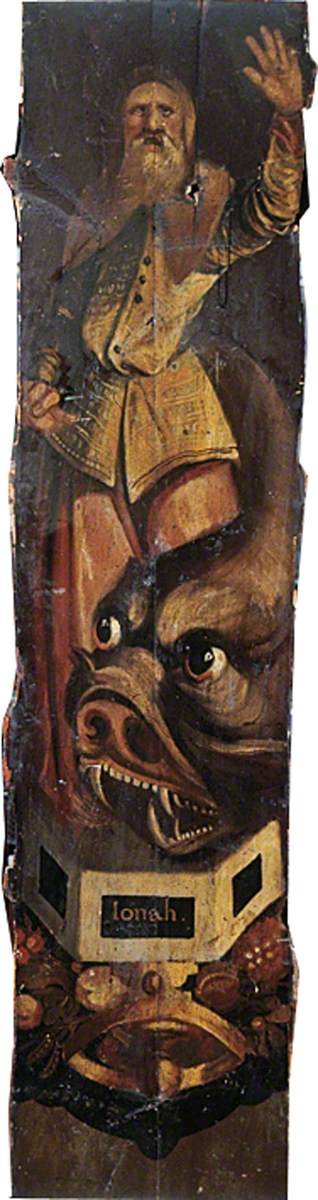
Jonah (1636) čiji je autor Carleton Wiggins

Jonah

1636 · Oil · Temple Newsam House, Lids

In this work, Carleton Wiggins captures the moment of divine intervention and peril. The painting depicts Jonah being swallowed by the whale. It is a scene of sudden, overwhelming scale. The figure of Jonah is caught in the transition between the world of men and the depths of the sea. He is a man in a suit with his arms outstretched, as if he's being lifted up into the air.…

Rukom oslikana uljana reprodukcija od $170 16 × 61 cm
Naručite ručno oslikanu kopiju O slici

Slika Carleton Wiggins rangirane od 11 do 27

Slike umetnika Carleton Wiggins prema temi

Četiri najčešća motiva u ovom rangiranju, sa najboljim delom za svaki od njih.

Muzeji u kojima se čuvaju originalna dela umetnika Carleton Wiggins

5 muzeja u kojima se nalazi najviše slika sa ove stranice.

Muzeji Grad Radovi umetnika Carleton Wiggins Slike iz ovog spiska
Temple Newsam House, LidsTemple Newsam House Lids 18 The Supper at Emmaus, Moses, Daniel
Smithsonian American Art Museum, Vašington, D.C.Smithsonian American Art Museum Vašington, D.C. 2 Evening after a Shower, The Pasture Lot
Rhode Island School of Design Museum of Art, ProvidensRhode Island School of Design Museum of Art Providens 1 Winter Evening in France
New York Historical Society, New York CityNew York Historical Society New York City 1 Landscape with Cattle
Buffalo AKG Art Museum, BuffaloBuffalo AKG Art Museum Buffalo 1 Sand Dunes: Coney Island

Carleton Wiggins po decenijama: najpoznatija slika svake

Radovi po decenijama

Izaberite deceniju da biste videli njene najpoznatije slike.

Slike autora Carleton Wiggins: česta pitanja

Koje je najpoznatije delo umetnika Carleton Wiggins?Prikaži odgovor

Winter Evening in France (1882), Rhode Island School of Design Museum of Art, Providens, zauzima prvo mesto, a prate ga Landscape with Cattle (1882) i The Supper at Emmaus (1636).

Koliko je godina imao/la Carleton Wiggins kada je slika Winter Evening in France nastala?Prikaži odgovor

Carleton Wiggins je imao 34 godina: Winter Evening in France je datiran 1882, a Carleton Wiggins je rođen 1848.

Koja su najpoznatija dela umetnika Carleton Wiggins?Prikaži odgovor

Winter Evening in France, Landscape with Cattle, The Supper at Emmaus, Moses, Daniel, Zephaniah, Nahum, Jeremiah, Ezekiel i Jonah. Godina i muzej za svako od njih navedeni su u rangiranju iznad.

Koliko dela umetnika Carleton Wiggins imate u ponudi?Prikaži odgovor

U našem katalogu se nalazi 27 dela umetnika Carleton Wiggins, datiranih od 1873 do 1908.

Gde se čuvaju originalna dela Carleton Wiggins?Prikaži odgovor

Pretežno u Temple Newsam House (Lids), Smithsonian American Art Museum (Vašington, D.C.) i Rhode Island School of Design Museum of Art (Providens). Za kompletnu listu pogledajte tabelu muzeja iznad.

U kom periodu su nastala najpoznatija dela umetnika Carleton Wiggins?Prikaži odgovor

U periodima 1880s: 2 od 27 slika rangiranih ovde datiraju iz tog vremena, uključujući Winter Evening in France.

Koja su najranija i najnovija čuvena dela Carleton Wiggins?Prikaži odgovor

Najstarije na ovoj stranici: Moonlight on the Long Island Sound (1873). Najnovije: Sand Dunes: Coney Island (1908).

Koje su glavne teme na slikama umetnika Carleton Wiggins?Prikaži odgovor

Među 27 slika rangiranih ovde: Man (12), People (7) i Clock (4).

U kojoj tehnici je najviše originala umetnika Carleton Wiggins?Prikaži odgovor

Oil, za 18 od 27 slika rangiranih ovde.

Čiji su originali umetnika Carleton Wiggins u muzeju Temple Newsam House?Prikaži odgovor

Temple Newsam House, Lids poseduje 18 slika sa ovog rangiranja, uključujući The Supper at Emmaus, Moses i Daniel.

Mogu li da naručim reprodukciju Carleton Wiggins?Prikaži odgovor

Da. Svaka slika na ovoj stranici može se naručiti kao ručno slikana uljana reprodukcija ili kao štampa. Otvorite sliku, odaberite veličinu i izvršite porudžbinu.

O umetniku: Carleton Wiggins

John Carleton Wiggins (1848–1932): A Visionary Interpreter of Biblical Narrative

John Carleton Wiggins was a prolific American artist whose distinctive style—characterized by meticulous detail and expressive tonal modulation—established him as one of the foremost interpreters of Old Testament themes in late nineteenth-century art. Born in Brooklyn, New York, in 1848, Wiggins’s artistic journey began modestly but swiftly ascended to prominence thanks to his unwavering dedication to capturing the spiritual essence of biblical stories through masterful technique and profound emotional resonance.
  • Early Life & Education: Wiggins pursued formal schooling primarily in Brooklyn, where he honed foundational skills in drawing and painting before embarking on a collegiate path at Bates College in Lewiston, Maine. His formative years instilled within him an appreciation for both realism and symbolic representation—influences that would permeate his artistic output throughout his career.
  • Career Highlights: Wiggins’s professional life unfolded across several disciplines, including law practice and coaching roles. However, it was his unwavering commitment to visual art that cemented his legacy. He gained considerable acclaim for his biblical paintings, notably ‘Ezekiel,’ ‘The Supper at Emmaus,’ and ‘Aaron,’ which garnered recognition from institutions like the Smithsonian American Art Museum.

Stylistic Innovation & Artistic Technique

Wiggins’s artistic approach distinguished itself through a meticulous attention to textural detail—a hallmark of his oeuvre—and an innovative use of tonal modulation that conveyed profound emotional depth. He skillfully blended realistic observation with symbolic iconography, creating canvases imbued with both visual richness and spiritual significance. His technique involved layering thin glazes over prepared surfaces, achieving luminous effects and capturing subtle nuances of light and shadow—methods that reflected the prevailing artistic currents of his time while simultaneously forging a singular aesthetic identity.
  • Glazing Technique: Wiggins’s mastery of glazing—applying translucent layers of pigment—allowed him to build up color gradually, producing velvety surfaces and enhancing visual luminosity.
  • Symbolic Iconography: He incorporated symbolic elements into his compositions, referencing biblical narratives and conveying theological ideas through carefully chosen imagery.

Major Works & Recognition

Among Wiggins’s most celebrated paintings are ‘Ezekiel,’ ‘The Supper at Emmaus,’ and ‘Aaron,’ each representing a significant achievement in capturing the dramatic tension and spiritual contemplation inherent in biblical narratives. These works exemplify his stylistic innovations and garnered considerable acclaim from critics and collectors alike. The Smithsonian American Art Museum proudly houses several of Wiggins’s masterpieces, ensuring that his artistic legacy continues to inspire future generations of artists and scholars.

Legacy & Historical Significance

John Carleton Wiggins stands as a pivotal figure in the history of American biblical art—a testament to the enduring power of visual storytelling to illuminate spiritual truths. His distinctive style—characterized by meticulous detail, expressive tonal modulation, and skillful blending of realism and symbolism—influenced subsequent artists and solidified his place among the foremost interpreters of Old Testament themes. Wiggins’s unwavering dedication to artistic excellence ensured that his work would resonate across time, securing his enduring contribution to the canon of nineteenth-century art.