Garancija povraćaja novca · 100 dana Besplatna dostava širom sveta
612.379umetnička dela 52.886umetnici 5.406muzeji 32jezici

Хијероним Бош

1450 - 1516

Хијероним Бош (1450–1516) je najpoznatiji po delu Врт земних наслада; ovde je navedeno 371 umetnikovih dela.

Osnovne informacije

  • Rođenje: 1450, 's-Hertogenbosch
  • Preminuo: август 1516., 's-Hertogenbosch
  • Nacionalnost: Холандија
  • Pokret: severna renesansa
  • Istaknuta dela:
    • The Garden of Earthly Delights
    • Ship of Fools
    • Ecce Homo
    • The Seven Deadly Sins and the Four Last Things
    • The Last Judgment
    • The Marriage Feast at Cana
  • Učenici: Gielis Panhedel
  • Muzeji:
    • Luvr
    • Yale University Art Gallery
    • Rijksmuseum
    • Kunsthistorisches Museum
    • Gallerie dell'Accademia di Venezia
  • Status autorskih prava: Public domain

Koje je najpoznatije delo umetnika Хијероним Бош?

Najpoznatije delo umetnika Хијероним Бош je Врт земних наслада, a među ostala značajna dela spadaju Sedam smrtnih grehova i Тriptico Хајвајн.

A Netherlandish Enigma: The Life and Art of Hieronymus Bosch

Born around 1450 in the vibrant, bustling town of ’s-Hertogenbosch in the Netherlands—then part of Brabant—Hieronymus Bosch, originally Jheronimus van Aken, remains one of art history’s most compelling and mysterious figures. His world was steeped in late medieval religious fervor, folklore, and a growing sense of societal unease, all of which would profoundly shape his uniquely unsettling artistic vision. Coming from a family with a long tradition of painting—his grandfather, Jan van Aken, and father, Anthonius van Aken, were both artists—Bosch likely received his earliest training within the family workshop, absorbing the techniques and conventions of Netherlandish painting. However, even in his formative years, he began to diverge from established norms, hinting at the extraordinary imagination that would define his career. Biographical details are frustratingly scarce; records are fragmented, leaving much open to speculation and interpretation, adding to the aura of mystique surrounding both the man and his work. He married Aleyt Goyaerts van den Meerveen sometime before 1481, a union that provided him with some financial security through her family’s holdings, but little else is known about their personal life. Fantastical Visions and Symbolic Depths Bosch's artistic style is instantly recognizable—a captivating blend of meticulous detail and wildly imaginative imagery. He primarily worked with oil on oak panels, demonstrating a masterful command of the medium, achieving luminous colors and intricate textures. While his early works show influences from traditional Netherlandish painting, particularly in their realism and attention to detail, he quickly moved beyond mere imitation, developing a profoundly original vision. His paintings are not simply representations of reality; they are allegorical landscapes populated by bizarre creatures, hybrid beings, and unsettling scenes that seem plucked from dreams—or nightmares. Religious themes form the core of much of his work, but these are rarely straightforward depictions of biblical stories. Instead, Bosch uses symbolism to explore complex moral and theological concepts, often focusing on the dangers of sin, the fragility of earthly pleasures, and the inevitability of divine judgment. His creatures—grotesque demons, fantastical animals, and strangely human figures—are not merely decorative elements; they are embodiments of vice, temptation, and spiritual corruption. The blending of the sacred and the profane, the beautiful and the grotesque, creates a uniquely unsettling effect that continues to captivate viewers centuries later.

Masterpieces of Moral Allegory

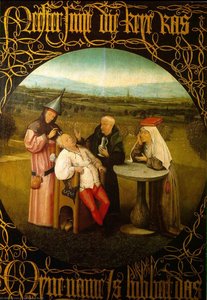
Among Bosch’s most celebrated achievements is The Garden of Earthly Delights (c. 1490-1510), a triptych that remains one of the most enigmatic and debated works in art history. When opened, it presents a panoramic vision of paradise, earthly life, and hell—a complex allegorical representation of humanity’s fall from grace. The left panel depicts the Garden of Eden, teeming with fantastical creatures and lush vegetation; the central panel portrays a world consumed by sensual pleasure and unrestrained desire; and the right panel offers a terrifying glimpse into the torments of hell. The Triptych of the Last Judgement (c. 1480-1490) is another powerful example of his skill in portraying both heavenly bliss and infernal torment, while The Ascent of the Blessed (c. 1480-1490) demonstrates his ability to create ethereal and dreamlike scenes. Even smaller works like Epiphany (c. 1495) showcase his innovative use of oil on wood and complex symbolism, revealing a mind constantly grappling with profound questions about faith, morality, and the human condition.

Influences and Artistic Development

Bosch’s artistic trajectory reveals a gradual shift from conventional Netherlandish painting to an increasingly personal and expressive style. Early works demonstrate considerable skill in depicting realistic figures and landscapes—traits inherited from his family tradition—but he quickly abandoned these techniques in favor of bolder colors, more dramatic compositions, and a preoccupation with unsettling imagery. Scholars suggest possible connections to medieval folklore, religious texts—particularly those emphasizing apocalyptic themes—and the prevailing anxieties of the time, including fears of heresy and social upheaval. However, it’s clear that Bosch synthesized these elements into something entirely new and uniquely his own. His artistic vision was profoundly shaped by humanist ideas circulating in Europe during his lifetime, prompting him to question established dogma and explore psychological dimensions previously ignored by artists. He absorbed influences from artists like Pieter Bruegel the Elder, whose landscapes conveyed moral lessons with a similar blend of realism and symbolism.

Legacy and Enduring Influence

Identifying Bosch’s direct influences is a challenging task, given the originality of his vision. Scholars suggest possible connections to medieval folklore, religious texts—particularly those emphasizing apocalyptic themes—and the prevailing anxieties of the time, including fears of heresy and social upheaval. However, it's clear that he revolutionized Netherlandish painting by introducing unprecedented levels of psychological complexity and symbolic depth. His impact on subsequent artists is undeniable. Pieter Bruegel the Elder directly followed in his footsteps, adopting similar themes and compositional techniques, while later movements, such as Surrealism, also drew inspiration from Bosch’s dreamlike imagery and exploration of the subconscious. Artists like Salvador Dalí and Max Ernst openly acknowledged their debt to his unsettling visions. Even today, Bosch's work continues to fascinate and provoke debate, solidifying his place as a master of Netherlandish painting and a visionary artist whose influence extends far beyond his own time. His paintings offer valuable insights into the religious, social, and psychological climate of the late 15th and early 16th centuries, challenging conventional norms and paving the way for new forms of artistic expression. He died in 1516, leaving behind a body of work that continues to haunt and inspire, ensuring his enduring legacy as one of art history’s most singular and unforgettable voices.

Kviz

Svako pitanje ima samo jedan tačan odgovor.

Pitanje 1:
У којем граду је рођен Јеронимијус Бош?
Pitanje 2:
Како се звао Бошов отац, који је такође био уметник?
Pitanje 3:
Који је од ових познати триптих Јеронимијуса Боша поменут у тексту?
Pitanje 4:
Који је материјал Јеронимијус Бош првенствено користио за своје слике?
Pitanje 5:
Ко је била Бошва жена?

Pitanja i odgovori

Gde mogu pronaći statistiku o delima umetnika Хијероним Бош?

Pogledajte najpopularnija dela umetnika Хијероним Бош, rangirana prema broju poseta na ovom vebu.

Mogu li da kupim reprodukciju slike autora Хијероним Бош?

Da. Pogledajte reprodukcije slika Хијероним Бош, dostupne kao ručno oslikana ulja na platnu i kao printovi.

Gde je i kada je rođen/a Хијероним Бош?

Хијероним Бош je rođen/a u gradu Хертогенбос godine 1450.

Koliko je dugo Хијероним Бош živio/la?

Хијероним Бош je živio/la oko 66 godina, od 1450. do 1516.

Koje je boje Хијероним Бош najčešće koristio/la?

Pogledajte boje koje je Хијероним Бош najčešće koristio, izmerene kroz njegova dela.

Po kojim slikama je Хијероним Бош poznat/a?

Хијероним Бош je poznat po delima koja su navedena u najpoznatijim slikama autora Хијероним Бош.

Ko su bili učenici Хијероним Бош?

Gielis Panhedel je studirao/la kod Хијероним Бош.

Gde mogu da vidim slike umetnika Хијероним Бош?

Radove Хијероним Бош možete pogledati u Музеј Прадо, Museu Nacional de Arte Antiga i Museum Boijmans Van Beuningen.

U kom stilu je Хијероним Бош stvarala?

Хијероним Бош je slikao u stilu Severna Renesansa, baš kao i drugi slavni Severna Renesansa umetnici.