


1


Ažurirano: новембар 2026 · rangirano prema našem koeficijentu popularnosti (pretrage, posete i porudžbine za svako delo) · 25 dela Robert Wolfe u našem katalogu
Brzi odgovor
Najpoznatija slika umetnika Robert Wolfe je Manteau sonore (1964); original se nalazi u muzeju Musée national des beaux-arts du Québec, Kvebek Siti. Les Dieux nordiques (1966) i Dishevelled Lectern (1966) su brojevi dva i tri. Od 25 dela umetnika Robert Wolfe u našem katalogu, ovih je 24 najpoznatijih, rangiranih prema godini i muzeju u kojem se nalaze, kako biste mogli da odaberete sliku za narudžbu.
 Krwth1998 · Musée national des beaux-arts du Québec
12
 Giotto1999 · Musée national des beaux-arts du Québec
13
 Sarab2003 · Musée national des beaux-arts du Québec
14
 Hériz2003 · Musée national des beaux-arts du Québec
15
 Varamin2003 · Musée national des beaux-arts du Québec
16
 Sarouk2003 · Musée national des beaux-arts du Québec
17
 Malaïr2003 · Musée national des beaux-arts du Québec
18
 Ganymède de la série «Les Nébuleuses»1983 · Musée national des beaux-arts du Québec
19
 La Prophétie1988 · Musée national des beaux-arts du Québec
20
 Je crois qu'il ne se fût pas départi de son sourire si je lui avais déclaré que j'allais mourir dans quelques minutes1991 · Musée national des beaux-arts du Québec
21
 Tabriz2003 · Musée national des beaux-arts du Québec
22
 Goltok2003 · Musée national des beaux-arts du Québec
23
 Pazyrik2003 · Musée national des beaux-arts du Québec
24
 Hamadan2003 · Musée national des beaux-arts du Québec
2 muzeja u kojima se nalazi najviše slika sa ove stranice.
| Muzej | Grad | Radovi umetnika Robert Wolfe | Slike iz ovog spiska |
|---|---|---|---|
 Musée national des beaux-arts du Québec |
Kvebek Siti | 23 | Manteau sonore, Les Dieux nordiques, Moïse |
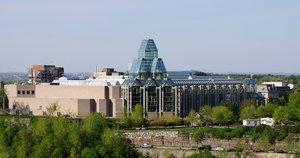 Nacionalna galerija Kanade |
Otava | 1 | Dishevelled Lectern |
Izaberite deceniju da biste videli njene najpoznatije slike.


Manteau sonore (1964), Musée national des beaux-arts du Québec, Kvebek Siti, zauzima prvo mesto, a prate ga Les Dieux nordiques (1966) i Dishevelled Lectern (1966).
Robert Wolfe je imao 29 godina: Manteau sonore je datiran 1964, a Robert Wolfe je rođen 1935.
Manteau sonore, Les Dieux nordiques, Dishevelled Lectern, Moïse, Tiarella cordifolia, Ligularia, Maslaghan, Rusucurru, Jaune et blanc i Ennéades 3. Godina i muzej za svako od njih navedeni su u rangiranju iznad.
U našem katalogu se nalazi 25 dela umetnika Robert Wolfe, datiranih od 1964 do 2003.
Pretežno u Musée national des beaux-arts du Québec (Kvebek Siti) i Nacionalna galerija Kanade (Otava). Za kompletnu listu pogledajte tabelu muzeja iznad.
U periodima 1980s: 9 od 24 slika rangiranih ovde datiraju iz tog vremena, uključujući Moïse.
Najstarije na ovoj stranici: Manteau sonore (1964). Najnovije: Sarab (2003).
Musée national des beaux-arts du Québec, Kvebek Siti poseduje 23 slika sa ovog rangiranja, uključujući Manteau sonore, Les Dieux nordiques i Moïse.
Born in Montreal, Canada, in 1935, Robert Wolfe spent his years observing the world through a lens of stillness. His work does not shout; instead, it settles into a space, much like the objects he chose to paint. He worked with oils on masonite and acrylics on canvas, focusing on the way light and form occupy a room. There is a certain weight to his compositions, a sense of things being exactly where they belong, even when they appear slightly out of place.
His hands moved between different textures and surfaces, seeking to capture the essence of a subject without the need for grand gestures. In 1966, he produced Dishevelled Lectern, an oil on masonite piece that found its way into the National Gallery of Canada. It is a work that demands a slow look, much like the quiet corners of a library or a study.
The practice of his work reveals a steady commitment to the physical reality of his subjects. He dealt with the tangible, the everyday, and the structural. His output includes works that explore the relationship between space and object, often leaving the title to the viewer's own perception.
His approach to a canvas was methodical. Whether working with the thick application of oil or the more direct nature of acrylic, the focus remained on the subject at hand. He did not seek to transform the world, but to record it as it sat before him.
By the time of his death in 2003, Wolfe had left behind a body of work that remains part of the Canadian artistic landscape. His paintings, such as the large-scale Tombeau de Vincent, show a continued interest in the way light interacts with a surface. He remained a painter of the specific, finding meaning in the arrangement of a room or the tilt of a piece of furniture. His legacy is found in these quiet, composed moments captured on wood and cloth.


