


1


Updated октобар 2026 · ranked by our popularity score (searches, visits and orders for each work) · 14 works by Адалберт Штифтер in our catalogue
Quick answer
Number one among Адалберт Штифтер's paintings is Im Gosautal (1834). In second and third place: Moonrise (1855) and Blick auf Wiener Vorstadthäuser (1839). Our catalogue holds 14 works by Адалберт Штифтер. The 14 listed here are the most famous, in rank order, with the year and museum of each original.

Adalbert Stifter, an Austrian writer and painter, is renowned for his captivating landscapes that evoke a sense of tranquility and connection with nature. One of his most striking works is Moonrise, a painting that embodies the essence of serenity and the beauty of the natural world. Composition and Elements Moonrise measures 23 x 28 cm and is executed in oil, showcasing Stifter's skillful use of medium. The painting depicts the…

Adalbert Stifter’s Blick auf Wiener Vorstadthäuser transports the viewer to an idyllic moment suspended in time—a quintessential vision of early 19th-century suburban life. This painting is far more than a mere depiction of architecture; it is an immersion into a carefully curated sense of community and pastoral calm. The composition draws the eye across a gently flowing scene, anchored by a charming bridge that serves as both a physical connector…


The museum that holds the most of the paintings on this page.
| Museum | City | Works by Адалберт Штифтер | Paintings from this list |
|---|---|---|---|
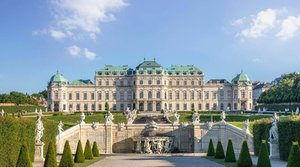 Austrian Gallery Belvedere |
Beč | 1 | Blick auf Wiener Vorstadthäuser |
Select a decade to see its top painting.
Adalbert Stifter, an Austrian writer and painter, is renowned for his captivating landscapes that evoke a sense of tranquility and connection with nature. One of his most striking works is Moonrise, a painting that embodies the essence of serenity and the beauty of the natural world. Composition and Elements Moonrise measures 23 x 28 cm and is executed in oil, showcasing Stifter's skillful use of medium. The painting depicts the…
Im Gosautal (1834) ranks first, followed by Moonrise (1855) and Blick auf Wiener Vorstadthäuser (1839).
Адалберт Штифтер was 29: Im Gosautal is dated 1834, and Адалберт Штифтер was born in 1805.
Im Gosautal, Moonrise, Blick auf Wiener Vorstadthäuser, Das Stift Kremsmünster, Blick auf die Falkenmauer aus der Gegend von Kremsmünster, View of Oberplan, Blick auf Kremsmünster und Umgebeung, The Königssee with the Watzmann, Der Sarstein bei Alt Aussee (Fassung I) and Cloud Study. Year and museum for each are in the ranking above.
14 works by Адалберт Штифтер are in our catalogue, dated 1823 to 1855.
Mainly in Austrian Gallery Belvedere (Beč). See the museum table above for the full list.
In 1820s: 4 of the 14 paintings ranked here date from that time, including Das Stift Kremsmünster.
Earliest on this page: Das Stift Kremsmünster (1823). Latest: Moonrise (1855).
Romanticism, based on the paintings ranked on this page.
Yes. Every painting on this page can be ordered as a hand-painted oil reproduction or a print. Open the painting, choose the size and place your order.
Adalbert Stifter, a name perhaps less familiar than many of his literary contemporaries, nevertheless holds a significant place within the landscape of 19th-century German literature. Born in Oberplan, a small village nestled in what is now the Czech Republic – Bohemia at the time – on October 23, 1805, Stifter’s early life was profoundly shaped by the quiet rhythms of rural existence and the loss of his father at a young age. His father, Johann Stifter, a linen weaver and flax dealer, tragically died in 1817 after being crushed by an overturned wagon, leaving a young Adalbert and his family in a state of profound grief.
Despite this early hardship, Stifter’s upbringing was far from bleak. His mother and grandmother instilled in him a love for storytelling, legends, and the beauty of the natural world – experiences that would later become central themes in his writing. He received his initial education at the Benedictine Gymnasium in Kremsmünster, where he demonstrated an aptitude for learning and a particular interest in music and drawing. This foundation laid the groundwork for his future pursuits as both a writer and a painter.
Following his time at the gymnasium, Stifter moved to Vienna in 1826 to study law, but quickly found himself drawn to mathematics and natural sciences. He sought knowledge beyond the confines of legal theory, reflecting a growing interest in understanding the world around him – an interest that would profoundly influence his artistic vision. He secured a position as a private tutor, a role he embraced with dedication, providing instruction to the children of prominent Viennese families, including Princess Maria Anna von Schwarzenberg and even the son of Klemens Wenzel von Metternich, the influential Austrian statesman.
This period was marked by a significant personal loss: in 1828, Stifter fell deeply in love with Fanny Greipl, but their relationship ended tragically when her parents forbade further correspondence. This heartbreak left an indelible mark on his life and work, contributing to the melancholic undertones often found within his writings. He later engaged in a brief marriage to Amalia Mohaupt in 1837, though the union proved unhappy due to the inability to conceive, leading them to attempt adopting three of Amalia’s nieces – an endeavor that ended with one niece tragically drowning.
Seeking a fresh start and a more stable environment, Stifter moved to Linz in 1848, where he quickly established himself as an editor for the Linzer Zeitung and the Wiener Bote. This period marked a turning point in his career, providing him with both financial security and creative freedom. In 1840, he achieved immediate literary success with “Der Condor,” a short story that captivated readers and launched his writing career. This early recognition paved the way for subsequent works like “Im Gosautal” (1834) and “Indian Summer” (1857), both of which are considered masterpieces of German literature.
Stifter’s commitment to education continued throughout his life. In 1850, he was appointed supervisor of elementary schools for Upper Austria, a role that allowed him to combine his passion for teaching with his artistic sensibilities. His dedication to fostering a love of nature and moral values within young minds is evident in his pedagogical approach.
Stifter’s work is characterized by a profound appreciation for the beauty of the natural world and a deep concern for ethical conduct. His stories often depict idyllic landscapes – mountains, forests, and streams – imbued with symbolic meaning. He sought to capture not just the outward appearance of nature but also its underlying spiritual essence. His writing style is notable for its meticulous detail and understated elegance, reflecting his Biedermeier sensibilities—a movement emphasizing simplicity, realism, and a focus on everyday life.
Stifter’s influence extends beyond his own literary achievements. He is considered a key figure in the development of the Bildungsroman, a genre that explores the moral and psychological growth of a protagonist from childhood to maturity. Authors like Hesse and Mann have acknowledged Stifter's profound impact on their work. His exploration of themes such as nature, morality, education, and the search for meaning continues to resonate with readers today, cementing his place as a significant voice in German literature.
Despite suffering from declining health in his later years – culminating in a tragic suicide in 1868 – Adalbert Stifter’s legacy endures. His evocative depictions of the natural world and his insightful explorations of human morality continue to inspire and captivate audiences, reminding us of the enduring power of art to illuminate the complexities of life.


