Garancija povraćaja novca · 100 dana Besplatna dostava širom sveta
646.759umetnička dela 53.420umetnici 5.406muzeji 32jezici
Portrait of Едвард Мунк

The 100 Most Famous Едвард Мунк Paintings to Choose From

Updated октобар 2026 · ranked by our popularity score (searches, visits and orders for each work) · 2.121 works by Едвард Мунк in our catalogue

Quick answer

Number one among Едвард Мунк's paintings is Врисок (1893), whose original is at the Nasjonalgalleriet, Oslo. In second and third place: Vampir Nacionalna galerija Oslo and Pubertet (1914). Our catalogue holds 2,121 works by Едвард Мунк. The 100 listed here are the most famous, in rank order, with the year and museum of each original.

1863 – 1944, Аделсбрук Ekspresionizam Most works: Munch Museum

The top 10: Едвард Мунк's most famous paintings

1
Врисок (1893) by Едвард Мунк

Врисок

1893 · Ulje na platnu · Nasjonalgalleriet, Oslo

Edvard Munch’s “The Scream,” painted in 1893, isn't merely an artwork; it is a visceral cry echoing through the corridors of modern consciousness. More than just a depiction of a scene, it embodies a profound sense of existential dread, alienation, and anxiety—emotions that continue to resonate deeply with audiences across generations. This iconic image stands as a cornerstone of Expressionism, rejecting traditional representational art in favor of conveying raw, internal…

2
Vampir Nacionalna galerija Oslo by Едвард Мунк

Vampir Nacionalna galerija Oslo

Ulje na platnu · Munch Museum, Oslo

Ovo umetničko delo predstavlja krupni plan dve osobe upletene u strastni, ali uznemirujući zagrljaj. Kompoziciju dominiraju njihova isprepletena tela, što stvara neposredan osećaj bliskosti i ranjivosti. Munch namerno zamagljuje jasne crte lica, fokusirajući se umesto toga na konture njihovih oblika i sugestivnu moć njihove poze. Ova namerna ambiguitet poziva posmatrače da na scenu projektuju sopstvene emocije i interpretacije. Figure su postavljene ispred tamne, neodređene pozadine koja služi da ih izoluje…

3
Pubertet (1914) by Едвард Мунк

Pubertet

1914 · Ulje na platnu · Munch Museum, Oslo

Mlada devojčica sedi na ivici kreveta, a njeno telo je postavljeno frontalno u odnosu na horizontalnu ravan madraca. Njene su udice ukrštene, a rukama pokušava da zaštiti svoj intimni deo, što predstavlja instinktivan gest modesty i ranjivosti. Figura je izvedena u mekim, bledo-svetlim tonovima koji su u snažnom kontrastu sa fragmentiranim, mozaikskim pozadinom. Levo od nje, blizu se nalazi jastuk, dok se desno, na svetlijem zidu, razvija velika, tamna senka.…

4
Anksioznost 2 (1894) by Едвард Мунк

Anksioznost 2

1894 · Ulje na platnu · Munch Museum, Oslo

Uvod u umetnika i delo Edvard Munch bio je norveški slikar čije je delo Anksioznost 2, nastalo 1894. godine, suštinski primer ekspresionizma. Ovaj umetnički stil naglašava subjektivno emocionalno iskustvo umetnika, često koristeći izobličene ili preuveličane forme kako bi se prenela intenzivna osećanja. Anksioznost 2 predstavlja deo Munchovog opusa koji istražuje teme anksioznosti, straha i ljudske egzistencije. Informacije o slici i stil Slika prikazuje grupu ljudi koji stoje ispred vodenog stuba,…

5
the kiss (1897) by Едвард Мунк

the kiss

1897 · Acrylic On Canvas · Munch Museum, Oslo

Edvard Munch’s “The Kiss” (1897) isn't merely a depiction of romantic embrace; it’s a profound exploration of isolation, vulnerability, and the unsettling undercurrents of human connection. Painted during a period of intense personal turmoil for the artist – marked by illness, loss, and a pervasive sense of dread – the work transcends simple representation to become a visceral embodiment of Munch's psychological landscape. The scene unfolds within a deliberately ambiguous…

6
Танец Жизни (1899) by Едвард Мунк

Танец Жизни

1899 · Ulje na platnu · Nasjonalgalleriet, Oslo

Munkovo delo „Tač o životu” (1899) predstavlja očaravajuće ekspresionističko remek-delo koje posmatrače uvodi u svet živopisnih boja, dinamičnog pokreta i duboke emocionalne složenosti. Ova kultna slika, deo Munkovog slavnog serijala Friz na životu, istražuje zamršenost ljudskih odnosa i prolaznost vremena kroz prizor živopisnog društvenog okupljanja.

7
Night street Karl Johan 03 (1892) by Едвард Мунк

Night street Karl Johan 03

1892 · Acrylic On Canvas · Bergen Kunstmuseum, Bergen

Introduction Explore the depths of human emotion and urban life in Edvard Munch's captivating work, 'Night Street Karl Johan 03'. This masterpiece is a testament to Munch's unique style and his ability to evoke powerful feelings through art. Artist: Edvard Munch Edvard Munch (1863-1944) was a Norwegian painter and printmaker, known for his Expressionist style. His work often depicted intense emotions and personal experiences, reflecting the inner turmoil of modern…

8
Melancholy (1894) by Едвард Мунк

Melancholy

1894 · Ulje na platnu · Nasjonalgalleriet, Oslo

Едвард Мунк и Душевна Туманица: Разглед Модерне Ангестије У основи своје творбе стоји Едвард Мунк, рођен 1863. године у Норвешкој средишта суровог пейзажа и утицаја који је био неизбежан за све уметнике тог времена – душевна туманица и стрење модерне ангестије. Живот Мунке био је дубоко обелељен губитком и преовлађујућим осећајем туге, што је служило као извор за његов изузетно изразно уметностство. Одрастање под сенком раног смрти мајке и сестре…

9
Мадона (1894) by Едвард Мунк

Мадона

1894 · Akril na platnu · Munch Museum, Oslo

Edvard Munch's *Madonna*, created in 1895, stands as an emblem of Expressionism’s preoccupation with psychological depth and emotional intensity—a testament to Munch’s profound engagement with themes of love, loss, and the inescapable shadow of mortality. Unlike idealized depictions prevalent during his time, this artwork confronts viewers with a raw vulnerability rarely encountered in art history.

10
Julaften i bordell (1905) by Едвард Мунк

Julaften i bordell

1905 · Ulje na platnu · Munch Museum, Oslo

Delo „Božić u bordelu” (1905) Edvarda Munkа poziva posmatrače u živopisnu i emocionalno nabijenu unutrašnju scenu. Ovo očaravajuće umetničko delo prikazuje Munchov prepoznatljiv ekspresivni stil, spajajući smele boje i dinamične poteze četkicom kako bi stvorio osećaj intimnosti i kontemplacije.

Ranks 11 to 100: more Едвард Мунк paintings

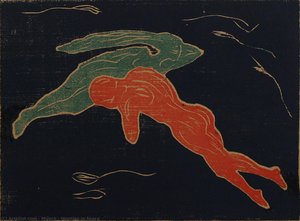
11Мадона (1894) by Едвард МункМадона1894 · Munch Museum 12Пепео (1894) by Едвард МункПепео1894 · National Museum of Art, Architecture and Design 13Последневије (1895) by Едвард МункПоследневије1895 · Nasjonalgalleriet 14Pored kreveta smrti (groznica) (1915) by Едвард МункPored kreveta smrti (groznica)1915 · Munch Museum 15Cree (kazein na kartonu) 2 (1893) by Едвард МункCree (kazein na kartonu) 21893 · National Museum of Art, Architecture and Design 16Razdvojenje (1896) by Едвард МункRazdvojenje1896 · Bergen Kunstmuseum 17Dete i smrt (1899) by Едвард МункDete i smrt1899 · Kunsthalle Bremen 18Kupidon i Psihija (1907) by Едвард МункKupidon i Psihija1907 19The Kiss (1895) by Едвард МункThe Kiss1895 20The Murderer (1910) by Едвард МункThe Murderer1910 · Munch Museum 21Devojke na molu (1904) by Едвард МункDevojke na molu1904 · Kimbell Art Museum 22Man and Woman I (1905) by Едвард МункMan and Woman I1905 · Мунх музеј 23Vampir (1893) by Едвард МункVampir1893 · Gothenburg Museum of Art 24Poljubac (1897) by Едвард МункPoljubac1897 · Мунх музеј 25Očaj (1892) by Едвард МункOčaj1892 26Eye in Eye (1894) by Едвард МункEye in Eye1894 27Bolno dete - slikana verzija - 1926 by Едвард МункBolno dete - slikana verzija - 1926 28Susret u svemiru (1899) by Едвард МункSusret u svemiru1899 · Tel Aviv Museum of Art 29Bolesno dete (1925) by Едвард МункBolesno dete1925 · Munch Museum 30Mlada žena na obali (1896) by Едвард МункMlada žena na obali1896 · Munch Museum 31Bolesno dete (1885) by Едвард МункBolesno dete1885 32Луна (1895) by Едвард МункЛуна1895 · Nasjonalgalleriet 33Krik (1893) by Едвард МункKrik1893 · Munch Museum 34Kiss IV (1902) by Едвард МункKiss IV1902 35Ubica (1907) by Едвард МункUbica1907 · Munch Museum 36Autoportret (1895) by Едвард МункAutoportret1895 · Kunsthaus Zürich 37Melancholy, Laura (1899) by Едвард МункMelancholy, Laura1899 · Munch Museum 38Muškarci koji se kupaju (1907) by Едвард МункMuškarci koji se kupaju1907 39Тешка деца (1896) by Едвард МункТешка деца1896 · Gothenburg Museum of Art 40Dva srca (1899) by Едвард МункDva srca1899 · Tel Aviv Museum of Art 41Death at the helm (1893) by Едвард МункDeath at the helm1893 · Munch Museum 42Storm (1893) by Едвард МункStorm1893 43Smrt i devojčica (1893) by Едвард МункSmrt i devojčica1893 · Munch Museum 44Madona (1902) by Едвард МункMadona1902 · Ohara Museum of Art 45The Three Stages of Woman (Sphinx). (1894) by Едвард МункThe Three Stages of Woman (Sphinx).1894 46Četiri doba života (1902) by Едвард МункČetiri doba života1902 · Bergen Kunstmuseum 47Месечина (1893) by Едвард МункМесечина1893 · National Museum of Art, Architecture and Design 48Cupid and Psyche (1907) by Едвард МункCupid and Psyche1907 · Munch Museum 49Zvezdane Noći (1893) by Едвард МункZvezdane Noći1893 50Zimska noć (1900) by Едвард МункZimska noć1900 · Kunsthaus Zürich 51The Kiss (1892) by Едвард МункThe Kiss1892 52Mother and Daughter (1897) by Едвард МункMother and Daughter1897 · Nasjonalgalleriet 53Devojke na mostu (1901) by Едвард МункDevojke na mostu1901 · Nasjonalgalleriet 54Devojka pored prozora (1893) by Едвард МункDevojka pored prozora1893 · Art Institute of Chicago 55Nude I (1913) by Едвард МункNude I1913 · Munch Museum 56Garden with Red House (1882) by Едвард МункGarden with Red House1882 57Noć (1890) by Едвард МункNoć1890 58Anksioznost (1894) by Едвард МункAnksioznost1894 59Madonna (1894) by Едвард МункMadonna1894 · Hamburger Kunsthalle 60untitled (7660) by Едвард Мункuntitled (7660) 61Vampire II (1902) by Едвард МункVampire II1902 62Завист (1895) by Едвард МункЗавист1895 · Bergen Kunstmuseum 63Portret Herbert Eschea (1905) by Едвард МункPortret Herbert Eschea1905 · Kunsthaus Zürich 64Dance on the Beach (1904) by Едвард МункDance on the Beach1904 · Narodna galerija Prag 65The Sick Child (1907) by Едвард МункThe Sick Child1907 · Thiel Gallery 66Woman Combing Her Hair (1892) by Едвард МункWoman Combing Her Hair1892 67The Assassin (1910) by Едвард МункThe Assassin1910 68The killer (1906) by Едвард МункThe killer1906 69Ispod kestena (1937) by Едвард МункIspod kestena1937 · Munch Museum 70Starry Night (1923) by Едвард МункStarry Night1923 71Starry Night (1901) by Едвард МункStarry Night1901 · Museum Folkwang 72Gostionica u Sent Kludu (1890) by Едвард МункGostionica u Sent Kludu1890 73Melancholy (1894) by Едвард МункMelancholy1894 74Death in the Sickroom (1893) by Едвард МункDeath in the Sickroom1893 · Munch Museum 75Three Girls in Åsgårdstrand (1905) by Едвард МункThree Girls in Åsgårdstrand1905 · Thiel Gallery 76Zavist (1907) by Едвард МункZavist1907 · Munch Museum 77Friederich Nietzsche (1906) by Едвард МункFriederich Nietzsche1906 · Munch Museum 78The girl and death (1894) by Едвард МункThe girl and death1894 79Lübeck Harbour with the Holstentor (1907) by Едвард МункLübeck Harbour with the Holstentor1907 80The Researchers: Central Group with Alma Mater (1910) by Едвард МункThe Researchers: Central Group with Alma Mater1910 · Munch Museum 81Irmgard Steinbart (1913) by Едвард МункIrmgard Steinbart1913 · Mildred Lane Kemper Art Museum 82Smrtonosna odaja (1915) by Едвард МункSmrtonosna odaja1915 · Munch Museum 83Snow shovelers (1911) by Едвард МункSnow shovelers1911 84Svadba boema (1927) by Едвард МункSvadba boema1927 · Munch Museum 85Self-Portrait on the Glass Veranda (1930) by Едвард МункSelf-Portrait on the Glass Veranda1930 · Munch Museum 86The Dead Mother and Child (1901) by Едвард МункThe Dead Mother and Child1901 · Kunsthalle Bremen 87Pored ruleta (1892) by Едвард МункPored ruleta1892 88Summer (1889) by Едвард МункSummer1889 89Vampire (1894) by Едвард МункVampire1894 90Helge Bäckström (1893) by Едвард МункHelge Bäckström1893 · Thiel Gallery 91friedrich nietzsche by Едвард Мункfriedrich nietzsche 92Self-Portrait I (1896) by Едвард МункSelf-Portrait I1896 93fortvivlan (1892) by Едвард Мункfortvivlan1892 94Akter (1896) by Едвард МункAkter1896 · Rasmus Meyer Collection 95Ungdom (Youth) by Едвард МункUngdom (Youth)Museum Folkwang 96Skriet oslo by Едвард МункSkriet oslo 97Red vine (1898) by Едвард МункRed vine1898 98Anton Brünings (1919) by Едвард МункAnton Brünings1919 99Скрет Оља, НГ Осијо (1893) by Едвард МункСкрет Оља, НГ Осијо1893 100The House is Burning! (1927) by Едвард МункThe House is Burning!1927 · Munch Museum

Едвард Мунк paintings by period

Едвард Мунк paintings by subject

The four most frequent subjects in this ranking, with the top painting for each.

Museums holding Едвард Мунк's originals

The 8 museums that hold the most of the paintings on this page.

Museum City Works by Едвард Мунк Paintings from this list
Munch Museum, OsloMunch Museum Oslo 1.030 Vampir Nacionalna galerija Oslo, Pubertet, Anksioznost 2
Nasjonalgalleriet, OsloNasjonalgalleriet Oslo 10 Врисок, Танец Жизни, Melancholy
Bergen Kunstmuseum, BergenBergen Kunstmuseum Bergen 42 Night street Karl Johan 03, Razdvojenje, Četiri doba života
National Museum of Art, Architecture and Design, OsloNational Museum of Art, Architecture and Design Oslo 51 Пепео, Cree (kazein na kartonu) 2, Месечина
Kunsthaus Zürich, ZrichKunsthaus Zürich Zrich 25 Autoportret, Zimska noć, Portret Herbert Eschea
Thiel Gallery, StockholmThiel Gallery Stockholm 13 The Sick Child, Three Girls in Åsgårdstrand, Helge Bäckström
Gothenburg Museum of Art, GothenburgGothenburg Museum of Art Gothenburg 5 Vampir, Тешка деца
Museum Folkwang, EsenMuseum Folkwang Esen 5 Starry Night, Ungdom (Youth)

Each decade's top Едвард Мунк painting

Works per decade

Select a decade to see its top painting.

Едвард Мунк paintings: FAQ

Which is Едвард Мунк's most famous work?Show answer

Врисок (1893), Nasjonalgalleriet, Oslo, ranks first, followed by Vampir Nacionalna galerija Oslo and Pubertet (1914).

At what age was Врисок painted by Едвард Мунк?Show answer

Едвард Мунк was 30: Врисок is dated 1893, and Едвард Мунк was born in 1863.

What are the ten most famous Едвард Мунк paintings?Show answer

Врисок, Vampir Nacionalna galerija Oslo, Pubertet, Anksioznost 2, the kiss, Танец Жизни, Night street Karl Johan 03, Melancholy, Мадона and Julaften i bordell. Year and museum for each are in the ranking above.

How many paintings by Едвард Мунк are listed?Show answer

2,121 works by Едвард Мунк are in our catalogue, dated 1882 to 1937.

Which museums hold Едвард Мунк's most famous originals?Show answer

Mainly in Munch Museum (Oslo), Nasjonalgalleriet (Oslo) and Bergen Kunstmuseum (Bergen). See the museum table above for the full list.

When were the top Едвард Мунк paintings made?Show answer

In 1890s: 52 of the 100 paintings ranked here date from that time, including Врисок.

What are the oldest and the most recent famous Едвард Мунк paintings?Show answer

Earliest on this page: Garden with Red House (1882). Latest: Ispod kestena (1937).

Which subjects appear most in Едвард Мунк's paintings?Show answer

Among the 100 paintings ranked here: Emocija (14), Simbolizam (13) and Anksioznost (12).

Which medium is most common in Едвард Мунк's paintings?Show answer

Ulje na platnu, for 34 of the 100 paintings ranked here.

What movement do Едвард Мунк's paintings belong to?Show answer

Ekspresionizam, based on the paintings ranked on this page.

Which famous Едвард Мунк paintings does the Munch Museum have?Show answer

The Munch Museum, Oslo holds 27 of the paintings ranked here, including Vampir Nacionalna galerija Oslo, Pubertet and Anksioznost 2.

Can I buy a Едвард Мунк painting as a reproduction?Show answer

Yes. Every painting on this page can be ordered as a hand-painted oil reproduction or a print. Open the painting, choose the size and place your order.

Едвард Мунк: the artist behind the paintings

The Life and Identity of Edvard Munch

Edvard Munch was a Norwegian painter whose life was deeply tied to the landscapes and the heavy atmosphere of his homeland. Born on 12 December 1863, he spent much of his existence navigating the complexities of the human psyche through his brush and printmaking tools. His work often felt like a direct extension of his own internal struggles, turning private emotions into something visible and shared. He remained an active presence in the art world until his death on 23 January 1944.

His ability to capture the tremors of human existence reached a peak in 1893 with the creation of The Scream. This specific work has become one of the most acclaimed images in Western art, recognized globally for its depiction of existential dread. While many artists sought to replicate the physical world, Munch was interested in the things that cannot be seen, such as anxiety and the weight of loneliness. He used color and form to give a shape to the invisible forces that pull at the human spirit.

Throughout his long career, he produced a vast body of work that spanned many different mediums. His output included:

Early Life, Family and Training

Edvard Munch was born in 1863 amidst the stark landscapes of Norway. His childhood was shaped by a household where the presence of sickness was a constant companion. In 1868, his mother died from tuberculosis, a loss that left a heavy mark on the young boy. This sense of fragility deepened in 1877 when his sister, Johanne Sophie, also succumbed to tuberculosis at the age of 15. These early bereavements meant that the shadows of mortality were woven into the fabric of his daily life.

His father, Christian Munch, worked as a physician and medical officer. Christian was a man of intense religious devotion, but he also struggled with a temperament that was nervous and obsessively religious. The atmosphere of the home was often heavy with this sense of dread. Growing up in such a setting, Edvard often found himself drawing to keep occupied during the long winters when illness kept him from school. These early experiences of grief and fear would eventually find their way onto his canvases.

For his formal education, he attended the Royal School of Art and Design in Kristiania. It was here that he began to develop the technical skills that would support his later explorations of the human psyche. His training provided the foundation for a career spent translating internal distress into visual form.

The Bohemian Circles of Kristiania

In the streets of Kristiania, the former name of Oslo, Munch found a community that challenged everything he had been taught. He moved within the bohemian circles of the city, a group of people who lived outside the strict rules of the era. Among them was the naturalistic painter Christian Krohg, who was a part of this progressive circle. These gatherings were not just social; they were spaces where new ways of seeing the world were debated and lived.

It was through the influence of the nihilist Hans Jæger that Munch’s own path began to shift. Jæger urged him to move away from the polite, academic traditions of the time. He encouraged the artist to look inward and paint his own emotional and psychological state. This was a radical idea. Instead of trying to capture the world as it appeared to others, Munch began to use his canvas to express the internal storms of his own mind.

Travels and Influences in Paris and Berlin

Moving through the centers of European art allowed Munch to see his own impulses reflected in the work of others. In Paris, he encountered the techniques of artists like Paul Gauguin and Vincent van Gogh. He learned much from them, absorbing how they used color and form to move beyond simple representation. His time in the city also brought him into contact with Henri de Toulouse-Lautrec. These encounters helped him refine a way of seeing that prioritized the internal over the external.

His time in Berlin shifted his focus toward the deeper, more unsettling layers of the human mind. It was there that he met the Swedish dramatist August Strindberg. These connections with figures such as Strindberg pushed his investigations into psychological themes. He began to use his art to explore the tremors of human existence, moving away from naturalistic depictions toward a style that could communicate the heavy weight of fear and anxiety.

Technique and Style of Soul Painting

Munch did not aim to replicate the physical world as it appeared to the eye. Instead, he sought to externalize his internal state, a method he called soul painting. He used distorted forms and rhythmic lines to communicate the tremors of human existence, turning psychological distress into a visible, tangible form. His brushwork often reflected the turbulence of his own mind, using color and shape to translate what he felt rather than what he saw.

This focus on the internal led him to experiment extensively with various mediums. He was a highly active printmaker, working through lithography, woodcut, and etching to expand his reach. His technical range was broad, involving intaglio processes such as aquatint, drypoint, and engraving on copper. These methods allowed him to layer textures and lines that mirrored the complexity of human emotion.

The Frieze of Life and Key Works

Munch sought to capture the recurring cycles of human existence through a series of works he called The Frieze of Life. This collection focused on the heavy, inescapable themes of love, fear, death, and anxiety. He did not aim for a simple depiction of life, but rather an exploration of the internal storms that define it. His paintings often functioned as a way to process the grief and the psychological tremors that stayed with him from his youth.

Many of his most recognized images emerged from these personal struggles. He conceived The Scream while in Kristiania, using swirling, fiery landscapes to represent a sense of existential dread. In other works, he turned his gaze toward the complexities of human connection and the fragility of life. Madonna explores the intersection of sexuality and mortality, while The Sick Child remains a poignant reminder of the loss of his sister, Sophie. These pieces reflect a man trying to make sense of the shadows that followed him.

Later Years and Death

The later years of Munch's life were marked by a significant shift in his personal habits and his creative environment. Following a mental breakdown in 1908, he made the decision to give up heavy drinking. This period of change led him away from the turbulent social scenes of his youth. Instead, he spent his remaining years working in peace and privacy, finding a quiet space to continue his practice.

His output remained steady until the end of his life. By the time he passed away in 1944, he had amassed a collection of 1006 paintings. While the world around him faced the immense upheaval of World War II, the majority of his works survived the conflict, ensuring that his visual language would remain available for future generations to study and experience.

The Lasting Legacy and Influence

Munch's ability to confront the darker aspects of the human condition helped pave the way for German Expressionism. He was a pioneer of Expressionism, moving away from the polite rules of academic art to find a way to show the internal storms of the mind. By translating psychological distress into visual form, he changed how artists approached the canvas. His work became a cornerstone of the modernism movement, shifting the focus from what the eye sees to what the soul endures.

His presence is felt deeply within the history of Norwegian art. He helped define a national identity through his exploration of universal human experiences. The way he used color and distorted lines to communicate the tremors of existence left a mark that many artists followed. His influence reached far beyond the borders of Norway, affecting how the modern world perceives anxiety and isolation.

Where to See the Works Today

To experience the breadth of his life's work, one must travel to Oslo, Norway. The Munch Museum is the primary guardian of his legacy, housing a vast collection that spans the full range of his artistic output. It is a place where the sheer scale of his production becomes clear, offering a deep look into the themes he explored throughout his years of painting and printmaking.

Other significant pieces are held in the city's other major institutions. The National Gallery in Oslo holds the 1893 tempera and crayon on cardboard version of The Scream. This specific piece offers a different texture and feeling compared to other versions. Additionally, the National Museum of Norway is home to a version of Madonna, allowing visitors to see how he approached the same subject through different lenses.

All 2121 works by Едвард Мунк →