Garancija povraćaja novca · 100 dana Besplatna dostava širom sveta
646.446umetnička dela 53.409umetnici 5.406muzeji 32jezici
Portrait of Ђино Северини

Ђино Северини Paintings: The Top 68 Most Famous, Ranked

Updated октобар 2026 · ranked by our popularity score (searches, visits and orders for each work) · 68 works by Ђино Северини in our catalogue

Quick answer

The most famous Ђино Северини painting is The Pan Pan at the Monico (1959). Armored Train in Action (1915) and Waltz are numbers two and three. Out of the 68 works by Ђино Северини in our catalogue, these are the 68 most famous, ranked, each with its year and museum, so you can choose the painting to order.

1883 – 1966, Cortona Futurism Most works: Art Institute of Chicago

Top 10 Ђино Северини paintings, ranked

1
The Pan Pan at the Monico (1959) by Ђино Северини

The Pan Pan at the Monico

1959 · Oil On Canvas

The scene unfolds within The Pan Pan at the Monico, a work that pulses with the energy of the Futurism style. Created in 1959 by the artist Gino Severini, this oil on canvas captures a moment of intense social motion. The painting exists as a replica, executed in Rome, following an earlier version that vanished decades ago. It brings the spirit of the early twentieth century into a new light…

2
Armored Train in Action (1915) by Ђино Северини

Armored Train in Action

1915 · Oil On Canvas

The composition is dominated by a large, steel armored train that occupies the majority of the frame. This machine moves through an urban landscape, cutting through the environment with a sense of momentum. The train is rendered with sharp, angular lines and a palette of contrasting colors. Puffs of caustic smoke and steam rise from the engine, obscuring parts of the background and the sky. Within the scene, several figures…

3
Waltz by Ђино Северини

Waltz

Oil On Canvas

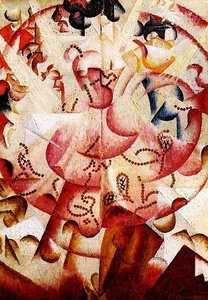
To gaze upon Gino Severini’s "Waltz" is not merely to observe a dance; it is to be swept into its very current. This painting captures the exhilarating, almost breathless energy of a Parisian nightclub in the early 20th century. The scene pulses with life—a dizzying confluence of bodies caught in the rhythmic embrace of the waltz. Severini has masterfully translated the ephemeral nature of movement into solid pigment, creating a…

5
Sea = Dancer (1914) by Ђино Северини

Sea = Dancer

1914 · Oil On Canvas

Gino Severini's Sea=Dancer, created in 1914, is a quintessential example of Futurist art. This oil on canvas painting, currently housed at the Solomon R. Guggenheim Museum in New York, captures the essence of motion and dance with vibrant colors and dynamic brushstrokes. Inspiration and Technique Severini's inspiration for Sea=Dancer came from his vacation in Anzio, Italy, where he was captivated by the movement of the sea. The painting reflects this…

Ђино Северини paintings ranked 11 to 68

11Synthèse plastique de l’idée: Guerre (1915) by Ђино СевериниSynthèse plastique de l’idée: Guerre1915 · Bavarske državne slikopisne kolekcije 12Composition: The Dove (1930) by Ђино СевериниComposition: The Dove1930 13Harlequins (1954) by Ђино СевериниHarlequins1954 14Dancer = Propeller = Sea (1915) by Ђино СевериниDancer = Propeller = Sea1915 · Metropoliten музеј у Њујорку 15Mosaic at the Church of St. Mark, Cortona, Italy by Ђино СевериниMosaic at the Church of St. Mark, Cortona, Italy 16Self-portrait by Ђино СевериниSelf-portrait 17Dancer + Sea + Equals Sailing Deck by Ђино СевериниDancer + Sea + Equals Sailing Deck 18Two Harlequins by Ђино СевериниTwo Harlequins 19The Boulevard (1911) by Ђино СевериниThe Boulevard1911 20Dancers at Monicos (1910) by Ђино СевериниDancers at Monicos1910 21Memories of Travel (1911) by Ђино СевериниMemories of Travel1911 22Portrait of Madame M-S (1912) by Ђино СевериниPortrait of Madame M-S1912 · Izraelski muzej 23Dancer (1912) by Ђино СевериниDancer1912 24Dancer in Pigalle (1912) by Ђино СевериниDancer in Pigalle1912 25Maternity (1916) by Ђино СевериниMaternity1916 26Visual Synthesis of the Idea: ''War'' (1914) by Ђино СевериниVisual Synthesis of the Idea: ''War''1914 27Still Life (1916) by Ђино СевериниStill Life1916 28Suburban Train Arriving in Paris (1915) by Ђино СевериниSuburban Train Arriving in Paris1915 29Train of the Wounded (1913) by Ђино СевериниTrain of the Wounded1913 30Still Life with Marsala Bottle (1917) by Ђино СевериниStill Life with Marsala Bottle1917 31Plastic Rhythm of the 14th of July (1913) by Ђино СевериниPlastic Rhythm of the 14th of July1913 32Ballerina in Blue (1912) by Ђино СевериниBallerina in Blue1912 33Red Cross Train Passing a Village (1915) by Ђино СевериниRed Cross Train Passing a Village1915 34The Accordion Player (1919) by Ђино СевериниThe Accordion Player1919 35Maternity (1927) by Ђино СевериниMaternity1927 36Flowers and masks (1930) by Ђино СевериниFlowers and masks1930 37Window with Doves (1931) by Ђино СевериниWindow with Doves1931 38La Marchesa Maria De Seta (1937) by Ђино СевериниLa Marchesa Maria De Seta1937 39Odalisque with Mirrors (1942) by Ђино СевериниOdalisque with Mirrors1942 40Still Life with the Dome of St. Peter's (1943) by Ђино СевериниStill Life with the Dome of St. Peter's1943 41On the Beach (1948) by Ђино СевериниOn the Beach1948 42A dancer (1950) by Ђино СевериниA dancer1950 43A spring (1952) by Ђино СевериниA spring1952 44Still life (1949) by Ђино СевериниStill life1949 45Still Life (1955) by Ђино СевериниStill Life1955 46The Cyclist (1956) by Ђино СевериниThe Cyclist1956 47The musicians (1955) by Ђино СевериниThe musicians1955 48Ballerina (1954) by Ђино СевериниBallerina1954 49Commedia dell'Arte (1958) by Ђино СевериниCommedia dell'Arte1958 50Still Life: Barbera (1918) by Ђино СевериниStill Life: Barbera1918 · Art Institute of Chicago 51Harlequin (1965) by Ђино СевериниHarlequin1965 52Still Life with Violin (1964) by Ђино СевериниStill Life with Violin1964 53Self-portrait (1908) by Ђино СевериниSelf-portrait1908 54North-South by Ђино СевериниNorth-SouthGalleria Civica di Arte Moderna e Contemporanea Torino 55The Black Cat by Ђино СевериниThe Black CatNacionalna galerija Kanade 56Untitled by Ђино СевериниUntitled 57Arrival by Ђино СевериниArrival 58Festival in Montmartre by Ђино СевериниFestival in MontmartreArt Institute of Chicago 59Dancers by Ђино СевериниDancers 60A dancer by Ђино СевериниA dancer 61The north-south by Ђино СевериниThe north-south 62Sea = Dancer by Ђино СевериниSea = Dancer 63Dancer + Sailing + Sea = Bouquet by Ђино СевериниDancer + Sailing + Sea = Bouquet 64Dynamism of a dancer by Ђино СевериниDynamism of a dancer 65Portrait of Madame M.S. by Ђино СевериниPortrait of Madame M.S. 66Ballerina - Bow - Sea by Ђино СевериниBallerina - Bow - Sea 67Still Life. Centrifugal Expansion of Colors. (1916) by Ђино СевериниStill Life. Centrifugal Expansion of Colors.1916 · Art Institute of Chicago 68Stations of the Cross (1947) by Ђино СевериниStations of the Cross1947

Ђино Северини paintings by subject

The four most frequent subjects in this ranking, with the top painting for each.

Museums holding Ђино Северини's originals

The 6 museums that hold the most of the paintings on this page.

Museum City Works by Ђино Северини Paintings from this list
Art Institute of Chicago, ČikagoArt Institute of Chicago Čikago 3 Still Life: Barbera, Festival in Montmartre, Still Life. Centrifugal Expansion of Colors.
Bavarske državne slikopisne kolekcije, MinhenBavarske državne slikopisne kolekcije Minhen 1 Synthèse plastique de l’idée: Guerre
Metropoliten музеј у Њујорку, ЊујоркMetropoliten музеј у Њујорку Њујорк 1 Dancer = Propeller = Sea
Izraelski muzej, JerusalimIzraelski muzej Jerusalim 1 Portrait of Madame M-S
Galleria Civica di Arte Moderna e Contemporanea Torino, TurinGalleria Civica di Arte Moderna e Contemporanea Torino Turin 1 North-South
Nacionalna galerija Kanade, OtavaNacionalna galerija Kanade Otava 1 The Black Cat

Ђино Северини by decade: the top painting of each

Works per decade

Select a decade to see its top painting.

Ђино Северини paintings: common questions

What is the most famous painting by Ђино Северини?Show answer

The Pan Pan at the Monico (1959) ranks first, followed by Armored Train in Action (1915) and Waltz.

What was Ђино Северини's age when The Pan Pan at the Monico was painted?Show answer

Ђино Северини was 76: The Pan Pan at the Monico is dated 1959, and Ђино Северини was born in 1883.

Which are the top 10 Ђино Северини paintings?Show answer

The Pan Pan at the Monico, Armored Train in Action, Waltz, Lancers, Sea = Dancer, Woman with Green Plant, The bear dance at the Moulin Rouge, Memories of Travel, The Haunting Dancer and The Concert. Year and museum for each are in the ranking above.

How many works by Ђино Северини do you list?Show answer

68 works by Ђино Северини are in our catalogue, dated 1908 to 1965.

Where are the original Ђино Северини paintings kept?Show answer

Mainly in Art Institute of Chicago (Čikago), Bavarske državne slikopisne kolekcije (Minhen) and Metropoliten музеј у Њујорку (Њујорк). See the museum table above for the full list.

Which period produced Ђино Северини's most famous paintings?Show answer

In 1910s: 25 of the 68 paintings ranked here date from that time, including Armored Train in Action.

Which are the earliest and latest famous Ђино Северини paintings?Show answer

Earliest on this page: Self-portrait (1908). Latest: Harlequin (1965).

What are the main subjects of Ђино Северини's paintings?Show answer

Among the 68 paintings ranked here: Music (18), Roads (7) and Life (7).

What medium are most Ђино Северини originals in?Show answer

Oil On Canvas, for 4 of the 68 paintings ranked here.

Which movement is Ђино Северини associated with?Show answer

Futurism and Cubism, based on the paintings ranked on this page.

Which Ђино Северини originals are at the Art Institute of Chicago?Show answer

The Art Institute of Chicago, Čikago holds 3 of the paintings ranked here, including Still Life: Barbera, Festival in Montmartre and Still Life. Centrifugal Expansion of Colors..

About the artist: Ђино Северини

Рани живот и семе за уметнички бунт

Ђино Северини је угледао свет 7. априла 1883. године, у живописном тосканском граду Кортони, Италија. Његови почеци су били скромни; отац нижи судски чиновник, мајка кројачица – позадина која га је научила и осетљивости на форму и свести о друштвеним структурама. Формално образовање се није показало прикладним за немирну душу младог Северинија. Испоштовао је петнаест година са колегама због млађачке непослушности која укључује украдене испитне радове, и нашао се избачен из конвенционалног школовања. Ово искључење, међутим, није било деструктивно већ катализатор, ослобађајући га да самостално тражи растуће уметничке тежње док је радио као службеник за испоруку робе. Прелазак у Рим 1899. године означио је преломну тачку; тамо, усред древних рушевина и живописног градског живота, започео је формалне часове цртања, брзо очаран сјајним ефектима дивизионизма – технике коју су заговарали уметници попут Ђакома Бале и Умберта Бочонија, који ће ускоро постати кључне фигуре у његовом уметничком путу. Ове формирајуће године положиле су основ за Северинијево касније прихватање футуризма, палећи му жељу да зароби динамику модерног живота.

Прихватање брзине футуризма

Позив да се придружи Филипу Томасу Маринетију и Умберту Бочонију у растућем футуристичком покрету показао се као трансформативни за Северинија. Постао је потписник *Манифеста футуристичких сликара* 1910. године, придружујући се револуционарној идеологији која слави брзину, технологију и опијајућу енергију модерности. Ово није био само уметнички избор; то је била филозофска посвећеност разбијању традиције и ковању новог естетског језика за брзо променљиви свет. Северини је играо кључну улогу у ширењу футуристичких идеја на међународном нивоу, посебно организовајући прву изложбу покрета ван Италије у Галерији Бернхајм-Јунге у Паризу 1912. године. Његов рад током овог периода, примерцено сликама попут *Север-Југ* (1915), отелотворује футуристичку опсесију заробљавањем кретања и енергије кроз фрагментиране облике и живописну, готово експлозивну палету. За разлику од неких својих колега који су се фокусирали на машине, Северини се често окретао градским сценама и плесачима као предметима, што је одражавало његову фасцинацију приказивањем ритмова и осећаја модерног живота – вртлог сукњи, блиц осветљења, пулсирајуће гомиле.

Синтеза стилова: кубизам и даље

Уметнички стил Северинија никада није био ограничен ригидном догмом; то је била константна еволуција синтезе утицаја. Иако дубоко укорењен у футуристичкој естетици, његов рад је такође показао дубоко ангажовање са кубизмом, посебно након његове кључне посете Паризу 1911. године. Упијао је елементе геометријске апстракције и фрагментираних перспектива, укључујући их у своје композиције да би створио динамичне аранжмане који су преносили осећај истовремености и кретања. Уметници попут Умберта Бочонија, Карла Каре и Ђовани Франческа Романелија били су значајни утицаји, али јединствена визија Северинија му је омогућила да пронађе свој пут. *Валц*, на пример, показује ово мајсторско спајање стилова – вртлог енергије плеса приказан кроз кубистичку призму, што резултира сликом која се осећа и хаотично и хармонично. Након Првог светског рата дошло је до промене у Северинијевом уметничком правцу, што одражава шире „враћање поретку“ које је преовладавало у Европи. Истраживао је класичне теме и облике, али је задржао своју карактеристичну употребу боја и композиције, демонстрирајући способност да се прилагоди и развија без напуштања основних естетских принципа.

Каснији радови и трајно наслеђе

Године које су уследиле после Првог светског рата виделе су Северинија како континуирано експериментише са различитим уметничким медијима, укључујући мозаик и фреску, проширујући своје креативне хоризонте ван платна. Делио је време између Париза и Рима, стварајући радове који су одражавали његово италијанско наслеђе и урањање у париску културу. Осим сликања, постао је плодан писац о теорији уметности, значајно доприносећи интелектуалном дискурсу око модернизма. Ђино Северини је преминуо у Паризу 26. фебруара 1966. године, у доби од 83 године, оставивши иза себе богат и многострани рад. Његово наслеђе као кључне фигуре футуристичког покрета – и значајног доприносача двадесетом веку Италијанске уметности – траје. Данас се његове слике чувају у познатим музејима широм света, укључујући Галерију Чивика ди Арте Модерна у Венецији, служећи као сведочење његовог трајног утицаја на развој модерне уметности и настављајући да инспиришу генерације уметника и гледалаца. Он остаје важна веза између прошлости и садашњости, подсећајући нас на моћ уметности да зароби енергију и сложеност човековог искуства.

All 68 works by Ђино Северини →