

1562. Olja på duk, 96.0 x 75.0 cm.

§ 1Katalogdata

- 96.0 x 75.0 cm


§ 2Abstrakt
Beskrivning av samlarobjekt
Upptäck Titian Ramsey Peale II:s mästerverk 'Porträtt av en man', ett detaljerat oljemål från Renässansen som fångar konstnärens introspektiva själfbild och klassisk stil.
 Visa mer
Konstnärens biografi
Upplev Titian Ramsay Peale II: Döden till Aktéon - ett mästerverk av italiensk renässanskonst och psykologisk djupdykning i National Gallery London.
§ 3Kommentarer
Titian Ramsey Peale II: A Renaissance Echo in the New World
Titian Ramsay Peale II occupies a fascinating, often overlooked niche within the landscape of 19th-century American art. Born in Philadelphia in 1799, he was steeped in artistic lineage as the youngest son of Charles Willson Peale, a pivotal figure in early American portraiture and founder of the nation’s first museum. While his father's legacy loomed large, Titian forged his own path, one deeply rooted in the aesthetic ideals of the High Renaissance, particularly those emanating from Venice. He wasn’t merely replicating styles; he was channeling a profound artistic sensibility, imbuing his canvases with a meticulous detail and vibrant color palette that set him apart from many of his contemporaries. His life unfolded against a backdrop of burgeoning American identity, yet his artistic heart remained tethered to the classical masters, creating a compelling tension between Old World reverence and New World expression.The Artist and His Work
Titian Ramsay Peale II was an American artist known for his contributions to the field of natural history illustration. However, this self-portrait showcases his versatility as a painter. The painting is dated 1562, which places it within the Renaissance period, a time when artists were experimenting with new techniques and styles. This careful consideration of chronology underscores Peale’s commitment to honoring artistic traditions while simultaneously forging his own distinctive voice—a hallmark of the era's intellectual ferment.Composition and Symbolism
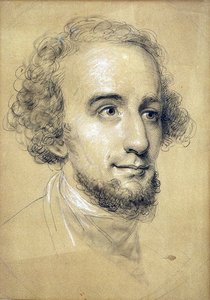
The self-portrait depicts the artist in a contemplative mood, dressed in a robe or long coat, possibly a cape, and adorned with a necklace. The stern expression on his face suggests a deep sense of introspection. This deliberate pose—characteristic of Renaissance portraiture—serves as more than just visual representation; it embodies the humanist preoccupation with self-awareness and moral contemplation prevalent during the period. The attire adds depth and texture to the scene, while the well-defined facial features capture the essence of the artist’s personality. Furthermore, the necklace symbolizes status and wealth, reflecting the social realities of Renaissance Italy—a subtle yet powerful element contributing to the painting's narrative complexity.Artistic Style
The painting is characterized by its Renaissance style, which was prevalent during the 15th to 17th centuries in Europe. This period saw a resurgence in classical Greek and Roman art forms, influencing the works of artists like Titian Ramsay Peale II. The use of oil on canvas gives the painting a rich and vibrant appearance, typical of Renaissance art. Artists meticulously blended pigments with linseed oil, achieving luminous colors and textural nuances that would have been unattainable with tempera—a testament to the advancements in artistic technique during this transformative era.Historical Context
The Renaissance was a time of great cultural and artistic transformation. Palazzo Vescovile in Pienza, Italy, is an example of a building that houses numerous masterpieces from this era. This historic building, also known as the Bishop’s Palace, has been home to many artworks since its construction in the 15th century. The palazzo stands as a symbol of humanist ideals—reason, beauty, and civic virtue—reflecting the broader intellectual currents shaping European society during the Renaissance. Its opulent interiors and carefully curated collections exemplify the artistic ambition of the time.Other Works by Titian Ramsay Peale II
Titian Ramsey Peale II was prolific in his work, producing several notable pieces. Some of his other works include:- Doge Antonio Grimani Kneeling Before the Faith
- Pieta
- Solome
For those interested in exploring more of his works, Titian Ramsay Peale II: Self-portrait is available on AllPaintingsStore.com.
Frågor och svar
Var rekommenderas det att visa "Porträtt av en man" i Porträttformat-formatet?
Format (Porträttformat) och rekommenderat utrymme (Vardagsrummet) är de två placeringsfakta som finns registrerade för "Porträtt av en man" av Titian Ramsay Peale II.
Vilken historisk plats har "Porträtt av en man" i konsthistorien?
Historiskt sett är "Porträtt av en man" ett Renaissance-verk från den bredare Renässansen-eran.
Vilka är måtten på originalet av "Porträtt av en man" av Titian Ramsay Peale II?
Originalet av "Porträtt av en man" av Titian Ramsay Peale II mäter 96 x 75 cm.


 Byt till tryck


 För konstverk eller reproduktioner som är större än 105 cm (cirka 41 tum) på någon sida, levereras ramen som ett isärplockat kit. Denna metod säkerställer en trygg leverans och förhindrar skador under transport.


