Pengarna tillbaka-garanti · 100 dagar Fri frakt i hela världen
643 303konstverk 52 888konstnärer 5 406museer 32språk
Porträtt av Adèle Riché

Adèle Richés målningar: De 1 mest kända, rankade

Uppdaterad november 2026 · rangordnad efter vår popularitetspoäng (sökningar, besök och beställningar för varje verk) · 1 verk av Adèle Riché i vår katalog

Snabbt svar

Det mest kända verket av Adèle Riché är Portrait of Natalia Obrenovich, Queen of Serbia (1876); originalet finns på Ermitaget i Sankt Petersburg. Av de 1 verk av Adèle Riché som finns i vår katalog är detta de 1 mest kända, rangordnade med årtal och museum, så att du kan välja den målning du vill beställa.

1791 – 1878, Paris Flest verk: Ermitaget

Topp 10 rankade målningar av Adèle Riché

1
Portrait of Natalia Obrenovich, Queen of Serbia (1876) av Adèle Riché

Portrait of Natalia Obrenovich, Queen of Serbia

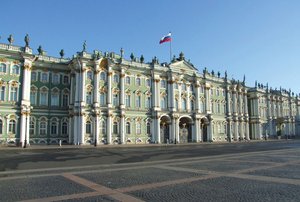
1876 · Oil On Canvas · Ermitaget, Sankt Petersburg

The Portrait of Natalia Obrenovich, Queen of Serbia is a painting by Adèle Riché. It captures the likeness of the woman born Natalia Keșco. She moved through the courts of Europe as the wife of King Milan I of Serbia. Her presence in the history of the Balkan monarchy was defined by her tenure as Queen Consort of Serbia from 1882 to 1889.

Handmålad oljereproduktion från $170 28 × 35 cm Samma storlek som originalet $252 55 × 69 cm Beställ i originalstorlek →
Beställ en handmålad kopia Om målningen

Museer som innehar Adèle Richés originalverk

Museet som innehar flest av målningarna på denna sida.

Museum Stad Verk av Adèle Riché Målningar från denna lista
Ermitaget, Sankt PetersburgErmitaget Sankt Petersburg 1 Portrait of Natalia Obrenovich, Queen of Serbia

Adèle Riché efter år: de främsta målningarna

Alla daterade Adèle Riché-målningar på denna sida är från 1876 och är listade här efter rang.

Verk per år

Välj ett år för att se dess målningar.

Adèle Richés målningar: vanliga frågor

Vilken är den mest kända målningen av Adèle Riché?Visa svar

Portrait of Natalia Obrenovich, Queen of Serbia (1876) rankar först.

Hur gammal var Adèle Riché när Portrait of Natalia Obrenovich, Queen of Serbia målades?Visa svar

Adèle Riché var 85 år gammal: Portrait of Natalia Obrenovich, Queen of Serbia är daterad 1876, och Adèle Riché föddes 1791.

Hur många verk av Adèle Riché finns listade?Visa svar

1 verk av Adèle Riché finns i vår katalog.

Var förvaras originalmålningarna av Adèle Riché?Visa svar

Främst i Ermitaget (Sankt Petersburg). Se museatabellen ovan för den fullständiga listan.

Kan jag beställa en reproduktion av Adèle Riché?Visa svar

Ja. Varje målning på denna sida kan beställas som en handmålad oljereproduktion eller som ett tryck. Öppna målningen, välj storlek och lägg din beställning.

Om konstnären: Adèle Riché

The Precision of the Botanical Eye

Adèle Riché did not merely paint flowers; she documented them with the clinical accuracy required by the French Natural History Museum in Paris. Born in 1791, she occupied a specific niche where art met science. Her lineage provided her entry into this world, as her father, François-Joseph Riché, served as the chief gardener of the Paris Jardin des Plantes. This proximity to living specimens shaped her technical development. She was not a self-taught amateur but a disciplined student of Jan Frans van Dael and Gerard van Spaendonck, masters who understood the structural necessity of botanical illustration.

Her work on vellum required a level of control that most painters never achieve. Working on such a surface demands immediate, decisive application, as mistakes cannot be easily erased. This technical rigor is evident in her watercolor and gouache works, such as her depiction of the Queen of the Night or Night-Flowering Cereus. She moved between the delicate requirements of entomological and natural painting and the more traditional demands of oil portraiture. While her still lifes leaned toward the watercolor medium, her portraits, including a likeness of Natalia Obrenovich, Queen of Serbia, utilized oil to meet the stylistic expectations of the era.

Technical Mastery and Scientific Contribution

Riché’s career was defined by a dual identity as both a fine artist and a scientific illustrator. Her ability to translate complex organic forms into clear, legible images earned her a gold medal at the 1831 Salon. This was not a hollow accolade; it recognized a specific command over her medium. Her illustrations for François André Michaux's 1813 Histoire des arbres forestiers de l'Amerique Septentrionale demonstrate her capacity to handle large-scale botanical subjects with the same precision she applied to small-scale watercolors on vellum.

Her professional circle included significant figures in the field of botanical art, such as Pierre-Joseph Redouté and Pancrace Bessa. These collaborations were not mere social connections but professional alignments with the leading specialists of the nineteenth century. Her output was diverse, spanning several distinct methods:

By the time of her death in Fontainebleau, France, Riché had established a body of work that bridged the gap between aesthetic composition and scientific record. She did not rely on abstraction; she relied on the truth of the specimen. Her legacy is found in the accuracy of her lines and the permanence of her botanical observations.