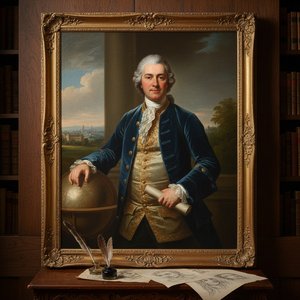
Thomas Stringer: A Painter of Equestrian Grace and Cheshire Landscapes
Thomas Stringer (1722-1790) remains a somewhat enigmatic figure in the annals of 18th-century British art, yet his captivating equine portraits and meticulously rendered landscapes offer a unique window into the world of aristocratic leisure and rural life. Born in Knutsford, Cheshire, a region steeped in gentry tradition, Stringer’s artistic journey was shaped by both innate talent and a series of influential encounters – from apprenticeship to patronage, and ultimately, a distinctive style that blended observation with a touch of whimsical invention.
Early life provided little indication of the artist he would become. He began as a servant in the household of Peter Legh, a prominent local landowner, an experience that instilled a keen eye for detail and a familiarity with the rhythms of rural existence. However, a falling out led to his departure, setting him on a path toward establishing himself as a professional painter. This early period undoubtedly honed his skills in capturing animal forms – a crucial element in his later success.
The Rise of an Equestrian Portraitist
Stringer’s career truly blossomed during the mid-18th century, coinciding with a surge in demand for portraits of horses and their riders. The aristocratic pursuit of hunting and equestrian sport fueled this trend, creating a lucrative market for artists capable of depicting these subjects with grace and accuracy. Stringer quickly gained recognition for his ability to capture not just the physical appearance of the animals but also their spirit and movement. His paintings weren’t merely representations; they conveyed a sense of dynamism and connection between horse and rider.
His commissions came primarily from wealthy landowners in Cheshire and beyond – families like the Brooke, Heron, and Smith-Barry, all prominent figures within the region's social and economic landscape. These patrons sought portraits that reflected their status and celebrated their sporting pursuits. Stringer’s work became synonymous with this aristocratic ideal, showcasing a refined aesthetic and an appreciation for the beauty of the countryside.
A Distinctive Style: Observation and Illusion
Stringer's artistic style is immediately recognizable, characterized by a unique blend of observation and illusionistic technique. He possessed a remarkable ability to render details with precision – from the texture of horsehair to the folds in a rider’s clothing – yet he frequently employed techniques that subtly altered the viewer’s perception of space. A common feature of his paintings is the tendency to “disappear” elements into the background, creating an impression of depth and movement. This technique, often described as a form of visual trickery, adds a layer of complexity and intrigue to his compositions.
His use of color was also notable – favoring muted tones and earthy hues that evoked the natural world. He skillfully employed light and shadow to create a sense of atmosphere and drama, further enhancing the realism of his subjects. The signature element of many of his works is the nonchalant crossing of the sitter’s legs, a detail that adds a touch of informality and personality to the portraits.
Notable Works and Legacy
Among Stringer's most celebrated paintings are “Beauty, a dapple grey,” a captivating portrait of a young mare, and "A gentleman with his hounds in an extensive landscape," which offers a glimpse into the aristocratic pursuit of hunting. “View, Supposedly of Poynton Hall, Cheshire” is another significant work, showcasing Stringer’s ability to capture the beauty of the English countryside.
Despite his prolific output and considerable reputation during his lifetime, Stringer faded from public view after his death in 1790. For many years, his work was largely overlooked, overshadowed by more prominent artists of the era. However, in recent decades, a renewed interest in 18th-century British art has led to a reassessment of Stringer’s contribution – recognizing him as a skilled and imaginative painter who deserves greater recognition for his unique artistic vision. His paintings continue to be exhibited and studied, offering valuable insights into the social and cultural life of Georgian England.
Further Research
For further information on Thomas Stringer, consider exploring these resources:
- Wikipedia Entry: Thomas Stringer (carpenter)
- Web Gallery of Art: Thomas Stringer
- Art UK: Thomas Stringer
Frågor och svar
Hur utvecklades Thomas Stringers konst över tid?
Thomas Stringers karriär presenteras period för period på artistens Karriärlinje-sida: en horisontell tidslinje över konstverken, uppdelade i kapitel efter olika karriärperioder.
Kan jag utforska Thomas Stringers verk efter motiv?
Ämnesindex för Thomas Stringer är en sida som kategoriserar konstnärens verk efter deras motiv.
Hur många konstverk av Thomas Stringer finns tillgängliga att bläddra bland?
Du kan bläddra bland 19 konstverk verk av Thomas Stringer på sidan Samtliga konstverk.