Hızlı yanıt
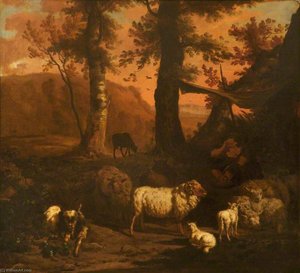
Dirck van der Bergen'in tabloları arasında bir numara Farmyard with a woman and farm animals (1650)'tir. İkinci ve üçüncü sırada: Landscape and Animals (1668) ve Cattle in a Rocky Landscape (1680). Kataloğumuzda Dirck van der Bergen tarafından yapılmış 39 eser bulunmaktadır. Burada sıralanan 39 eser, her bir orijinalin yılı ve müzesiyle birlikte, en ünlülerden başlayarak sıralanmıştır.
En iyi 10: Dirck van der Bergen'in en ünlü tabloları
11 ile 39 arası sıralama: daha fazla Dirck van der Bergen tablosu
Dirck van der Bergen tabloları (konuya göre)
Bu sıralamadaki en sık rastlanan dört konu ve her biri için en iyi tablo.
Rural life 2 eser
Landscape painting 2 eser
Landscape 2 eser
Dirck van der Bergen'in orijinal eserlerinin bulunduğu müzeler
Bu sayfadaki tabloların çoğuna ev sahipliği yapan 8 müze.
| Müze | Şehir | Dirck van der Bergen Eserleri | Bu listedeki tablolar |
|---|---|---|---|
| Thames | 16 | Night Scene with Figures Grouped around a Fire, Landscape with a Milkmaid Milking a Cow, a Farm Dwelling, Cows, Sheep and a Donkey, A Landscape with an Antique Tomb with a Ruined Urn, a Herdsboy and Shepherd Girl, Cattle, Sheep, and a Goat | |
| Amsterdam | 4 | Landscape with Herdsmen and Cattle near a Tomb, Dirck van Bergen, 1660 - 1690, landscape with fighting bulls, Landscape with Herdsmen and Cattle, Dirck van Bergen, 1660 - 1690 | |
| Dublin | 2 | Cattle in a Rocky Landscape, The Old White Horse | |
| Anvers | 2 | Landscape with a Spinner and Cattle, Landscape with a Shepherd | |
| Viyana | 1 | Mountainous landscape with a shepherdess and cows | |
| Gouda | 1 | Resting Cattle near a Grave monument | |
| Helsinki | 1 | Meadow Landscape | |
| Stockholm | 1 | Cattle near a Barn |
Her on yılın en iyi Dirck van der Bergen tablosu
On yıllara göre eserler
En iyi tablosunu görmek için bir on yıl seçin.
Landscape with Herdsmen and Cattle near a Tomb, Dirck van Bergen, 1660 - 1690
Italian landscape with shepherds and cattle resting at a decaying antique tomb. A goat is milked by a girl.
Dirck van der Bergen tabloları: SSS
Dirck van der Bergen'in en ünlü eseri hangisidir?Cevabı göster
Farmyard with a woman and farm animals (1650) birinci sırada yer alırken, onu Landscape and Animals (1668) ve Cattle in a Rocky Landscape (1680) takip ediyor.
En ünlü on Dirck van der Bergen tablosu hangileridir?Cevabı göster
Farmyard with a woman and farm animals, Landscape and Animals, Cattle in a Rocky Landscape, Mountainous landscape with a shepherdess and cows, Resting Cattle near a Grave monument, Night Scene with Figures Grouped around a Fire, Landscape with a Milkmaid Milking a Cow, a Farm Dwelling, Cows, Sheep and a Donkey, A Landscape with an Antique Tomb with a Ruined Urn, a Herdsboy and Shepherd Girl, Cattle, Sheep, and a Goat, Landscape with Figures, Cattle, Sheep and a Castle in the Distance ve Meadow Landscape. Her birinin yılı ve müzesi yukarıdaki sıralamada yer almaktadır.
Dirck van der Bergen tarafından yapılmış kaç tablo listeleniyor?Cevabı göster
Dirck van der Bergen tarafından yapılan 39 eser, 1665 ile 1690 tarihleri arasında katalogumuzda yer almaktadır.
Dirck van der Bergen'in en ünlü orijinal eserleri hangi müzelerde sergilenmektedir?Cevabı göster
Ağırlıklı olarak National Trust (Thames), Rijksmuseum (Amsterdam) ve National Gallery of Ireland (Dublin) bünyesinde bulunmaktadır. Tam liste için yukarıdaki müze tablosuna bakınız.
En iyi Dirck van der Bergen tabloları ne zaman yapıldı?Cevabı göster
1670s döneminde: Buradaki 39 tablodan 20 tanesi, Night Scene with Figures Grouped around a Fire dahil olmak üzere, o döneme aittir.
Dirck van der Bergen sanatçısının en eski ve en yeni ünlü tabloları hangileridir?Cevabı göster
Bu sayfadaki en eski eser: Two Calves, a Sheep and a Dun Horse by a Ruin (1665). En yeni eser: Landscape with Herdsmen and Cattle near a Tomb, Dirck van Bergen, 1660 - 1690 (1690).
Dirck van der Bergen'in tablolarında en çok hangi konular yer alıyor?Cevabı göster
Burada sıralanan 39 tablo arasından: Rural life (2), Landscape painting (2) ve Landscape (2).
Dirck van der Bergen'in tabloları hangi akıma aittir?Cevabı göster
Baroque ve Dutch golden age, bu sayfadaki sıralamaya göre seçilen tablolar temel alınarak oluşturulmuştur.
National Trust bünyesinde hangi ünlü Dirck van der Bergen tabloları bulunuyor?Cevabı göster
National Trust, Thames, Night Scene with Figures Grouped around a Fire, Landscape with a Milkmaid Milking a Cow, a Farm Dwelling, Cows, Sheep and a Donkey ve A Landscape with an Antique Tomb with a Ruined Urn, a Herdsboy and Shepherd Girl, Cattle, Sheep, and a Goat dahil olmak üzere burada sıralanan tablolardan 16 tanesine ev sahipliği yapmaktadır.
Dirck van der Bergen tablosunu reprodüksiyon olarak satın alabilir miyim?Cevabı göster
Evet. Bu sayfadaki tüm tablolar, el yapımı yağlı boya reprodüksiyon veya baskı olarak sipariş edilebilir. Tabloyu açın, boyutu seçin ve siparişinizi verin.
Dirck van der Bergen: tabloların arkasındaki sanatçı
The Quiet Brilliance of Dirck van den Bergen
In the golden twilight of the Dutch Golden Age, a period defined by the monumental shadows of Rembrandt and the sweeping grandeur of Rubens, there existed a more intimate form of mastery. Dirck van den Bergen (1645 – c. 1700) emerged as a painter of profound subtlety, a master of the landscape who found the extraordinary within the ordinary. While history often favors the dramatic, van den Bergen’s work offers a different kind of enchantment—one rooted in the tranquil, atmospheric beauty of the Dutch and Flemish countryside. His canvases do not shout; instead, they whisper of moonlit pastures, the rhythmic toil of rural life, and the soft, shifting light that defines the northern European spirit.
Though much of his early life remains shrouded in the mists of time, we know that van den Bergen’s artistic soul was shaped by the rigorous traditions of his era. Born around 1645, he likely found his footing through the guidance of established masters. While some records suggest an apprenticeship under the Antwerp landscape painter Jacob Savertijns, other historical accounts point to him being a pupil of Adriaen van de Velde, a connection that would have deeply influenced his ability to capture delicate pastoral scenes. This formative training instilled in him a lifelong devotion to Baroque realism, a style where the meticulous observation of nature meets an almost poetic sense of atmosphere.
A Mastery of Light and Earthly Texture
To gaze upon a van den Bergen landscape is to experience the tactile reality of the seventeenth century. He possessed a singular ability to render the textures of the natural world, employing the impasto technique—the thick, sculptural application of paint—to breathe life into his subjects. Under his brush, the coarse wool of a sheep, the heavy hide of a grazing cow, and the weathered stone of an ancient ruin all possess a palpable weight and presence. His palette was one of sophisticated restraint, favoring the earthy, muted tones of ochre, umber, and slate grey, which allowed the subtle interplay of light to become the true protagonist of his compositions.
His oeuvre, consisting of approximately eighty known works, frequently explores the intersection of human presence and the vastness of nature. In masterpieces such as “Landscape with a Milkmaid Milking a Cow” (1677), we see his ability to transform a simple moment of agricultural labor into a scene of timeless grace. He was equally adept at capturing the nocturnal mysteries of the landscape; his “Night Scene with Figures Grouped around a Fire” demonstrates a breathtaking command over chiaroscuro, using the flickering glow of a campfire to pierce through the velvety darkness of a moonlit Dutch night. These works are not merely depictions of scenery but are emotional landscapes that evoke a sense of peace, solitude, and the enduring cycle of rural life.
Legacy and Historical Resonance
The significance of Dirck van den Bergen lies in his role as a bridge between the high drama of the early Baroque and the more refined, observational styles that followed. While he may not have sought the international fame of his contemporaries, his influence rippled through the generations of landscape painters who valued accuracy and atmospheric depth. His work provided a blueprint for capturing the pastoral ideal—a vision of the world that is both grounded in physical reality and elevated by artistic sensitivity.
As we reflect on his life, which saw him move between the vibrant art centers of Antwerp and Amsterdam before eventually settling in Haarlem, we see an artist who was deeply attuned to the rhythms of his time. His ability to find majesty in a herd of cattle or beauty in a ruined urn serves as a testament to the power of the observant eye. Today, his paintings remain vital touchstones for anyone seeking to understand the quiet, enduring heart of Dutch and Flemish landscape art, reminding us that true brilliance often resides in the most understated of moments.