Para İadesi Garantisi · 100 gün Dünya Çapında Ücretsiz Teslimat
646.446sanat eserleri 53.409sanatçılar 5.406müzeler 32Dil Seçenekleri
Jacques De Lajoue portresi

Jacques De Lajoue Tabloları: En Ünlü 20 Eser, Sıralanmış

Ekim 2026 tarihinde güncellendi · popülerlik puanımıza göre sıralanmıştır (her bir eser için aramalar, ziyaretler ve siparişler) · 21 eser Jacques De Lajoue kataloğumuzda

Hızlı yanıt

Jacques De Lajoue tarafından yapılan en ünlü tablo Scene in a Park (1740) eseridir; orijinali Saint Petersburg, Hermitaj Müzesi bünyesinde bulunmaktadır. Presumed Portrait of Abbé Jean-Antoine Nollet (1700-1770) (1740) ve Bonnier de La Mosson's Cabinet of Physics (1734) iki ve üç sayılarındandır. Katalogumuzdaki Jacques De Lajoue imzalı 21 eser arasından, en ünlü 20 eser; her biri yılı ve müzesiyle birlikte sıralanmış olarak, sipariş vereceğiniz tabloyu seçebilmeniz için aşağıda sunulmuştur.

1686 – 1761, Paris Rococo En çok eser: National Trust

Sıralanmış en iyi 10 Jacques De Lajoue tablosu

1
Scene in a Park (1740) tarafından Jacques De Lajoue

Scene in a Park

1740 · Oil · Hermitaj Müzesi, Saint Petersburg

The afternoon sun filters through the canopy, casting a soft, diffused light over a tranquil park setting. A man sits quietly on a bench, lost in thought, while nearby, another figure stands in a moment of stillness. To the right, a woman rests upon her own bench, her presence adding to the peaceful rhythm of the afternoon. The air feels heavy with the scent of greenery and the gentle movement…

Hand-painted oil reproduction from $170 37 × 27 cm Same size as the original $492 126 × 95 cm Order at original size →
Bu tabloyu sipariş edin Tablo detayları
6
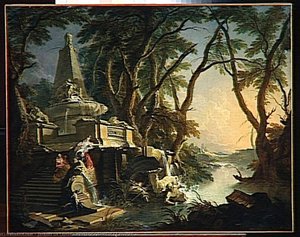
PAYSAGE COMPOSE LA RIVIERE tarafından Jacques De Lajoue

PAYSAGE COMPOSE LA RIVIERE

Oil On Canvas · Louvre Müzesi, Paris

To gaze upon Jacques de Lajoue's PAYSAGE COMPOSE LA RIVIERE is to step across the threshold into an idealized memory, a place where nature and human artistry achieve perfect, serene harmony. This masterful oil on canvas does not merely depict a river valley; it captures the very essence of pastoral repose. The composition unfolds with an almost breath-taking grace, drawing the viewer deep into its depths through meticulous planning and…

Hand-painted oil reproduction from $195 36 × 28 cm
Bu tabloyu sipariş edin Tablo detayları
7
La famille de l'artiste tarafından Jacques De Lajoue

La famille de l'artiste

Oil On Canvas · Louvre Müzesi, Paris

In this intimate 1737 portrait, titled La famille de l'artiste, Jacques De Lajoue captures a moment of domestic presence that feels almost immediate. Known also as Self-Portrait with Family, the work invites us into the private sphere of the artist himself. Jacques De Lajoue, a painter of significant technical precision, places himself at the center of this family tableau, surrounded by those who share his life. The scene is not…

Hand-painted oil reproduction from $220 28 × 36 cm
El yapımı bir kopya sipariş edin Tablo hakkında

Jacques De Lajoue tabloları 11. ile 20. sıra arasında sıralanıyor

Jacques De Lajoue tabloları (konuya göre)

Bu sıralamadaki en sık rastlanan dört konu ve her biri için en iyi tablo.

Jacques De Lajoue'in orijinal eserlerinin bulunduğu müzeler

Bu sayfadaki tabloların çoğuna ev sahipliği yapan 6 müze.

Müze Şehir Jacques De Lajoue Eserleri Bu listedeki tablolar
National Trust, Waddesdon ManorNational Trust Waddesdon Manor 4 Neptune's Fountain, Garden With Eastern Figures, Overdoor With A Faun And Two Putti Feeding A Lioness
Louvre Müzesi, ParisLouvre Müzesi Paris 3 PAYSAGE COMPOSE LA RIVIERE, La famille de l'artiste, PAYSAGE AVEC ARCHITECTURES DE FANTAISIE
Hermitaj Müzesi, Saint PetersburgHermitaj Müzesi Saint Petersburg 1 Scene in a Park
Carnavalet Müzesi, ParisCarnavalet Müzesi Paris 1 Presumed Portrait of Abbé Jean-Antoine Nollet (1700-1770)
Musee Baron Martin, GrayMusee Baron Martin Gray 1 Perspective with a Palace Facade and Fountains in a Park
Metropolitan Sanat Müzesi, New YorkMetropolitan Sanat Müzesi New York 1 Allegory of Winter

on yıllara göre Jacques De Lajoue: her on yılın en iyi tablosu

On yıllara göre eserler

En iyi tablosunu görmek için bir on yıl seçin.

Jacques De Lajoue tabloları: sıkça sorulan sorular

Jacques De Lajoue tarafından yapılmış en ünlü tablo hangisidir?Cevabı göster

Scene in a Park (1740), Hermitaj Müzesi, Saint Petersburg, birinci sırada yer alırken, onu Presumed Portrait of Abbé Jean-Antoine Nollet (1700-1770) (1740) ve Bonnier de La Mosson's Cabinet of Physics (1734) takip ediyor.

Scene in a Park yapıtı boyanırken Jacques De Lajoue kaç yaşındaydı?Cevabı göster

Jacques De Lajoue 54 yaşındaydı: Scene in a Park 1740 tarihli bir eserdir ve Jacques De Lajoue 1686 yılında doğmuştur.

En iyi 10 Jacques De Lajoue tablosu hangileridir?Cevabı göster

Scene in a Park, Presumed Portrait of Abbé Jean-Antoine Nollet (1700-1770), Bonnier de La Mosson's Cabinet of Physics, Perspective with Staircase, Perspective with a Palace Facade and Fountains in a Park, PAYSAGE COMPOSE LA RIVIERE, La famille de l'artiste, Winter, Neptune's Fountain ve Fantaisie architecturale. Her birinin yılı ve müzesi yukarıdaki sıralamada yer almaktadır.

Jacques De Lajoue tarafından yapılmış kaç eser listeleniyor?Cevabı göster

Jacques De Lajoue tarafından yapılan 21 eser, 1731 ile 1750 tarihleri arasında katalogumuzda yer almaktadır.

Orijinal Jacques De Lajoue tabloları nerede sergileniyor?Cevabı göster

Ağırlıklı olarak National Trust (Waddesdon Manor), Louvre Müzesi (Paris) ve Hermitaj Müzesi (Saint Petersburg) bünyesinde bulunmaktadır. Tam liste için yukarıdaki müze tablosuna bakınız.

Jacques De Lajoue'in en ünlü tabloları hangi dönemde yapılmıştır?Cevabı göster

1730s döneminde: Buradaki 20 tablodan 2 tanesi, Bonnier de La Mosson's Cabinet of Physics dahil olmak üzere, o döneme aittir.

Jacques De Lajoue üslubundaki en eski ve en yeni ünlü tablolar hangileridir?Cevabı göster

Bu sayfadaki en eski eser: Perspective with Staircase (1731). En yeni eser: Perspective with a Palace Facade and Fountains in a Park (1750).

Jacques De Lajoue'in tablolarının ana temaları nelerdir?Cevabı göster

Burada sıralanan 20 tablo arasından: Fountains (3), Landscape (2) ve Winter (2).

Jacques De Lajoue orijinal eserlerinin çoğu hangi teknikle yapılmıştır?Cevabı göster

Burada sıralanan 20 tablonun 3 tanesi Oil On Canvas türündedir.

Jacques De Lajoue hangi akımla ilişkilendiriliyor?Cevabı göster

Rococo, bu sayfadaki sıralamaya göre seçilen tablolar temel alınarak oluşturulmuştur.

National Trust bünyesinde hangi Jacques De Lajoue orijinalleri bulunuyor?Cevabı göster

National Trust, Waddesdon Manor, Neptune's Fountain, Garden With Eastern Figures ve Overdoor With A Faun And Two Putti Feeding A Lioness dahil olmak üzere burada sıralanan tablolardan 4 tanesine ev sahipliği yapmaktadır.

Jacques De Lajoue reprodüksiyonu sipariş edebilir miyim?Cevabı göster

Evet. Bu sayfadaki tüm tablolar, el yapımı yağlı boya reprodüksiyon veya baskı olarak sipariş edilebilir. Tabloyu açın, boyutu seçin ve siparişinizi verin.

Sanatçı hakkında: Jacques De Lajoue

The Architect of Dreams: The Life and Legacy of Jacques de Lajoue

Born in the vibrant heart of Paris in 1686, Jacques de Lajoue emerged as a painter of profound elegance, a master capable of weaving architectural precision with the ethereal softness of the French landscape. His life unfolded during one of the most opulent eras in European history, moving through the twilight of Louis XIV’s reign and into the burgeoning grace of the 18th century. While his name may not resonate with the same immediate thunder as contemporaries like Boucher or Watteau, Lajoue occupied a unique niche in the French canon, serving as an artist who could bridge the gap between the rigid grandeur of classical structure and the delicate, emotive spirit of the Rococo.

The foundation of Lajoue’s technical mastery can be traced back to his apprenticeship under the celebrated Flemish painter Jean-Baptiste Oudry. This mentorship was pivotal, as Oudry, renowned for his meticulous animal portraits and naturalistic landscapes, instilled in Lajous a rigorous devotion to observation. From Oudry, Lajoue inherited an ability to render the textures of the natural world—the shimmer of water, the density of foliage, and the subtle shifts of light—with a scientific accuracy that never sacrificed poetic beauty. This duality of precision and poetry became the hallmark of his mature style, allowing him to create worlds that felt both physically tangible and dreamlike.

Architectural Fantasies and the Neoclassical Vision

Lajoue is perhaps most celebrated for his architectural fantasies, canvases that served as windows into an idealized, classical past. These works were not mere depictions of existing structures but were instead monumental visions of palaces, temples, and manicured gardens designed to evoke a sense of mathematical harmony and sublime order. In pieces such as "Fantaisie architecturale," the viewer is invited to wander through spaces where neoclassical elegance meets the untamed beauty of nature. His ability to compose these grand structures within lush settings allowed him to capture the very essence of the neoclassical aesthetic, emphasizing symmetry, balance, and a nostalgic reverence for antiquity.

Beyond the stone and marble of his architectural visions, Lajoue possessed a remarkable sensitivity to the landscape. His river scenes, such as "Paysage composé la rivière," demonstrate a masterful command of atmosphere. In these works, the classical elements—perhaps a weathered temple or a stone bridge—are integrated seamlessly into a serene, flowing environment. The light in his landscapes often possesses a soft, diffused quality, reminiscent of the Rococo movement, which lends a sense of tranquility and timelessness to his compositions. This mastery extended even to more intimate subjects; in "La famille de l'artiste," he utilized an idyllic garden setting to frame a family portrait, blending the formal requirements of portraiture with the romanticism of the natural world.

A Lasting Impression on French Art

The significance of Jacques de Lajoue lies in his ability to capture the shifting cultural tides of 18th-century France. As the era moved from the heavy, formal grandeur of the late Baroque toward the lighter, more decorative Rococo and eventually the structured Neoclassical, Lajoue’s work mirrored these transitions. His use of pastel—a medium that allowed for a delicate, velvety texture—exemplified his ability to convey subtle emotions, such as the melancholic stillness found in his "Allegory of Winter."

Ultimately, the legacy of Jacques de Lajoue is one of balance. He balanced the structural with the organic, the historical with the imaginary, and the precise with the atmospheric. His works remain vital studies in how an artist can use the language of architecture to express the soul of a landscape, leaving behind a body of work that continues to enchant those drawn to the elegance and mystery of the French classical tradition.