Para İadesi Garantisi · 100 gün Dünya Çapında Ücretsiz Teslimat
646.446sanat eserleri 53.409sanatçılar 5.406müzeler 32Dil Seçenekleri
Jim Nutt portresi

The Top 6 Jim Nutt Paintings, Ranked by Fame

Ekim 2026 tarihinde güncellendi · popülerlik puanımıza göre sıralanmıştır (her bir eser için aramalar, ziyaretler ve siparişler) · 6 eser Jim Nutt kataloğumuzda

Hızlı yanıt

Untitled (1966), Jim Nutt tarafından yapılmış en ünlü tablodur; orijinali Chicago, Şikago Sanat Enstitüsü bünyesinde bulunmaktadır. Miss E. Knows (1967) ikinci, Rosie Comon (1968) ise üçüncü sırada yer alıyor. Kataloğumuzda Jim Nutt tarafından yapılmış 6 eser bulunmaktadır; sipariş vereceğiniz eseri seçmenize yardımcı olmak amacıyla, en ünlü 6 eser; her birinin yılı ve bulunduğu müze ile birlikte sıralanmış olarak burada yer almaktadır.

1938 doğumlu, Pittsfield En çok eser: Şikago Sanat Enstitüsü

Jim Nutt: en iyi sıralamadaki 10 tablo

6
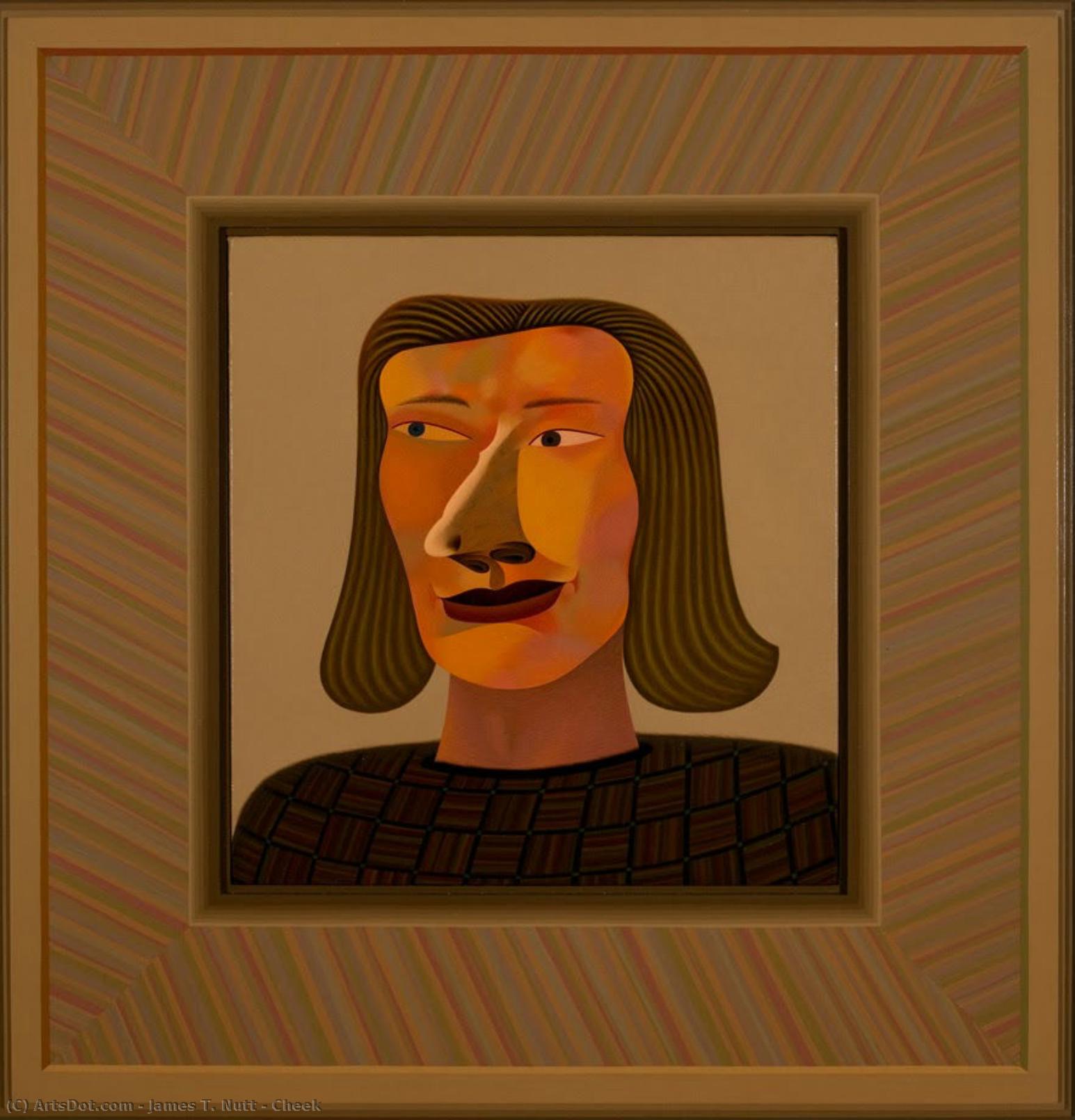
Cheek (1991) tarafından Jim Nutt

Cheek

1991 · Acrylic · Madison Museum of Contemporary Art, Madison

In the evocative painting Cheek, created in 1991 by the master of surrealist intensity, James T. Nutt, we are invited into a profound and unsettling encounter with the human form. The work presents a striking portrait of a woman, her face emerging from a deep, earthen brown background that feels both intimate and infinite. There is an immediate, magnetic pull in her gaze; she looks directly at the viewer, bridging…

Jim Nutt'in orijinal eserlerinin bulunduğu müzeler

Bu sayfadaki tabloların çoğuna ev sahipliği yapan 2 müze.

Müze Şehir Jim Nutt Eserleri Bu listedeki tablolar
Şikago Sanat Enstitüsü, ChicagoŞikago Sanat Enstitüsü Chicago 3 Untitled, Miss E. Knows, Lip Thrashed
Madison Museum of Contemporary Art, MadisonMadison Museum of Contemporary Art Madison 3 Rosie Comon, Toot and Toe, Cheek

On yıllara göre en iyi Jim Nutt tabloları

On yıllara göre eserler

En iyi tablosunu görmek için bir on yıl seçin.

Jim Nutt tabloları hakkında bilmeniz gerekenler

Sıralamanın başında hangi ünlü Jim Nutt tablosu yer alıyor?Cevabı göster

Untitled (1966), Şikago Sanat Enstitüsü, Chicago, birinci sırada yer alırken, onu Miss E. Knows (1967) ve Rosie Comon (1968) takip ediyor.

Untitled yılında Jim Nutt kaç yaşındaydı?Cevabı göster

Jim Nutt 28 yaşındaydı: Untitled 1966 tarihli bir eserdir ve Jim Nutt 1938 yılında doğmuştur.

Kataloğunuzda kaç adet Jim Nutt eseri listeleniyor?Cevabı göster

Jim Nutt tarafından yapılan 6 eser, 1966 ile 1991 tarihleri arasında katalogumuzda yer almaktadır.

Jim Nutt tarafından yapılan ünlü tabloların orijinalleri nerede görülebilir?Cevabı göster

Ağırlıklı olarak Şikago Sanat Enstitüsü (Chicago) ve Madison Museum of Contemporary Art (Madison) bünyesinde bulunmaktadır. Tam liste için yukarıdaki müze tablosuna bakınız.

Jim Nutt en üst sıralardaki eserlerini hangi yıllarda yaptı?Cevabı göster

1960s döneminde: Buradaki 6 tablodan 4 tanesi, Untitled dahil olmak üzere, o döneme aittir.

Hangi ünlü Jim Nutt tabloları en eski ve en yenidir?Cevabı göster

Bu sayfadaki en eski eser: Untitled (1966). En yeni eser: Cheek (1991).

Şikago Sanat Enstitüsü bünyesinde hangi Jim Nutt tabloları bulunmaktadır?Cevabı göster

Şikago Sanat Enstitüsü, Chicago, Untitled, Miss E. Knows ve Lip Thrashed dahil olmak üzere burada sıralanan tablolardan 3 tanesine ev sahipliği yapmaktadır.

Jim Nutt: yaşamı ve kariyeri

A Chicago Visionary: The Surreal World of James T. Nutt

James T. Nutt, born in Pittsfield, Massachusetts, in 1938, emerged as a pivotal figure in the vibrant and iconoclastic art scene of mid-century Chicago. He wasn’t simply *part* of a movement; he helped define it. Along with fellow artists like Gladys Nilsson – who would become his wife – Nutt was instrumental in forging the distinctive aesthetic of the Chicago Imagists, also known as the Hairy Who. This collective, born from the fertile ground of the School of the Art Institute of Chicago, rejected the prevailing cool detachment of East Coast Pop Art, opting instead for a raw, intensely personal, and often deliberately unsettling vision. Nutt’s journey wasn't one of immediate recognition; it was a gradual unfolding of a unique artistic language steeped in both high art tradition and the vernacular exuberance of popular culture.

Early Influences and the Formation of the Hairy Who

Nutt’s academic path was somewhat circuitous, drifting through studies of drawing and architecture before finding his true home at the Art Institute of Chicago in 1960. It was there he encountered Nilsson, a partnership that would prove both personally and artistically transformative. Crucially, they came under the mentorship of Whitney Halstead, an art history professor who provided intellectual guidance and encouragement. Halstead introduced them to Don Baum, whose Hyde Park Art Center became a crucial exhibition space for their burgeoning group. The Hairy Who’s initial 1966 show was a deliberate provocation—a rejection of minimalist formalism in favor of intensely figurative work brimming with sexual energy, cartoonish imagery, and a deliberately “bad taste” aesthetic. They drew inspiration from sources often dismissed by the art establishment: pulp magazines, advertising, comics, folk art, and even tattoos. However, Nutt’s work wasn't merely appropriation; it was a complex synthesis of these elements filtered through a deeply personal sensibility. He didn’t simply *use* pop culture imagery; he dissected it, reconfigured it, and imbued it with a psychological weight that set his paintings apart.

Developing a Distinctive Style: Line, Color, and the Grotesque

Nutt's artistic development saw him refine a style characterized by bold lines, saturated color palettes, and an embrace of the grotesque. His early works often employed plexiglass as a support, painting on the reverse side—a challenging technique that demanded precision and allowed for a unique luminosity. This process contributed to the density and immediacy of his compositions. The figures in these paintings are rarely conventionally beautiful; they’re bulbous, misshapen, and often fragmented, evoking a sense of both fascination and unease. Critics have noted the influence of European Expressionism and Surrealism, but Nutt's work is distinctly American—rooted in a specific cultural context and infused with a uniquely subversive humor. He wasn’t interested in replicating reality; he sought to reveal the hidden anxieties and desires lurking beneath its surface. His paintings are populated by hybrid creatures, distorted bodies, and ambiguous narratives that invite multiple interpretations. The meticulous craftsmanship belies the seemingly chaotic energy of his compositions—each line, each color choice is deliberate, contributing to a carefully constructed visual world.

Recognition and Lasting Impact

While initially met with resistance from some corners of the art world, Nutt’s work gradually gained recognition for its originality and uncompromising vision. He was one of six artists representing the United States at the 1972 Venice Biennale—a significant achievement that brought international attention to the Chicago Imagist movement. Major exhibitions followed at institutions like the Museum of Contemporary Art in Chicago, the Milwaukee Art Museum, and the Whitney Museum of American Art. Throughout his career, Nutt has consistently pushed the boundaries of figurative painting, challenging conventional notions of beauty and taste. His influence can be seen in the work of numerous contemporary artists who embrace a similar blend of high art and low culture, psychological depth and visual exuberance. He is often lauded as “the premier artist of his generation” by curators like Lynne Warren, a testament to the enduring power and originality of his vision.

A Legacy of Surreal Exploration

James T. Nutt’s contribution extends beyond his individual paintings; he helped establish a new paradigm for figurative art—one that embraced subjectivity, challenged established norms, and celebrated the complexities of the human psyche. His work continues to resonate with audiences today, offering a compelling glimpse into a surreal world where beauty and grotesquerie coexist, and where the boundaries between high art and popular culture are blurred beyond recognition. He remains an active artist, continuing to explore the themes that have defined his career—a testament to his enduring creativity and unwavering commitment to his unique artistic vision.