


1


Ekim 2026 tarihinde güncellendi · popülerlik puanımıza göre sıralanmıştır (her bir eser için aramalar, ziyaretler ve siparişler) · 6 eser Kenneth Price kataloğumuzda
Hızlı yanıt
Japanese Tree Frog Cup (1968), Kenneth Price tarafından yapılmış en ünlü tablodur; orijinali New York City, MoMA - Museum of Modern Art bünyesinde bulunmaktadır. Figurine Cup VI (1970) ikinci, DEATH SHRINE (1975) ise üçüncü sırada yer alıyor. Kataloğumuzda Kenneth Price tarafından yapılmış 6 eser bulunmaktadır; sipariş vereceğiniz eseri seçmenize yardımcı olmak amacıyla, en ünlü 6 eser; her birinin yılı ve bulunduğu müze ile birlikte sıralanmış olarak burada yer almaktadır.
Bu sayfadaki tabloların en büyük kısmına ev sahipliği yapan müze.
| Müze | Şehir | Kenneth Price Eserleri | Bu listedeki tablolar |
|---|---|---|---|
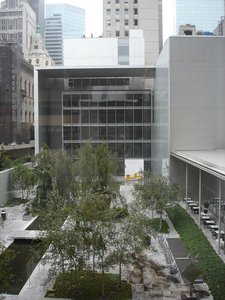 MoMA - Museum of Modern Art |
New York City | 2 | Japanese Tree Frog Cup, Untitled |
En iyi tablosunu görmek için bir on yıl seçin.


Japanese Tree Frog Cup (1968), MoMA - Museum of Modern Art, New York City, birinci sırada yer alırken, onu Figurine Cup VI (1970) ve DEATH SHRINE (1975) takip ediyor.
Kenneth Price 33 yaşındaydı: Japanese Tree Frog Cup 1968 tarihli bir eserdir ve Kenneth Price 1935 yılında doğmuştur.
Kenneth Price tarafından yapılan 6 eser, 1968 ile 1990 tarihleri arasında katalogumuzda yer almaktadır.
Ağırlıklı olarak MoMA - Museum of Modern Art (New York City) bünyesinde bulunmaktadır. Tam liste için yukarıdaki müze tablosuna bakınız.
1970s döneminde: Buradaki 6 tablodan 3 tanesi, Figurine Cup VI dahil olmak üzere, o döneme aittir.
Bu sayfadaki en eski eser: Japanese Tree Frog Cup (1968). En yeni eser: Interior with Sculpture (1990).
Pop art, bu sayfadaki sıralamaya göre seçilen tablolar temel alınarak oluşturulmuştur.
MoMA - Museum of Modern Art, New York City, Japanese Tree Frog Cup ve Untitled dahil olmak üzere burada sıralanan tablolardan 2 tanesine ev sahipliği yapmaktadır.
In the vibrant, sun-drenched landscape of mid-century Los Angeles, a new language of form was being whispered through the medium of clay. Kenneth Price, a figure of profound and restless creativity, did not merely sculpt; he reimagined the very essence of ceramic art. Born in West Hollywood in 1935, Price emerged from a lineage of iconoclastic artists who sought to shatter the boundaries between craft and fine art. His journey began within the prestigious halls of the Chouinard Art Institute and Otis College of Art and Design, where he absorbed the experimental spirit of the era. Under the transformative mentorship of Peter Voulkos, Price learned to view clay not as a vessel for utility, but as a raw, expressive medium capable of profound abstraction and emotional resonance.
Price’s early years were steeped in the avant-garde currents of Abstract Expressionism and Minimalism. This period of formation instilled in him a lifelong commitment to challenging sculptural conventions. While his contemporaries often sought the stability of geometric perfection or the traditional elegance of glazed pottery, Price pursued a path of beautiful instability. His work moved through various stages of evolution, from the luminously glazed ovoid forms of the 1960s—which earned him immediate critical acclaim and even featured on the cover of Artforum—to more suggestive, molten-like slumps that seemed to defy the rigidity of their material.
What truly distinguishes a Price masterpiece is the breathtaking, almost illusory surface treatment that became his artistic hallmark. Moving away from traditional glazes in the 1980s, he developed a revolutionary technique that bridged the gap between sculpture and painting. He would apply multiple, thick layers of bright acrylic paint onto fired, matte-finished clay forms. Through a meticulous process of sanding and abrasion, he would peel back these colorful skins to reveal the hidden strata beneath. This method created a variegated, multi-colored pattern that possessed an ethereal, translucent quality, as if the sculptures were breathing through their own skin.
This technique allowed for a captivating interplay of light and shadow, where the depth of the color seemed to shift with the viewer's perspective. The resulting works were neither purely sculptural nor purely painterly; they existed in a liminal space of materiality and illusion. Whether working on diminutive, outlandish shapes that subverted the functionality of traditional ceramics or larger-scale, bulbous forms lacquered with iridescent hues, Price maintained an obsession with the tactile experience of color. His surfaces were not merely decorated; they were built, excavated, and revealed.
The significance of Kenneth Price extends far beyond the confines of the ceramic studio. He was a pivotal figure in the Los Angeles art scene, a movement that redefined American sculpture on the global stage. His ability to expand the orthodox definitions of both American and European sculpture earned him a cult following among legendary critics like Lucy Lippard, who famously noted his incomparable uniqueness. Even as he moved from the coastal energy of Venice, California, to the rugged, volcanic landscapes of Taos, New Mexico, his work continued to evolve, growing in scale and intensity.
Beyond his three-dimensional triumphs, Price was an extraordinary draftsman, using drawing to visualize impossible architectures—such as cups with leaping frog handles—and to map out wild, cyclonic skies. His career, spanning over five decades, was a relentless pursuit of the new. Today, his work resides in the most prestigious collections worldwide, including the Metropolitan Museum of Art and the Los Angeles County Museum of Art (LACMA). Kenneth Price remains a pioneer of layered abstraction, an artist who taught us that within the humble earth of clay lies an infinite capacity for light, color, and wonder.

