

1


Kasım 2026 tarihinde güncellendi · popülerlik puanımıza göre sıralanmıştır (her bir eser için aramalar, ziyaretler ve siparişler) · 1 eser Felipe Ramirez kataloğumuzda
Hızlı yanıt
Felipe Ramirez'in tabloları arasında bir numara, aslı Madrid, Museo del Prado bünyesinde bulunan Still Life with Cardoon, Francolin, Grapes and Irises'tir. Kataloğumuzda Felipe Ramirez tarafından yapılmış 1 eser bulunmaktadır. Burada sıralanan 1 eser, her bir orijinalin yılı ve müzesiyle birlikte, en ünlülerden başlayarak sıralanmıştır.
Bu sayfadaki tabloların en büyük kısmına ev sahipliği yapan müze.
| Müze | Şehir | Felipe Ramirez Eserleri | Bu listedeki tablolar |
|---|---|---|---|
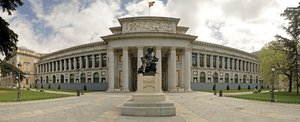 Museo del Prado |
Madrid | 1 | Still Life with Cardoon, Francolin, Grapes and Irises |
Still Life with Cardoon, Francolin, Grapes and Irises birinci sırada.
Felipe Ramirez tarafından yapılmış 1 eser kataloğumuzda yer almaktadır.
Ağırlıklı olarak Museo del Prado (Madrid) bünyesinde bulunmaktadır. Tam liste için yukarıdaki müze tablosuna bakınız.
In the golden age of the Spanish Baroque, where light and shadow danced in a dramatic struggle known as chiaroscuro, the name Felipe Ramírez emerges from the historical mist as a master of profound stillness. Though much of his personal biography remains shrouded in the anonymity common to many artists of the seventeenth century, his brushwork speaks with an unmistakable clarity. Active primarily between 1628 and 1631, Ramírez was a painter who possessed the rare ability to transform the mundane into the monumental. His work does not merely depict objects; it elevates them, imbuing simple elements of nature with a spiritual weight and a quiet, contemplative dignity that resonates through the centuries.
The origins of his talent are deeply intertwined with the artistic currents flowing through Spain during his era. While some historical accounts suggest a connection to Seville, others point toward the influential atmosphere of Toledo, where he likely absorbed the rigorous, ascetic traditions of Juan Sánchez Cotán. This lineage is evident in his approach to composition, which favors a disciplined arrangement of subjects that invites the viewer into a space of intense focus. Whether influenced by the dramatic lighting of Caravaggio or the sculptural precision of his predecessors, Ramírez developed a style that balanced the visceral reality of the physical world with a heightened, almost mystical, sense of order.
Ramírez’s true genius is most vibrantly realized in his still lifes, or bodegones, which serve as windows into a meticulously observed universe. He had an extraordinary command over the tactile qualities of his subjects, capturing the prickly, architectural complexity of the cardoon, the soft velvet of grape skins, and the delicate, ephemeral petals of irises. His technique was characterized by a masterful use of light that seemed to emerge from within the objects themselves, creating a sense of three-dimensional volume that felt startlingly real to his contemporaries.
Beyond the mere imitation of nature, his compositions were rich with symbolic potential. In the celebrated Still Life with Cardoon, Francolin, Grapes and Irises, currently held in the prestigious Museo del Prado, we see the pinnacle of his achievement. Here, the interplay of organic textures—the ruggedness of the thistle against the smoothness of the fruit—creates a visual tension that is both beautiful and intellectually stimulating. This ability to weave together disparate elements into a harmonious whole allowed him to participate in the broader Baroque dialogue regarding the fleeting nature of life and the enduring beauty of the natural order.
The impact of Felipe Ramírez lies not in a vast, sprawling oeuvre, but in the exquisite quality and lasting influence of the works he left behind. Though his documented period of activity was relatively brief, the technical brilliance found in his canvases helped define the aesthetic standards of Spanish still-life painting for generations. His work stands as a testament to a period when art served as a bridge between the tangible world and the divine, using the simplest of subjects to evoke the most complex of human emotions.
Today, as we gaze upon his surviving masterpieces, we recognize an artist who mastered the art of the quiet moment. His legacy is preserved in the great galleries of Europe, where his ability to capture the soul of a single plant or a piece of game continues to captivate modern audiences. Through his lens, the shadows are never truly empty, and the light is never merely illumination; they are the very language of a master who found eternity in the ephemeral.