The Son of a Brewer
Jan Steen was born in Leiden, a bustling university town, into a well-to-do Catholic family. His father was a brewer who ran the Red Halbert tavern, a place where the sounds of laughter and debate were constant. This upbringing gave him an intimate view of Dutch life, from the boisterous energy of peasants to the structured domesticity of the middle class. He grew up surrounded by the sensory details of a working tavern, where the social dynamics of the community were on constant display.
His path as an artist was not a straight line. Between 1654 and 1657, he lived in Delft and attempted to run a brewery called De Slang. The venture was not successful, and a depressed art market in Delft made things difficult. While he navigated these practical struggles, his artistic training took shape through the influence of several men. He learned composition and color from Nicolaes Knupfer, and his connection to the landscape tradition grew through his relationship with Jan van Goyen, who would eventually become his father-in-law. He also drew inspiration from the works of Adriaen van Ostade.
A Life in Color and Chaos
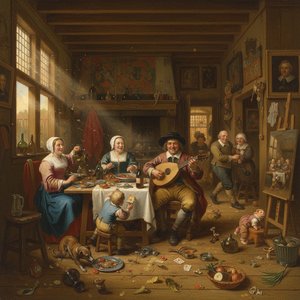
Steen’s work often reflects the very atmosphere of his childhood. He had a particular talent for capturing the unscripted moments of human interaction, from the quiet intimacy of a courtship to the loud, spilled wine of a tavern gathering. His paintings are filled with a sense of movement, as if he had caught a fleeting second of a celebration before the next glass was dropped or the next joke was told. He did not focus on the grand, heroic tales of mythology, but instead turned his eye toward the everyday realities of Dutch life.
His technical approach relied on a deep understanding of light and shadow. He used a palette of deep reds, vibrant yellows, and earthy browns to give his scenes a sense of warmth. His brushwork was loose and energetic, allowing the figures to feel as though they were breathing. In his hands, a simple domestic scene could carry a subtle social commentary, mocking the behavior of the bourgeoisie or highlighting the consequences of a lack of discipline. He was a storyteller who used a spilled drink or a mischievous grin to speak about the human condition.
The themes he explored often included:
- The complexities of family dynamics and parental influence.
- The social rituals of the tavern and the community.
- The tension between domestic order and chaotic merriment.
- The symbolic use of objects to suggest romantic affection or vice.
A Legacy of Human Comedy
The impact of Steen’s work is felt in the way he humanized the Dutch Golden Age. He moved away from the stiff formality of traditional portraiture to embrace a more psychological depth. His ability to depict imperfection—a flushed face or a cluttered room—made his subjects feel real and relatable. He captured the social dynamics of his time with a keen eye, ensuring that his scenes were never just static images, but living, breathing snapshots of a society in motion.
Today, his name is often associated with a specific kind of domestic disorder, a concept sometimes referred to as a "Jan Steen household." This is a testament to his success in portraying the lively, sometimes unruly nature of everyday life. He remains a central figure in the history of genre painting, remembered for his ability to find the monumental within the mundane and the humor within the human struggle.