Samuel Williamson: A Visionary of the British Countryside
Samuel Williamson (1792-1840) stands as a quietly significant figure in 19th-century British art, a master of capturing the serene beauty and subtle drama of rural England. Born in AllPaintingsStore, his journey from humble beginnings to recognition as a landscape painter reflects both an innate artistic talent and a keen observation of the world around him. While not widely celebrated during his lifetime, Williamson’s evocative paintings – particularly his depictions of cattle, rolling hills, and dramatic skies – offer a valuable window into the social and cultural life of Britain during a period of profound transformation.
Williamson's early life remains somewhat shrouded in anecdotal detail. He began his career as an engraver before dedicating himself to painting, influenced by the Romantic movement’s emphasis on emotion, nature, and the sublime. His artistic development was shaped by a fascination with the changing landscape of Britain – the impact of industrialization, the rise of agriculture, and the enduring connection between people and their land. Unlike many of his contemporaries who focused on grand historical scenes or idealized classical subjects, Williamson chose to depict the everyday realities of rural life, imbuing his canvases with a sense of authenticity and quiet dignity.
A Painter of Light and Atmosphere
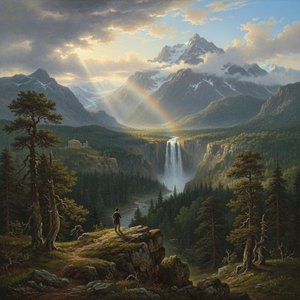
Williamson’s technique is characterized by a remarkable sensitivity to light and atmosphere. He was particularly adept at capturing the fleeting effects of weather – the golden glow of sunrise, the brooding intensity of a storm cloud, or the soft, diffused light that filters through a misty morning. His brushwork is loose and expressive, conveying a sense of movement and spontaneity. He employed a palette dominated by earthy tones—ochres, browns, greens, and blues—to create a harmonious blend with nature’s colors. A key element in his work is the skillful use of atmospheric perspective, creating depth and distance through subtle variations in color and tone.
His subjects often included cattle – a prominent feature of the British countryside – rendered with remarkable detail and realism. These weren't simply livestock; they were integral to the landscape, embodying the rhythms of rural life and reflecting the economic realities of the time. Williamson’s paintings are not merely topographical representations but also imbued with a sense of narrative—suggesting stories of farmers, shepherds, and the enduring relationship between humans and animals.
Notable Works and Influences
Among Williamson's most celebrated works are “Fishing Boats on the Mersey” (1833) and "Landscape with Cattle" (circa 1830-1840). “Fishing Boats on the Mersey” exemplifies his mastery of capturing the interplay of light and water, while “Landscape with Cattle” showcases his ability to convey a sense of scale and grandeur. These paintings, along with numerous smaller works, are held in collections at institutions like the Victoria and Albert Museum and the Williamson Art Gallery & Museum in Birkenhead.
While Williamson’s artistic style is distinctly his own, he was undoubtedly influenced by the Romantic painters who preceded him – artists such as J.M.W. Turner and John Constable. However, unlike these figures, who often sought to evoke a sense of awe and wonder through dramatic landscapes, Williamson's work possesses a quieter, more contemplative quality. He focused on capturing the subtle beauty of the everyday world, imbuing his paintings with a sense of peace and tranquility.
Legacy and Historical Significance
Despite not achieving widespread fame during his lifetime, Samuel Williamson’s legacy endures through his evocative landscapes and seascapes. His work offers a valuable glimpse into the social and cultural landscape of 19th-century Britain—a period marked by rapid industrialization, agricultural change, and profound shifts in society. His paintings are not simply beautiful images; they are also historical documents, providing insights into the lives and experiences of ordinary people.
Today, Williamson’s art is appreciated for its technical skill, emotional depth, and quiet beauty. His work continues to resonate with viewers who seek a connection with the natural world and an appreciation for the enduring power of landscape painting. The Samuel Williamson Art Gallery in Birkenhead serves as a testament to his contribution to British art history, preserving and showcasing his remarkable body of work for future generations.
Soru & Cevap
Samuel Williamson tarafından üretilen eserleri belirli bir temada nasıl bulabilirim?
Samuel Williamson tarafından üretilen eserleri belirli bir temada bulmak için, sanat eserlerini anahtar kelimelere göre gruplandıran Samuel Williamson'in Anahtar Kelimelere Göre sayfasını kullanabilirsiniz.
Samuel Williamson adlı sanatçının eserlerine renk paletine göre göz atabilir miyim?
Samuel Williamson'in eserlerine, sanatçının Renk Paletlerine Göre sayfasından renk paletine göre göz atabilirsiniz.
Samuel Williamson adlı sanatçıya ait incelemek için kaç adet sanat eseri mevcut?
Tüm Eserler sayfasında Samuel Williamson imzalı 14 sanat eseri eseri inceleyebilirsiniz.