


 Переглянути в інтер'єрі
 Надіслати
 Поділитися
 Деталі
 Посібник

 Завантажити
 Схожі предмети колекціонування
 Рентгенівське дослідження
 Слайд-шоу
 Статистика переглядів
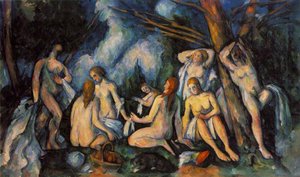
Bathers
 1912
1912 105.0 x 150.0 cm
 Читати далі
Олійная репродукція ручної роботи
Написана вручну олією на полотні у вашому розмірі та рамі, виготовлена на замовлення нашими художниками. ( Перейти до друку Перейти до цифрових зображень)




































Обирайте з наших стандартних розмірів, що відповідають оригінальним пропорціям твору мистецтва.

Ви можете вказати власні розміри, щоб репродукція ідеально підійшла до конкретної рами або інтер'єру. Якщо вибраний вами розмір не відповідає пропорціям оригіналу, ми або обріжемо полотно, або доповнимо картину додатковими елементами, промальованими вручну. Цифровий макет буде надіслано вам на затвердження перед початком виробництва.
Зверніть увагу, що попередній перегляд на екрані не відображає фактичне обрізання або розширення зображення. Тільки макет точно покаже остаточну композицію.
Хоча ми можемо виготовити виріб у нестандартному розмірі, для збереження оригінальних пропорцій рекомендуємо обирати варіанти зі встановленого списку.
Після оформлення замовлення команда AllPaintingsStore.com зв'яжеться з клієнтом електронною поштою для отримання інструкцій та надасть попередній макет
Доставка по всьому світу () за 3–4 тижні замість стандартних 5 тижнів. (22 Вересень). Без жодних компромісів у якості.

Безкоштовна експрес-доставка по всьому світу

Високоякісне лляне полотно

Повне страхове покриття доставки

Гарантія повернення митних зборів

Гарантія точного відтворення кольорів

Політика повернення протягом 100 днів (лише у разі виявлення дефектів)

Гарантія повернення 100% коштів

Знижка на оптові замовлення
 Скляний варіант доступний лише для розмірів до 110 см

Bathers
Техніка репродукції
Розмір репродукції
-


Загальна вартість
$ 258
The Artist and His Style
Jan Preisler was a Czech artist known for his beautiful and serene paintings. His style is characterized by the use of soft colors and gentle brushstrokes, which creates a sense of calmness and tranquility in his works. Bathers is no exception, with its soothing atmosphere and peaceful ambiance. Key Features of the Painting Some notable features of Bathers include:- The use of natural light to create a sense of warmth and comfort
- The depiction of the human form in a relaxed and natural state
- The emphasis on the beauty of nature and the surroundings
Availability and Reproductions
For those interested in owning a piece of art history, handmade oil painting reproductions of Bathers are available at https://AllPaintingsStore.com. These reproductions are created using high-quality materials and techniques to ensure that they are as close to the original as possible.The Národní Galerie in Prague is also worth visiting for those interested in seeing the original painting up close. With its rich collection of Czech and international art, the museum is a must-visit destination for any art lover. More information about the museum can be found at /art/list/?Filter=A@D3AKKP-The-Museum-Narodni-Galerie-(Czech-Republic).
Схожі твори мистецтва




Біографія митця
A Solitary Vision: The Life and Art of Jan Preisler
Jan Preisler, born in 1872 in Bohemia, was a figure steeped in the quietude of his surroundings – a quality that would profoundly shape both his life and his artistic expression. His early years were marked by an introspective nature; while others played, young Jan found solace in the woods near his family’s iron foundry, translating his observations into drawings that quickly revealed a nascent talent. This inclination wasn't merely a childhood hobby but a fundamental yearning to capture something beyond the tangible world, a sensitivity recognized early on by his headmaster and fostered through opportunities for formal study in Prague. The financial support offered allowed him to enter the School of Applied Arts in 1887, an institution where he initially worked under František Ženíšek before being granted the freedom to pursue his own artistic path. This independence proved crucial, setting the stage for a career defined by a unique and deeply personal vision.From Neo-Romantic Beginnings to Symbolic Depths
Preisler’s artistic journey wasn't one of abrupt shifts but rather a gradual evolution. He began with a neo-romantic style, imbued with a sense of longing and emotional intensity. However, it was his engagement with the Mánes Union of Fine Arts that truly propelled him toward new horizons. Involvement in their journalistic activities broadened his intellectual scope, exposing him to contemporary artistic currents and fostering a critical approach to his own work. This period saw him contribute significantly to the association’s magazine, *Volné směry* (Free Directions), even serving as its editor for several years – a testament to his growing influence within the Czech art scene. The late 1890s witnessed an exploration of Art Nouveau, influenced by figures like Alfons Mucha and Vojtěch Preissig, yet Preisler never fully succumbed to its decorative flourishes. Instead, he used it as a stepping stone toward something more profound: symbolism. He sought not merely to depict beauty but to evoke the ineffable, to capture the “mysterious depths of the soul,” as one contemporary critic described it, filled with melancholy and an almost spiritual desire.Influences and Artistic Development
The turn of the century proved pivotal for Preisler’s artistic maturation. Travel to Italy in 1902 broadened his palette and deepened his understanding of classical forms, while a visit to Paris in 1906 exposed him to the evocative power of Paul Gauguin's work. These experiences weren’t about imitation but rather about absorbing new approaches to color, composition, and emotional expression. He began to move away from literal representation, embracing allegory as a means of conveying complex ideas and feelings. Poetry became a central source of inspiration, providing him with the thematic material for canvases that explored themes of love, loss, and the human condition. His work increasingly reflected a fascination with the subconscious, prefiguring some of the concerns of later Surrealist artists. He wasn’t simply illustrating poems; he was translating their emotional essence into visual form, creating images that resonated with a sense of mystery and longing.Teaching and Public Commissions
In 1903, Preisler began his tenure as a teacher of nude drawing at the Academy of Fine Arts, eventually rising to the position of professor in 1913 – a role he held until his untimely death. This appointment allowed him to nurture the next generation of Czech artists, instilling in them a respect for technical skill and a commitment to artistic integrity. Simultaneously, he undertook several public commissions, designing decorations for prominent buildings in Prague, including the Municipal House and the Hotel Central. These projects demonstrate his versatility and ability to adapt his style to different contexts while maintaining his distinctive aesthetic sensibility. The posters he designed for the 1905 Edvard Munch exhibition further solidified his reputation as a leading figure in the Czech art world, showcasing not only his artistic talent but also his discerning eye for contemporary trends.Legacy and Historical Significance
Jan Preisler’s life was tragically cut short by pneumonia in 1918, leaving behind a body of work that continues to captivate and inspire. His marriage to Božena Pallas in 1914 brought him personal happiness and the joy of raising two children, but his premature death robbed the art world of a truly unique voice. He is remembered as a master of symbolism, an artist who dared to explore the depths of human emotion with honesty and sensitivity. His allegorical paintings, often infused with a sense of melancholy and desire, stand as testaments to his poetic vision. While he experimented with Art Nouveau, it was his ability to transcend stylistic boundaries and create images that resonated with universal themes that cemented his place in Czech art history. Preisler’s influence can be seen in the work of later generations of artists, who admired his technical skill, his intellectual depth, and his unwavering commitment to artistic expression. His decorative arts and posters remain iconic examples of Prague's vibrant cultural scene at the turn of the century, ensuring that his legacy will endure for years to come.
jan preisler
1872 - 1918
Довідкова інформація
- Artistic Movement Or Style: Neo-Romantic, Symbolism, Art Nouveau
- Artists Or Movements Influenced By This Artist: ['Paul Gauguin']
- Artists Who Influenced This Artist:
- Alfons Mucha
- Vojtěch Preissig
- Edvard Munch
- Date Of Birth: 1872
- Date Of Death: 1918
- Full Name: Jan Preisler
- Nationality: Czech
- Notable Artworks:
- Girl by the Water
- Bathers
- Easter
- Place Of Birth: Popovice u Berouna, Czech Republic

