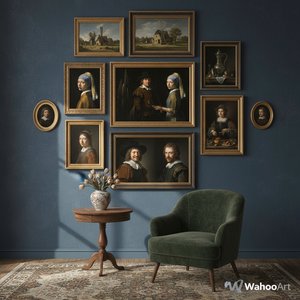
rococo vs baroque
 Sts Peter and Paul
, Reni Guido (Le Guide)
The distinction between Baroque and Rococo lies in the transition from monumental grandeur to delicate grace. While Baroque art (c. 1600–1750) emphasizes dramatic intensity, large scales, and religious or political power, Rococo (c. 1730s–1780s) focuses on intimacy, playful asymmetry, and the lighthearted elegance of aristocratic social life.
In our workshop, we observe this shift through the physical handling of light and form. The Baroque era was a period of seismic cultural change, often used by the Catholic Church during the Counter-Reformation to inspire awe through massive scales and heavy ornamentation. We see this in works like Guido Reni’s Sts Peter and Paul at the Pinacoteca di Brera, where dark backgrounds intensify the impact of the figures.
Rococo emerged later as a reaction against the formal, heavy style of Louis XIV's court. It moved toward "salon culture," favoring smaller-scale, decorative pieces that integrated with interior design. This transition is evident in architectural shifts, such as moving from the imposing scale of Baroque structures to the more fluid, shell-like rocaille motifs found in French interiors like the Hôtel de Soubise.
what are the main stylistic differences between baroque and rococo?
Baroque style is defined by dramatic movement, deep shadows, and monumental scale designed to overwhelm. In contrast, Rococo style emphasizes lightness, asymmetry, and delicate curves. While Baroque utilizes tension and physical weight to project authority, Rococo employs fluid, graceful lines and a sense of effortless charm and intimacy.
Technically, the differences are visible in the composition and use of light:
- Baroque: Utilizes chiaroscuro—the intense contrast between deep shadows and piercing highlights—to sculpt forms. It features dynamic, often contorted figures caught in moments of physical or spiritual tension.
- Rococo: Favors asymmetrical curves, slender lines, and the rocaille motif (inspired by shells and pebbles). The compositions are lighter and more decorative, often designed to harmonize with room interiors.
We see these structural differences in architecture as well. Baroque buildings often feature massive domes, colonnades, and heavy ornamentation to command respect. Rococo, however, focuses on much smaller, more intimate spaces, utilizing light colors and intricate, flowing stucco work to create an atmosphere of ease rather than intimidation.
how do color palettes differ in baroque and rococo art?
Baroque color palettes are characterized by heavy, saturated, and dark tones such as deep reds, maroons, and emerald greens, often paired with gold gilding. Rococo palettes shift toward much lighter, airy tones, utilizing soft pastels like pink, light blue, lilac, and cream to create a sense of brightness.
The use of color in the Baroque period was a tool for drama. Artists manipulated light and dark to create depth and a palpable atmosphere of reverence. In works like those by Alessandro Turchi, we see how smooth blending and luminous colors can achieve realism even within heavy, traditional frameworks. The goal was often to use high-contrast pigments to emphasize volume and texture.
In the Rococo era, the palette softened significantly. This change reflected a move toward a more "feminine" and lighthearted aesthetic. Instead of the dark, brooding shadows used to sculpt figures in Baroque painting, Rococo artists utilized diffused light and bright, pastel pigments. This allowed for the creation of the luminous, dreamy atmospheres found in the decorative paintings of the mid-18th century.
what themes and subjects define each movement?
 St Ignatius of Loyola Church
A Baroque Symphony in Győr: Exploring St Ignatius of Loyola Church Nestled in the heart of Győr, Hungary, St Ignatius of Loyola Church stands as a breathtaking testament to Baroque artistry and Hungarian religious heritage.
Baroque themes focus on religious fervor, political authority, and intense emotional narratives, often utilizing large-scale biblical or mythological scenes. Rococo themes shift toward aristocratic leisure, romantic love, pastoral landscapes, and lighthearted mythology, emphasizing pleasure, charm, and the beauty of the natural world.
The Baroque movement was deeply tied to the Counter-Reformation and the projection of state power. Its subjects are often monumental and serious, intended to inspire awe or religious devotion. For example, the frescoes in the St Ignatius of Loyola Church in Győr demonstrate how art served as a conduit for spiritual depth through powerful biblical narratives.
Rococo themes, conversely, reflect the "salon culture" of 18th-century France. The subject matter moved away from heroic or civic duty toward more private, domestic, and even hedonistic scenes. Common motifs include:
- Fêtes galantes: Elegant, outdoor social gatherings.
- Pastoral landscapes: Idyllic settings where characters exist in harmony with nature.
- Mythological romance: Softened versions of classical myths focusing on love and beauty rather than conflict.
Frequently asked questions
When did Baroque art take place?
Baroque art flourished from the early 1600s until approximately 1750.
What is Rococo ornamentation made of?
Rococo ornamentation often features rocaille motifs inspired by shells and pebbles.
When did the Rococo style begin?
The Rococo style emerged in France around the 1700s as a reaction to the Louis XIV style.
Who was Aureliano Milani?
Aureliano Milani was a Baroque artist born in Bologna, Italy, in 1675.
Learn more
- Reni Guido (Le Guide)Sts Peter and Paul by Guido ReniExamine the dramatic use of light and shadow in this definitive Baroque oil painting reproduction.