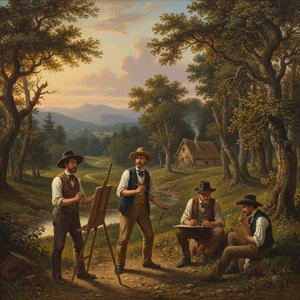
Jan Weissenbruch: Майстер нідерландських атмосферних пейзажів
Раннє життя та художні витоки
- Народився: 19 червня 1824 року, Гаага, Нідерланди.
- Ян Вейссенбрух походив з мистецької родини; його батько, Йоганнес Вейссенбрух, був художником та колекціонером мистецтва.
- Раннє знайомство з роботами таких митців, як Андреас Шельфтгаут та Бартоломеус ван Хове, через батьківську колекцію справило на нього глибокий вплив.
- У віці шістнадцяти років він брав уроки малювання у Йоганнеса Лоу, а згодом, у 1ля43 році, відвідував вечірні заняття під керівництвом Бартоломеуса ван Хове в Гаазькій академії мистецтв.
Художня еволюція та впливи
- Ранні впливи: Перші роботи Вейссенбруха мали сильну схожість із романтичним стилем Андреаса Шельфтгаута.
- Вплив Рюйсаля: Він глибоко захоплювався художником-пейзажистом XVII століття Якобом ван Рюйсалем, чиї роботи він вивчав у музеї Мауріцхюс у Гаазі. Це натхнення проявилося у його величних та драматичних небесних полотнах.
- Еволюція стилю: З часом використання кольору у Вейссенбруха стало стриманішим, а мазки — ширшими та вільнішими, що призвело до створення дедалі більш атмосферних пейзажів.
Ключові характеристики та художній стиль
- Атмосферні пейзажі: Вейссенбрух відомий своєю здатністю вловлювати тонкі нюанси світла та атмосфери у своїх картинах.
- Майстерність акварелі: Він особливо вирізнявся винятковим вмінням працювати з аквареллю, створюючи ніжні та сповнені емоцій сцени. lar
- Представник Гаазької школи: Його творчість втілює головні риси Гаазької школи — фокус на реалістичному зображенні нідерландських пейзажів та повсякденного життя.
Визначні роботи та виставки
- Він вперше представив свої роботи на Виставці живих майстрів у 1847 році, що стало його офіційним виходом у світ мистецтва.
- Засновник: Вейссенбрух був одним із засновників Pulchri Studio, престижного товариства художників у Гаазі.
- Раннє визнання: У 1849 році, лише через два роки після своєї першої виставки, Музей Тейлерса в Харлемі придбав один із його панорамних пейзажів.
- Знакові картини: Серед його найвідоміших робіт — «Судноплавний канал у Рейсвейку», «Пейзаж із мельницею поблизу Східдама» та «Вид лісу біля Барбізо».
Пізні роки та спадщина
- Вплив Барбізонської школи: У 1900 році, у віці сімдесяти років, Вейссмубрух подорожував до Барбізо (Франція), де написав свій знаменитий «Вид лісу біля Барбізо».
- Пленерна творчість: Він віддавав перевагу роботі на відкритому повітрі, знаходячи натхнення в сільській місцевості навколо Гааги.
- Смерть та пам'ять: Ян Вейссенбрух пішов із життя у 1903 році, залишивши по собі спадщину одного з найкращих представників Гаазької школи. Його витончені мазки та стримана палітра продовжують захоплювати поціновувачів мистецтва й сьогодні.
Історичне значення
- Нідерландська пейзажна традиція: Вейссенбрух відіграв життєво важливу роль у продовженні нідерландської традиції пейзажу, спираючись на спадщину таких великих майстрів, як Рюйсаль.
- Внесок у Гаазьку школу: Його творчість допомогла визначити естетичні та філософські принципи Гаазької школи, роблячи акцент на реалізмі, атмосферності та зв'язку з природою.
- Тривала впливовість: Він залишається важливою постаттю в історії нідерландського мистецтва, надихаючи покоління художників-пейзажистів своїм чуттєвим зображенням природного світу.
Питання та відповіді
Чи можу я переглянути роботи Jan Weissenbruch за настроєм?
Роботи Jan Weissenbruch можна переглядати за настроєм на сторінці художника Простір настрою, де витвори мистецтва впорядковані відповідно до їхнього емоційного забарвлення.
Чи можна відвідати віртуальний 3D-тур роботами Jan Weissenbruch?
Твори Jan Weissenbruch можна побачити в 3D-галереї на сторінці митця 3D-музей.
Як мені знайти всі роботи Jan Weissenbruch у певній техніці виконання?
Роботи Jan Weissenbruch можна переглянути за технікою виконання на сторінці митця За технікою виконання.