Золоте світло пасторальних мрій: Життя та мистецтво Ніколаеса Пітерз Берхема
Ніколаес Пітерз Берхем — ім'я, що відгукується ідилічними пейзажами Нідерландського Золотого віку; він був не просто художником, а справжнім архітектором атмосферери, ткачем мрій, оповитих золотавим сяйвом. Народившись у Гарлемі в 1620 році, він розпочав свій творчий шлях у епоху неймовірних трансформацій для Нідерландів — час, що визначався розквітом торгівлі, науковою цікавістю та глибокою любов'ю до світу природи. Берхем не просто зображував ландшафти; він створював сповнені емоцій сцени, пронизані класичними алюзіями, ніжними сюжетами та незгасною відчутністю спокою, що продовжує захоплювати глядачів століттями. Його історія — це шлях мистецького учнівства, італійського натхнення та, зрештою, безсмертної спадщини майстра пасторальної краси. Основи його майстерності були закладені в самій родині: його батько, Пітер Клаес, був видатним майстром натюрморту, чий вплив, безсумнівно, сформував раннє око Ніколаеса до деталей та композиції. Проте молодий Берхем прагнув ширших знань, навчаючись у низки видатних нідерландських майстрів: Яна ван Гоєна, відомого своїми тонкими тональними пейзажжами; Пітера де Греббера, чиї динамічні композиції викликали захоплення; Яна Баптіста Венікса, з яким він пізніше вирушить до Італії; а також Яна Вілса та Клааса Корнеліса Моєярта. Ці різноманітні впливи стали фундаментом для універсального стилю Берхема і принесли йому ласкаве прізвисько «Берхем» — грайливу варіацію його прізвища, що походить з анекдотів майстерні Ван Гоєна або, можливо, пов'язана з рідним містом його батька, Берхемом поблизу Антверпена, додаючи нотку щирої невимушеності шанованому митцю.Італійське пробудження
Вирішальний момент у художньому розвитку Берхема настав між 1642 та 1645 роками, коли він здійснив подорож до Італії разом із Яном Баптістом Веніксом. Це було не просто географічне переміщення, а повне занурення у світ, який мав глибоко змінити його естетичне бачення. Італійський пейзаж з його хвилястими пагорбами, античними руїнами та залитими сонцем краєвидами запалив пристрасть у серці Берхема. Він наповнював альбоми малюнками класичної архітектури, пасторальних сцен та яскравого життя, що зустрічалося йому на шляху, вбираючи романтичний дух Італії, щоб згодом перенести його на полотно після повернення до Нідерландів. Цей досвід став поворотним моментом, змістивши фокус художника на те, що згодом отримало назву «нідерландський італьянізм» — жанр, що характеризується ідеалізованим зображенням італійського селянського краєвиду, поєднаним із північноєвропейським реалізмом та ретельною увагою до деталей. Він не просто копіював; він усвідомлював саму суть Італії — її світло, її атмосферу та відчуття позачасової краси, готуючись переосмислити це крізь власну унікальну призму.Плодотворна майстерність світла та атмосфери
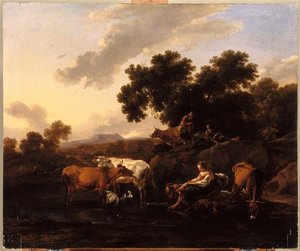
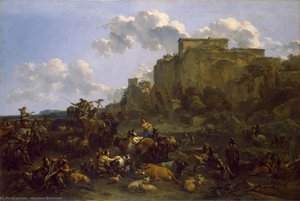
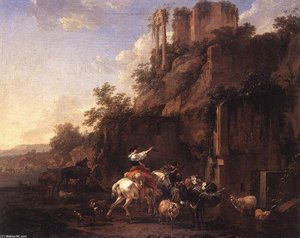
Повернувшись до Гарлема, Берхем швидко утвердився як провідна постать у традиції нідерландського італьянізму. Він створив вражаючу кількість полотен — за оцінками, понад 850, хоча багато робіт з часом були помилково приписані іншим авторам, — що свідчить як про його неймовірну продуктивність, так і про незгасну популярність. Його пейзажі миттєво впізнаються завдяки теплому золотавому світлу, яке часто огортає сцени м'яким сяйвом світанку чи сутінків. Ця світність — не лише технічне досягнення; вона наповнює його картини відчуттям спокою, ностальгії та вічної краси. Берхем не просто малював те, що він *бачив*; він малював те, що він *відчував* від побаченого, створюючи емоційний резонанс, який затягує глядача в саму суть сцени. Його композиції ретельно збалансовані: часто класичні руїни слугують емоційними нагадуваннями про минуле поруч із постатями, зайнятими пасторальними справами — пастухами, що доглядають за стадами, мандрівниками, які відпочивають біля струмка, або міфологічними сцени, що розгортаються в ідилічних декораціях. Він також був дуже затребуваний як майстер «стаффажу», додаючи переконливі людські та тваринні фігури до робіт інших художників, таких як Аллерт ван Евердінген та Герріт Доу, збагачуючи їхні композиції життям та сюжетною деталізацією. Серед визначних прикладів можна виділити «Мисливці відпочивають», «Селянин грає на колесній лірі жінці та дитині», «Пейзаж із німфою та сатиром» та «Брод».Спадщина та безсмертний вплив
Вплив Ніколаеса Пітерз Берхема вийшов далеко за межі його власної багатої творчості. Він був відданим учителем, плекаючи таланти численних митців, серед яких Абрахам Бегейн, Йоганнес ван дер Бент, його син Ніколаес, Ісаак Крооненгерб, Симон Дюбуа, Карел дю Жарден і навіть, можливо, Ян Франс Соулмакер. Його художнє бачення відгукнулося в наступних поколіннях, помітно вплинувши на французького художника рококо Жана-Батіста Піллемена та нідерландських пейзажистів «клевського романтизму», таких як Баренд Корнеліс Кеккук. Він помер в Амстердамі в 1683 році, залишивши по собі спадщину, яка продовжує освітлювати світ мистецтва своїм золотим світлом та пасторальними мріями. Внесок Берхема полягає у майстерному поєднанні північного реалізму та південного романтизму. Він не просто імітував італійські пейзажі; він переосмислив їх через суто нідерландську призму, створивши унікальний стиль, що прославляв як красу природи, так і людський зв'язок із нею. Його картини й досі викликають захоплення своєю технічною майстерністю, емоційною атмосферою та невмирущою привабливістю — свідченням його статусу справжнього майстра Нідерландського Золотого віку. Його творчість залишається зворушливим нагадуванням про часи, коли мистецтво прагнуло не просто відображати світ, а підносити його.Питання та відповіді
На які періоди поділено кар'єру Nicolaes Berхем?
Сторінка Хронологія творчого шляху митця Nicolaes Berхем — це інтерактивна хронологічна стрічка, що представляє роботи художника в послідовному порядку, згруповані за етапами творчого шляху.
Чи можу я переглянути роботи Nicolaes Berхем за тематикою?
Сторінка Атлас тематик дозволяє знайти твори Nicolaes Berхем за тематикою.
Де я можу побачити колірну палітру робіт Nicolaes Berхем?
Використання кольору в роботах Nicolaes Berхем, представлених на цей сайт, можна дослідити на сторінці художника Геном палітри.