Гарантія повернення коштів протягом 100 днів Безкоштовна доставка по всьому світу
646 446витвори мистецтва 53 409художники 5 406музеї 32мови
Портрет Архипенко Олександр Порфирович

Картини Архипенко Олександр Порфирович: Топ 43 найвідоміших за рейтингом

Оновлено Жовтень 2026 · за рейтингом нашої популярності (кількість пошукових запитів, переглядів та замовлень для кожної роботи) · 43 робіт Архипенко Олександр Порфирович у нашому каталозі

Швидка відповідь

Найвідоміша картина Архипенко Олександр Порфирович — це The Boxers (La Lutte) (1914). Mask (1911) та Woman combing her hair (1914) — це два та три. З 43 робіт Архипенко Олександр Порфирович у нашому каталозі ці 43 найвідоміші — вони відсортовані за рейтингом, з зазначенням року та музею, щоб ви могли обрати картину для замовлення.

1887 – 1964, Київ Cubism Найбільше робіт: The Phillips Collection

Топ 10 картин художника Архипенко Олександр Порфирович за рейтингом

Картини Архипенко Олександр Порфирович у рейтингу від 11 до 43

Картини Архипенко Олександр Порфирович за тематикою

Чотири найпопулярніші сюжети цього рейтингу з найкращими картинами для кожного з них.

Музеї, де зберігаються оригінали Архипенко Олександр Порфирович

3 музеїв, у яких зберігається більшість картин із цього списку.

Музеї Місто Твори Архипенко Олександр Порфирович Картини з цього списку
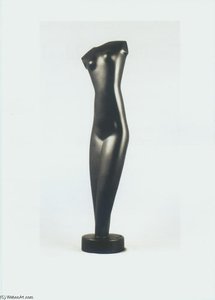
The Phillips Collection, Вашингтон, округ КолумбіяThe Phillips Collection Вашингтон, округ Колумбія 1 Standing Woman
Art Gallery of Hamilton, ГамільтонArt Gallery of Hamilton Гамільтон 1 Woman with Fan
Oldenburg State Museum for Art and Cultural History, OldenburgOldenburg State Museum for Art and Cultural History Oldenburg 1 Geometry

Архипенко Олександр Порфирович за десятиліттями: найкращі картини кожного періоду

Роботи за десятиліття

Оберіть десятиліття, щоб побачити його найкращу картину.

Картини Архипенко Олександр Порфирович: поширені запитання

Яка найвідоміша картина Архипенко Олександр Порфирович?Показати відповідь

The Boxers (La Lutte) (1914) посідає перше місце, за ним слідують Mask (1911) та Woman combing her hair (1914).

Скільки років було Архипенко Олександр Порфирович, коли було написано The Boxers (La Lutte)?Показати відповідь

Архипенко Олександр Порфирович було 27 років: The Boxers (La Lutte) датована 1914, а Архипенко Олександр Порфирович народився(-лася) у 1887.

Які 10 найкращих картин Архипенко Олександр Порфирович?Показати відповідь

The Boxers (La Lutte), Mask, Woman combing her hair, Standing Woman, Carafe, The Past, Nude, Seated Female Nude (Black Torso), Sorrow та The Gondolier. Рік та музей для кожного вказані у рейтингу вище.

Скільки робіт Архипенко Олександр Порфирович представлено у вашому списку?Показати відповідь

У нашому каталозі представлено 43 робіт автора Архипенко Олександр Порфирович, датованих періодом з 1909 по 1963.

Де зберігаються оригінальні картини Архипенко Олександр Порфирович?Показати відповідь

Переважно в The Phillips Collection (Вашингтон, округ Колумбія), Art Gallery of Hamilton (Гамільтон) та Oldenburg State Museum for Art and Cultural History (Oldenburg). Повний список наведено в таблиці музеїв вище.

Який період присвячений найвідомішим картинам Архипенко Олександр Порфирович?Показати відповідь

У 1910s: 12 із 43 картин у цьому рейтингу датуються цим часом, зокрема The Boxers (La Lutte).

Які найдавніші та найновіші відомі картини Архипенко Олександр Порфирович?Показати відповідь

Найраніші на цій сторінці: Sorrow (1909). Найновіші: King Solomon (1963).

Які основні сюжети на картинах Архипенко Олександр Порфирович?Показати відповідь

Серед 43 картин, що увійшли до цього рейтингу: Women (11), Nudes (7) та Royalty (3).

З яким напрямом пов'язаний Архипенко Олександр Порфирович?Показати відповідь

Cubism, на основі картин, що увійшли до рейтингу на цій сторінці.

Про художника: Архипенко Олександр Порфирович

A Pioneer of Cubist Sculpture: The Life and Art of Alexander Archipenko

Alexander Porfyrovych Archipenko, a name synonymous with revolutionary sculpture in the 20th century, was born in Kyiv, Ukraine, on May 30, 1887. His early life amidst the vibrant artistic scene of his native city laid the foundation for a career dedicated to challenging established norms and forging new paths in three-dimensional art. From 1902 to 1905, he honed his skills at the Kyiv Art School, followed by studies with Serhiy Svetoslavsky, absorbing traditional techniques while simultaneously nurturing an innate desire to break free from convention. Even during these formative years, Archipenko demonstrated a remarkable willingness to experiment and push boundaries, as evidenced by his exhibition alongside Alexander Bogomazov in 1906 – a clear signal of his burgeoning artistic independence. However, it was his relocation to Paris in 1908 that truly ignited the transformative process within him, propelling him onto the international stage as a leading figure in modern art.

Deconstructing Form: The Birth of a New Sculptural Language

Archipenko’s artistic vision underwent a profound metamorphosis during his time in Paris, deeply influenced by the burgeoning Cubist movement. Yet, he wasn't simply replicating the fractured perspectives of painting within the realm of sculpture; instead, he sought to fundamentally redefine what sculpture *could* be. He recognized that traditional sculptural approaches, focused on solid mass and volume, were limiting. Archipenko began exploring the potent power of *negative space* – the voids and absences that became integral components of his compositions. This daring concept challenged the very definition of form, suggesting that a sculpture’s essence resided not just in what was present but also in what was deliberately left out. He masterfully manipulated convex and concave surfaces, creating dynamic interplay of light and shadow, imbuing his works with an unprecedented sense of movement and energy. This innovative spirit led to the creation of “sculpto-paintings,” a groundbreaking technique where he boldly integrated painted color onto intersecting planes, effectively blurring the lines between sculpture and painting – a radical departure from traditional artistic boundaries. Inspired by Cubist collage techniques, Archipenko further expanded his material palette, incorporating glass, wood, and metal into his sculptures – most notably in his captivating “Medrano” series depicting circus performers. These works weren’t mere representations of figures; they were intricate investigations into the very essence of sculptural possibility, exploring how form could be defined by its absence as much as its presence.

Major Works and Artistic Innovations

The 1910s marked a period of intense creative output for Archipenko, during which he produced a series of seminal works that firmly established his reputation as a leading figure in modern sculpture. Family Life (1912) stands as an early example of his Cubist approach to the human form, showcasing fragmented planes and abstracted figures – capturing a sense of domestic intimacy through geometric deconstruction. Walking Woman (1912) exemplifies his innovative use of voids, creating a dynamic impression of movement as if the figure is perpetually in motion. Boxing Match (1913), with its abstract cubic and ovoid forms, powerfully conveys the energy and brutality of the sport through simplified geometric shapes. The “Medrano” series, inspired by the vibrant world of the circus, stands out for its unconventional use of materials – glass, metal, and painted wood – creating a collage-like effect that further blurred the boundaries between sculpture and other art forms. Later in his career, Archipenko undertook monumental projects like the King Solomon Statue (University of Pennsylvania), demonstrating his continued exploration of abstract forms and geometric principles on a grand scale, showcasing his ability to translate complex ideas into impressive public works. These works weren’t merely aesthetic statements; they were intellectual explorations into the nature of perception and representation, pushing the boundaries of what sculpture could achieve.

Legacy and Influence: A Lasting Impact on Modern Art

Alexander Archipenko's impact on the trajectory of modern art is undeniable. He stands as one of the first artists to successfully translate the principles of Cubism into three-dimensional form, effectively revolutionizing sculpture. His innovative use of voids, unconventional materials, and “sculpto-paintings” dramatically expanded the possibilities of the medium, inspiring generations of artists to challenge traditional conventions. After emigrating to the United States in 1923 and becoming a citizen in 1928, Archipenko continued to create and teach, introducing Cubist ideas and experimental techniques to a wider audience. He held teaching positions at various institutions, including the New Bauhaus, further disseminating his artistic philosophy. His election to the American Academy of Arts and Letters in 1962 served as a formal recognition of his significant contribution to art history. Archipenko’s legacy extends beyond specific artworks; it lies in his unwavering commitment to innovation and his willingness to question fundamental assumptions about what sculpture could be. He left behind not just a body of work, but a new language for artistic expression – one that continues to resonate with artists and audiences today.

Усі 43 робіт Архипенко Олександр Порфирович →