


 效果预览
效果预览
 分享
分享 分享
分享
 详情
详情 指南
指南

 下载
下载
 相似作品
相似作品 X射线
X射线 幻灯片播放
幻灯片播放 统计数据
统计数据鎏金器皿


 展开详情
展开详情
手工油画复制品
由我们的艺术家按需定制,为您提供您所选尺寸及画框的布面手工油画。 ( 切换至版画销售渠道 切换至数字图像销售渠道)




P118B $10

P118H $10

P118W $10

P438Z $10

P508JH $12

P508YH $12

P805H $10

P805Z $10

P919BZ $10

P919G $10

P919XJ $10

P959ZH $10

P968JZ $12

W106C $8

W218G $10

W218JH $8

W218Y $10

W307PJ $10

W316G $10

W316PJ $8

W316Y $10

W398PJ $8

W4111J $10

W500HY $15

W500JH $15

W692G $12

W849H $8

W940BG $15

W953PJ $8




从与原作比例一致的预设尺寸中进行选择。

您可以输入自定义尺寸,以适配特定的画框或空间。如果所选尺寸与原图比例不符,我们将通过裁剪作品或添加手绘元素来扩展画面。数字样稿将在制作开始前发送给您确认。
请注意,屏幕预览无法准确反映实际的裁剪或扩展效果,只有样稿才能真实呈现最终的构图。
虽然我们提供定制尺寸服务,但为了保留原作比例,建议您从预设列表中选择尺寸。
下单后,AllPaintingsStore.com 团队将通过电子邮件联系客户获取具体要求,并提供效果预览图。


 玻璃选项仅适用于110厘米以下的尺寸。

鎏金器皿
复制材质
复制品尺寸
-


最终总价
$ 258
《覆蓋壺》:巴洛克藝術的精緻與哲學
這件作品,出自於16世紀末的荷蘭巴洛克藝術家亞當·凡雅恩之手,現藏於阿姆斯特丹國立博物館。它不僅是一件精美的銀器藝術品,更蘊含著當時歐洲思想文化的深層意義,值得我們細細品味與欣賞。這件壺以其獨特的造型和豐富的裝飾吸引了人們的目光,成為巴洛克藝術風格的代表作之一。造型與技術:巴洛克 auricular 風格的巔峰
壺身呈現光滑閃耀的表面,暗示著它可能由黃金鍍銀製成或採用其他高級材料。壺蓋設計巧妙地模仿了鳥類頭部形象,這種主題不僅美觀動人,也反映了當時人們對自然與神靈的敬畏和讚頌。壺柄以鳥尾造型呈現,與壺蓋的整體設計相輔相成,營造出一種充滿生命力與活力的氛圍。壺口設計精巧,能夠方便倒入液體,而壺內光滑閃耀的表面則反射著光線,增添了視覺上的豐富感。壺底採用 flared 設計,或許配以幾何圖案或腳托,這些細節都顯示出凡雅恩卓越的雕塑技術和對藝術形式的精妙掌控。這種 auricular 風格巴洛克風格的造型手法,不僅追求視覺美感,更注重藝術作品的整體協調與平衡。歷史背景與文化象徵:宇宙創造與靈魂探索
這件壺的創作時期正值荷蘭黃金時代,當時社會經濟繁榮,藝術文化蓬勃發展。巴洛克藝術風格在歐洲藝術史上具有重要地位,它不僅關注現實生活的美麗和壯觀,更探尋人類存在的意義與價值。壺中的兩隻蜥蜴或龍,象征著從非生命物質中誕生的生命起源,這與當時科學家們的宇宙論觀點相符。這種對生命起源的思考反映了巴洛克藝術家們對科學與宗教之間的關係進行辯證和探索的精神追求。壺蓋上的裝飾也可能暗示著一種神聖的象征意義,例如代表著創造力與靈魂力量的圖案。情感與靈感:藝術家的創意與自然的奧秘
《覆蓋壺》這件作品不僅是一件精美的藝術品,更能夠激發人們對藝術與哲學的思考。它提醒我們欣賞藝術作品時,不僅要關注其視覺美感,還要深入理解其背後的歷史文化背景和精神內涵。凡雅恩以其卓越的技藝和創新設計,為巴洛克藝術風格注入了新的活力與靈魂,這件壺也成為了藝術家們傳遞智慧與感動的媒介。無論是收藏愛好者還是 wnętr设计师,都可以在這件作品中感受到巴洛克藝術的精緻與哲學的美麗。相似艺术品


艺术家简介
The Master of Silver: The Life and Legacy of Adam van Vianen
In the heart of Utrecht, during the luminous dawn of the Dutch Golden Age, a transformative era of artistic brilliance was unfolding. It was within this atmosphere of burgeoning prosperity and cultural expansion that Adam van Vianen (1568–1627) emerged as a defining figure of the Baroque period. While history often casts a spotlight on the grand canvases of painters, Adam’s mastery resided in the intimate, tactile world of precious metals. As a silversmith and medallist, he possessed the rare ability to breathe life into silver, turning cold, hard surfaces into fluid, organic compositions that seemed to pulse with an internal vitality.
Adam's artistic journey was deeply intertwined with his familial roots and the prestigious traditions of the Netherlands. He was shaped by the mentorship of his brother, Paulus van Vianen, a renowned sculptor whose international travels had brought the sophisticated influences of Mannerism and Florentine sculpture back to Dutch soil. This connection provided Adam with more than just technical training; it offered him a window into a broader European aesthetic that blended classical grace with a new, restless energy. While Paulus sought fame on the grander stages of Europe, Adam remained a steadfast pillar of Utrecht’s artistic community, refining his craft and establishing a local legacy that would resonate far beyond the city walls.
The Auricular Style: A Symphony of Metal
The true hallmark of Adam van Vianen’s genius lies in his pioneering role in the development of the auricular style. This was not merely a technique, but a sensory revolution in metalwork. Characterized by intricate embossing, this method allowed the artist to manipulate silver sheets into raised, undulating surfaces that mimicked the organic complexity of nature. The term "auricular"—derived from the Latin for ear—alludes to the way these flowing, fleshy forms often resembled the curves of the human ear or the sinuous movement of liquid.
Through this mastery of texture and depth, Adam achieved a level of sculptural fidelity previously unseen in silversmithing. His works were characterized by:
- Dynamic Fluidity: The ability to create seamless transitions between solid metal and seemingly molten shapes.
- Textural Richness: An extraordinary use of light and shadow, created through deep embossing that captured the eye from every angle.
- Mythological Narrative: The integration of classical themes, where silver became a stage for tales of gods and legends, rendered with a Baroque intensity.
One of his most breathtaking achievements can be seen in pieces such as the Ewer and Basin (1614). In this work, the boundaries between vessel and sculpture dissolve; the metal appears to ripple like water, demonstrating how Adam could use the medium of silver to evoke the ephemeral qualities of the natural world. His ability to replicate the dynamism of classical sculpture within the confines of a functional object remains one of the most significant milestones in the history of decorative arts.
Historical Significance and Enduring Influence
The significance of Adam van Vianen extends far beyond the exquisite objects he left behind. He represents a pivotal moment in art history where the precision of the craftsman met the expressive ambition of the Baroque movement. By bridging the gap between the structured elegance of Mannerism and the dramatic, emotive power of the Baroque, he helped define a new visual language for Northern Europe. His work served as a testament to the technical prowess of the Dutch Golden Age, proving that even the smallest, most intimate objects could carry the weight of profound artistic innovation.
Today, the legacy of Adam van Vianen continues to inspire collectors and historians alike. His ability to transform silver into a medium of movement and emotion remains a benchmark for excellence in silversmithing. As we look upon his surviving masterpieces, we do not merely see historical artifacts; we witness the enduring spirit of an artist who mastered the art of capturing the infinite within the finite, leaving an indelible mark on the history of European decorative art.

adam van vianen
1568 - 1627 , Netherlands
艺术家简介
- Artistic Movement Or Style: Auricular Style
- Artists Or Movements Influenced By This Artist: ['Baroque']
- Artists Who Influenced This Artist: ['Paulus van Vianen']
- Date Of Birth: ca. 1568
- Date Of Death: 1627
- Full Name: Adam van Vianen
- Nationality: Dutch
- Notable Artworks:
- Diana & Actaeon bowl
- Covered ewer
- Ewer and basin
- Place Of Birth: Utrecht, Netherlands
相关文章
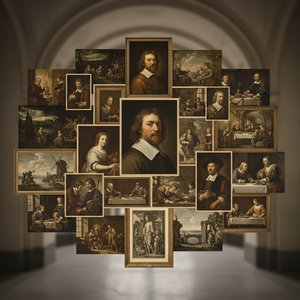
伦勃朗25幅杰作:光影大师的艺术传奇与家居臻选
探索伦勃朗25幅杰作,领略荷兰黄金时代光影大师的艺术传奇!从《夜巡》到自画像,深入了解巴洛克艺术、历史绘画与人物肖像背后的故事。AllPaintingsStore.com提供高清艺术复制品及家居装饰灵感。立即探索完整系列!
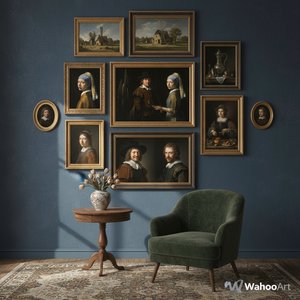
Dutch Baroque Masters: 10 Paintings That Shaped an Era | AllPaintingsStore
Journey through the Golden Age with our guide to the Top 10 Dutch Baroque masterpieces! Explore iconic paintings by Rembrandt, Vermeer & Frans Hals. Find museum-quality art reproductions and elevate your home decor at AllPaintingsStore.com.

Chiaroscuro and Character: A Definitive Guide to Light and Shadow in the Dutch Baroque Era
Explore the dramatic mastery of the Dutch Baroque era. Discover how masters like Rembrandt used chiaroscuro to transform everyday life into timeless art. An expert guide for collectors and enthusiasts seeking to understand the profound interplay of light and shadow.
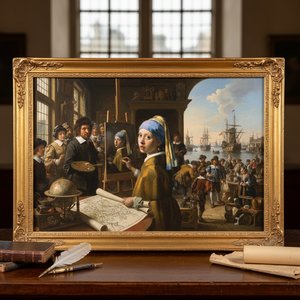
荷兰黄金时代绘画:文化创新中的现实主义反思
深入探索荷兰黄金时代绘画的文化创新与现实主义反思。本文解读伦勃朗、维米尔等大师的作品,并结合玛莉特·韦斯特曼的图像学研究,揭示艺术史背后的社会语境与现代性意识觉醒。

Cornelis van Poelenburch: Bridging Mannerism & the Dutch Baroque Landscape
Discover Cornelis van Poelenburch, a pivotal Dutch Baroque landscape painter bridging Mannerism & Italianate styles. Explore his life, key works, and lasting influence on 17th-century art with AllPaintingsStore.


