

1562. Oil On Canvas, 96.0 x 75.0 cm.

§ 1目录数据

- 96.0 x 75.0 cm


§ 2摘要
藏品详情
Explore the Maria Rodriguez de Reyero Collection in NYC! Home to Frida Kahlo's "Self-Portrait on the Borderline…" & 1930s art. Discover this unique private collection.
 展开全文
展开全文
艺术家简介
美国艺术家蒂坦·拉姆齐·皮尔二世(1799-1885),继承了家族艺术传统,同时深受文艺复兴时期威尼斯画派影响。他的作品以精湛的技法、丰富的色彩和对宗教题材的深刻理解而闻名,“献银币”、“牧羊人和仙女”等作品展现了他独特的艺术风格,连接了古典主义与新兴美洲文化。
§ 3赏析
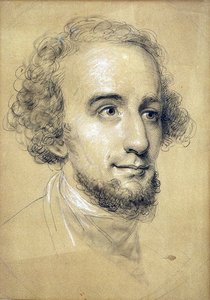
A Renaissance Echo in the New World: Exploring Titian Ramsay Peale II’s Self-Portrait
Titian Ramsay Peale II stands as a remarkable figure bridging the gap between European artistic tradition and burgeoning American identity. Born in Philadelphia in 1799, he inherited an extraordinary legacy from his father, Charles Willson Peale – a titan of early American portraiture and founder of the nation’s first museum – shaping him into an artist deeply attuned to the aesthetic sensibilities of the High Renaissance, specifically those emanating from Venice. Unlike many of his contemporaries who merely replicated established styles, Peale II channeled a profound artistic impulse, imbuing his canvases with meticulous detail and vibrant color palettes that distinguished him as a visionary innovator. His life unfolded against the backdrop of a nation striving to define itself culturally, yet his artistic soul remained steadfastly rooted in the grandeur of classical masters—a juxtaposition that generates an enduring fascination for art historians and collectors alike. ### Composition and Symbolism: A Window into Introspection The Self-portrait by Titian Ramsay Peale II is more than just a depiction of an individual; it’s a carefully constructed meditation on identity and artistic vocation. Executed in 1845, the oil on canvas measures 35cm x 24.9cm (13 3/4” x 9 13/16”), reflecting Peale's mastery of Renaissance technique—a style characterized by its reverence for classical ideals and its emphasis on realism achieved through layered glazing and subtle tonal variations. The artist is portrayed in a contemplative pose, dressed in a robe or long coat – possibly a cape – conveying an aura of solemn dignity. His stern gaze directs the viewer’s attention inward, mirroring the artist's preoccupation with capturing not merely outward appearance but also inner character. The necklace adorning his neck serves as a visual emblem of status and refinement, subtly reinforcing the notion that Peale viewed himself as embodying intellectual and artistic excellence. ### Artistic Style: Venetian Influence Meets American Observation Peale II’s stylistic choices demonstrate an astute understanding of Renaissance principles while simultaneously grounding his work in the observational realities of his time. The meticulous rendering of facial features—particularly the eyes—captures a palpable sense of thoughtfulness, reflecting Peale's dedication to portraying subjects with psychological depth. This approach aligns seamlessly with the Venetian tradition championed by artists like Titian and Giorgione, who prioritized capturing fleeting emotions and atmospheric nuances rather than striving for idealized representations. The use of oil paint on canvas – a technique perfected during the Renaissance—allowed Peale II to achieve unparalleled luminosity and textural richness, elevating his self-portrait beyond mere likeness into a powerful statement about artistic ambition and personal reflection. ### Historical Context: Palazzo Vescovile and the Rise of Portraiture The painting’s creation coincided with a period of transformative cultural change in Europe – namely, the flowering of the Renaissance—exemplified by monumental architectural projects like Palazzo Vescovile in Pienza, Italy. Constructed under Pope Pius II, this palazzo embodies the humanist ideals that underpinned the era's artistic endeavors, prioritizing human dignity and intellectual curiosity. The burgeoning popularity of portraiture during the Renaissance mirrored a broader societal shift toward valuing individual achievement and commemorating prominent figures. Peale II’s self-portrait stands as testament to this cultural dynamism—a product of an environment where artists sought to elevate their craft through meticulous observation and expressive technique. ### Emotional Impact: A Portrait of Quiet Confidence Ultimately, Titian Ramsay Peale II's Self-Portrait transcends its formal elements to convey a profound sense of inner conviction. The artist’s gaze holds both seriousness and compassion—suggesting an awareness of the complexities inherent in human experience. It invites contemplation on themes of identity, purpose, and artistic legacy—resonating with viewers who appreciate the enduring power of art to illuminate the human condition. This remarkable piece continues to inspire admiration for its masterful execution and its poignant portrayal of a man grappling with his role as both artist and humanist.常见问题与解答
建议将 "Self-portrait" 的 Portrait 格式作品陈列在什么位置?
关于 蒂坦·拉姆齐·皮尔二世 的《Self-portrait》,记录了其规格 (Portrait) 与建议摆放空间 (Living Room) 这两项陈列信息。
“Self-portrait”在艺术史上的地位如何?
从历史上看,"Self-portrait" 是广义上 Renaissance 时期的 Renaissance Revival 时期作品。
原件 蒂坦·拉姆齐·皮尔二世 的《Self-portrait》 的尺寸是多少?
原作 蒂坦·拉姆齐·皮尔二世 的《Self-portrait》 的尺寸为 96 x 75 cm。


 切换至版画销售渠道


 对于任何边长超过 105 厘米(约 41 英寸)的艺术品或复制品,画框将以拆解后的组件形式发货。此方法可确保安全送达并防止运输过程中的损坏。


