Early Life and Education
Philip Howard Francis Dixon Evergood (born Howard Blashki; 1901–1973) was born in New York City to Miles Evergood, an Australian artist of Polish Jewish descent, and Elsie (née Rosenblum) Evergood. His father’s artistic influence profoundly shaped his own creative path. From a young age, Philip demonstrated musical talent, performing piano concerts with his teacher by 1908. Recognizing this aptitude, he pursued formal education at various English boarding schools starting in 1909, culminating in degrees from Eton and Cambridge University. At Cambridge, he studied literature alongside music, fostering a well-rounded intellectual curiosity that would inform his artistic vision throughout his life.Artistic Training and Influences
Philip’s artistic journey began seriously in 1921 when he enrolled at Slade School of Art in London under the tutelage of Henry Tonks, absorbing the principles of tonal painting and exploring expressive brushwork. He continued his studies at the Art Students League of New York with George Luks and William von Schlegell, honing his skills in American Realism. A pivotal encounter occurred during his time abroad when he studied etching with Stanley William Hayter at Atelier 17, mastering the technique of printmaking and gaining invaluable insight into artistic experimentation. Evergood’s artistic sensibilities were deeply impacted by masters such as El Greco, Bosch, Brueghel, Goya, Daumier, Toulouse-Lautrec, and Sloan's Ashcan paintings—artists who championed social realism and explored psychological depth within their compositions. Furthermore, he drew inspiration from prehistoric cave art, recognizing its primal power and symbolic resonance.Career Highlights: WPA Murals and Teaching
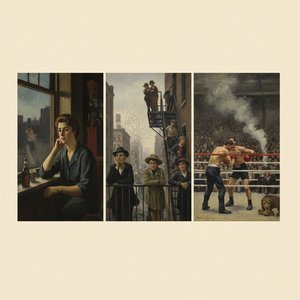
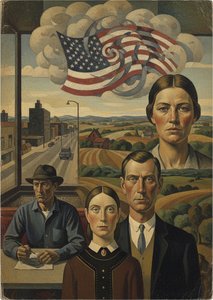
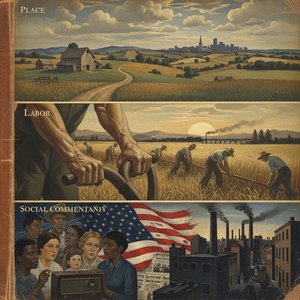
During the Great Depression and World War II eras, Philip Evergood achieved considerable recognition through his involvement with the Works Progress Administration (WPA). He undertook two ambitious mural projects: “The Story of Richmond Hill” (1936–37) for the Public Library branch in Queens, New York, and “Cotton from Field to Mill” (1938) commissioned by the Post Office in Jackson, Georgia. These murals exemplify Evergood’s commitment to portraying social realities with bold lines and evocative imagery—a hallmark of his artistic style. Beyond his painting endeavors, he served as a professor of music and art at various institutions, nurturing young talent and disseminating knowledge about creative expression.Later Years and Legacy
In 1952, Evergood relocated to Southbury, Connecticut, establishing himself as a respected artist and educator. He remained an active member of the Art Students League of New York and was inducted into the National Institute of Arts and Letters—honors recognizing his contribution to American art history. Tragically, he perished in a house fire in Bridgewater, Connecticut, on August 17, 1973, at the age of 72. His ashes were interred in Green-Wood Cemetery, Brooklyn, marking the final resting place of a prolific artist who left an indelible mark on American art. Evergood’s distinctive style—characterized by awkward drawing and spontaneous bold lines—continues to inspire artists today, cementing his position as a significant figure in 20th-century visual culture. His paintings are celebrated for their humor, fantasy, and symbolic depth, reflecting his unwavering belief in the power of art to engage with social issues and convey profound emotional truths.问答详情
Philip Evergood 的创作时期属于哪个历史阶段?
Philip Evergood 的创作活跃于 Modern 时期,这一时期确立了艺术家在艺术史上的地位。
如何按特定色调查找 Philip Evergood 的作品?
按色调浏览 页面按色调将 Philip Evergood 的艺术作品进行了分类。
可以按媒介类型浏览 Philip Evergood 的作品吗?
若要查找Philip Evergood在特定媒介下的所有作品,请访问艺术家的所有媒介页面。