ضمان استرداد الأموال خلال ١٠٠ يوم شحن مجاني حول العالم
449587الأعمال الفنية 30613الفنانون 4660المتاحف 32اللغات
Catalogue entry

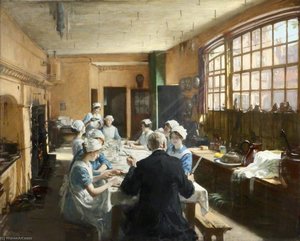
File Cutters

1917. , 31.0 x 47.0 cm.

Fig. 1. Edward Frederick Skinner, File Cutters, 1917. Shown as the reproduction you are specifying: , .

§ 1Catalogue data

الأبعاد
31.0 x 47.0 cm

§ 2Abstract

وصف المقتنيات

Explore 'File Cutters' by Edward Frederick Skinner (1917). A detailed oil painting capturing Victorian-era factory life & women’s labor. Academic realism, industrial detail. Perfect for art collectors!

نبذة عن الفنان

Edward Frederick Skinner (1865-1924) was a British painter known for his realistic depictions of industrial scenes, factories, and wartime production. Explore his captivating works documenting the era's labor & machinery.

§ 3Commentary

The painting "File Cutters" by Edward Frederick Skinner is a remarkable representation of the industrial era, showcasing women working together in a factory setting. Created in 1917, this oil on canvas piece measures 31 x 47 cm and is currently housed at the Science Museum in the United Kingdom.

Industrial Setting and Women's Roles

The scene depicts a group of women seated at tables with sewing machines, engaged in the production of clothing items such as dresses. The atmosphere suggests an industrial setting where teamwork and collaboration are essential. This painting highlights the significant role women played in the workforce during this period, often working in factories and contributing to the war effort. Key aspects of the painting include the attention to detail in the depiction of the sewing machines and the factory environment. The women appear focused and engaged in their tasks, demonstrating the importance of their work. For more information on industrial-themed paintings, visit Otto Friedrich Wilhelm Lietz: Industry in the Visual Arts at the Grohmann Museum.

Artist and Style

Edward Frederick Skinner was a notable artist known for his contributions to the representation of industrial scenes. His style often featured detailed depictions of machinery and factory settings, as seen in "File Cutters" and other works like Coiling and Setting Springs and Making Bessemer Steel. These paintings provide a glimpse into the industrial era, showcasing the evolution of manufacturing processes. Handmade oil painting reproductions of "File Cutters" by Edward Frederick Skinner are available at AllPaintingsStore, allowing art enthusiasts to own a piece of history. These reproductions are carefully crafted to capture the essence and detail of the original painting, making them a valuable addition to any art collection.
The "File Cutters" by Edward Frederick Skinner is a significant artwork that highlights the importance of women's roles in the industrial era. Its detailed depiction of factory life and machinery makes it a fascinating piece for art enthusiasts and historians alike.

الأسئلة والأجوبة

هل يُعرف Edward Frederick Skinner، مبدع "File Cutters"، بأسماء أخرى؟

يُعرف Edward Frederick Skinner أيضاً باسم E F Skinner.

عن ماذا يتحدث "File Cutters"؟

تُصور "File Cutters" للفنان Edward Frederick Skinner: industrial labor, women workers”, “factory life”, “victorian era”, “detailed art”, “social commentary”, “1917 history”.

ما هو اللون السائد في "File Cutters" للفنان Edward Frederick Skinner؟

تطغى على "File Cutters" للفنان Edward Frederick Skinner مسحة من اللون Warm Sunset Tones.

§ 4The artist

Quick facts about Edward Frederick Skinner

  • Artistic Movement Or Style: Realism
  • Artists Or Movements Influenced By This Artist: ['Arts and Crafts Movement']
  • Artists Who Influenced This Artist: ['William Morris']
  • Date Of Birth: 1865
  • Date Of Death: 1924
  • Full Name: Edward Frederick Skinner
  • Nationality: British
  • Notable Artworks:
    • Factory Scene I
    • Coal Mine Landscape
  • Place Of Birth: London, England

نبذة عن الفنان

The Chronicler of the Industrial Soul

Edward Frederick Skinner, a name synonymous with the gritty, unvarnished reality of Britain’s industrial zenith, occupied a unique space in the early 20th-century art world. Born in London in 1865, Skinner emerged during an era defined by rapid technological expansion and a profound shift in the social fabric of the nation. While many of his contemporaries sought refuge in the ethereal beauty of idealized landscapes or the timeless grace of mythological subjects, Skinner turned his gaze toward the smoke-filled horizons of factories, mills, and workshops. His work serves as a visceral window into an age of iron and steam, capturing the transformative impact of machinery upon the human spirit and the physical landscape of England.

His artistic foundation was laid within the prestigious halls of the Slade School of Fine Art, where he underwent rigorous training under the watchful eyes of masters such as Frederic Leighton and Joseph Hooker. This academic lineage bestowed upon him a meticulous command of traditional techniques and an unwavering commitment to precision. It was this very discipline that allowed him to approach industrial subjects not with mere observation, but with a profound anatomical and structural accuracy. Skinner did not merely paint machines; he understood their weight, their texture, and the way they interacted with the light and the laborers who tended them.

A Realist Vision of Progress and Labor

The true essence of Skinner’s oeuvre lies in his refusal to romanticize the hardships of the working class. His breakthrough came through a seriesed of paintings that documented the pulsating heart of British industry. In works such as File Cutters, created in 1917, he captures the quiet intensity of women engaged in factory production. Through his brush, the rhythmic movement of sewing machines and the focused expressions of the laborers become symbols of a collective national effort. He utilized light not to soften the harshness of the factory floor, but to illuminate the dignity found within strenuous toil.

Skinner’s mastery of composition allowed him to weave complex narratives of productivity and order. In Forging Files, he employs a sophisticated use of warm colors and soft lighting to create a sense of familiarity within the industrial setting, yet he maintains an unflinching eye for the mechanical details that define the era. His ability to balance the monumental presence of heavy machinery with the delicate human elements of his subjects created a tension that mirrored the societal shifts of his time. Whether depicting the heat of a forge or the organized chaos of a machine shop, Skinner’s canvases act as historical documents, preserving the atmosphere of an era that was rapidly being reshaped by the very tools he so lovingly rendered.

War, Propaganda, and Lasting Legacy

As the shadows of World War I descended upon Europe, Skinner’s artistic mission took on a new, more urgent dimension. His talent was harnessed for the purpose of documentation and national morale, leading to commissions from the British Government. During this period, his work became an essential component of a concerted propaganda campaign, illustrating the vital role of munitions factories, naval shipyards, and the preparation of soldiers. In paintings like One of the Machine Shops, he captured the scale of wartime production, where large-scale weaponry and heavy transport were integrated into the daily landscape of labor.

The historical significance of Edward Frederick Skinner extends far beyond the aesthetic value of his oil paintings. He remains a pivotal figure for understanding the visual identity of the Industrial Age. His legacy is found in the way he bridged the gap between fine art and social documentation, elevating the factory floor to the status of a worthy subject for high art. Today, his works, many of which are preserved in institutions like the Science Museum in the United Kingdom, continue to offer profound insights into the evolution of manufacturing, the changing roles of women in the workforce, and the enduring, complex relationship between humanity and the machines we create.

§ 5Comparanda

§ 6Questions

§ 7Cite this entry

AllPaintingsStore.com, “Edward Frederick Skinner, File Cutters (1917)”, https://allpaintingsstore.com/ar/art/edward-frederick-skinner-file-cutters-AR28W2-en/ArtistReproduction/ (accessed 4 أكتوبر 2026).

§ 8The reproduction

نسخة زيتية مصنوعة يدوياً

لوحة زيتية مرسومة يدوياً على الكانفاس بالمقاس والإطار الذي تفضله، تُنفذ حسب الطلب على أيدي فنانينا. ( التبديل إلى المطبوعات التحويل إلى الصورة الرقمية)

It is specified on the order sheet in the margin; the present state of that sheet reads as follows.

File Cutters

وسيط إعادة الإنتاج

مقاس النسخة المطبوعة

-

نخبة كبار الفنانين

دقة أكبر، ولمسات فنية أمتن، ووقت إضافي للإنتاج

-

إطار النسخة المطبوعة

-

-

بالنسبة للأعمال الفنية أو النسخ المطبوعة التي يتجاوز طول أي من أضلاعها 105 سم (حوالي 41 بوصة)، سيتم شحن الإطار كمجموعة مفككة. تضمن هذه الطريقة سلامة التوصيل وتمنع حدوث أي أضرار أثناء النقل.

يتطلب الأمر تجميعاً احترافياً - هذا المنتج ليس مخصصاً للتركيب الذاتي.
يجب تجميع المجموعة وشد القماش بواسطة فني إطارات محترف وخبير، باستخدام غراء الخشب (غير مرفق)، وكماشة شد القماش، وملاقط لتثبيت القضبان بشكل مستوٍ أثناء جفاف الغراء. إن التجميع غير الصحيح أو عدم توازن شد القماش قد يؤدي إلى تلف العمل الفني بشكل دائم، وهو أمر لا يغطيه الضمان الخاص بنا.

  • تتضمن المجموعة جميع القطع الخشبية الصلبة، والمقطعة بدقة لتناسب المقاسات المطلوبة.

  • يتم التجميع باستخدام البراغي المرفقة، بالإضافة إلى غراء الخشب للوصلات الزاوية، وهو غير مرفق ويجب توفيره من قبل فني التأطير الخاص بك.

  • تتطلب العملية استخدام أدوات احترافية غير مدرجة في المجموعة: مثل زرادية شد القماش (أداة شد) وملاقط لتثبيت القضبان بشكل مستوٍ أثناء جفاف الغراء.

تنبيه هام:
تتطلب الوصلات الزاوية استخدام غراء الخشب، كما يجب تثبيت القضبان باستخدام المشابك حتى يجف الغراء تماماً، ويتطلب شد القماش على الإطار المجمع استخدام كماشة شد القماش. لا تشتمل المجموعة على أي من هذه الأدوات؛ لذا يرجى التواصل مع فني تأطير محترف قبل طلب هذا المقاس.

لوحة التعريف

-

-

ورنيش حماية

ورنيش لامع (يُبرز الألوان ويحمي من الضوء والرطوبة)

-

تخصيص عملي الفني

أمثلة على التعديلات المتاحة: استبدال الوجه بصورة العميل؛ إضافة حيوان أليف (مثل استبدال قطة بكلب)؛ إدراج رسالة مخفية في الخلفية؛ تغيير المناظر الطبيعية أو العناصر في الخلفية.

-

عاجل

توصيل عالمي إلى خلال 3-4 أسابيع بدلاً من المدة المعتادة البالغة 5 أسابيع. (1 نوفمبر). جودة لا تضاهى.

-

شحن سريع ومميز

توصيل عالمي إلى خلال 5 أسابيع. (8 نوفمبر).

مُضمَّن

إجمالي السعر

E£ 20004

Included with every order

  • شحن سريع ومجاني لجميع أنحاء العالم
  • قماش كتان فاخر
  • تأمين شامل على الشحن
  • ضمان استرداد الرسوم الجمركية
  • ضمان دقة مطابقة الألوان
  • سياسة الإرجاع خلال 100 يوم (في حالات العيوب فقط)
  • ضمان استرداد نقدي بنسبة 100%
  • عرض خصم الكميات
Order sheet