

Charcoal.

§ 1بيانات الكتالوج


§ 2تجريدي
وصف القطعة المقتناة
Inspired by Gustav Klimt, Schiele’s work explores themes of sexuality, death, and the human condition. Explore reproductions at Egon Schiele Art Centrum in Český Krumlov.
 عرض المزيد
السيرة الذاتية للفنان
اكتشف عالم إغون شيلي، الرائد التعبيري النمساوي! لوحاته الصادمة والمؤثرة تستكشف موضوعات الموت، والعزلة، والوجود الإنساني بأسلوب فريد. استمتع بنسخ يدوية رائعة لأعماله!
§ 3تعليق
A Gaze Through the Veil of Existence
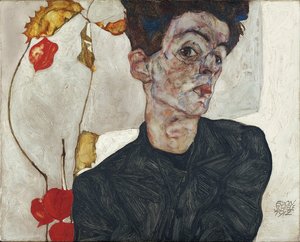
In the hauntingly beautiful monochrome sketch untitled (1348), Egon Schiele invites us into a profound confrontation with the human psyche. Created around 1918, during the twilight of his tragically short life and amidst the global upheaval of the First World War, this work serves as a visceral window into the soul. The subject—a solitary male figure—is captured in a moment of piercing intensity. His gaze does not merely observe the viewer; it pierces through the surface of the paper, demanding an emotional reckoning. There is an unsettling intimacy in the way Schiele positions the head and shoulders, forcing us to meet an expression that oscillates between profound vulnerability and a defiant, almost confrontational, strength.
The power of this piece lies in its masterful use of Expressionist technique, where the artist deliberately rejects the polished perfection of academic realism to prioritize raw, psychological truth. Schiele’s hand is visible in every jagged, angular line that defines the contours of the face and torso. Through a sophisticated application of hatching and cross-hatching, he creates depth and shadow without the need for color, using only the stark contrast of black and gray against a stark white void. These energetic, gestural marks do more than delineate form; they vibrate with a nervous energy, mirroring the internal tremors of anxiety and existential dread that characterized much of Schiele’s oeuvre.
The Architecture of Emotion and Shadow
Beyond its technical brilliance, untitled (1348) is a masterclass in symbolic minimalism. By stripping away the distractions of color, Schiele isolates the essential elements of human suffering and resilience. The monochromatic palette serves to amplify the dramatic impact of the composition, turning the artwork into a study of light and shadow that feels both timeless and immediate. The organic, often distorted shapes of the figure reflect the artist's preoccupation with the fragility of life—a theme deeply rooted in his personal history of loss and the broader cultural anxieties of early twentieth-century Vienna.
For the discerning collector or interior designer, this artwork offers a sophisticated focal point that commands attention through its quiet intensity. It is a piece that does not merely decorate a space but transforms it, providing a contemplative anchor for rooms designed for introspection and intellectual depth. Whether displayed in a modern gallery setting or as a striking element within a curated residential collection, Schiele’s work brings an unparalleled sense of historical gravity and emotional complexity. To possess a reproduction of such a seminal work is to hold a fragment of the Expressionist revolution, capturing that fleeting, beautiful moment where art transcends representation to become pure feeling.
الأسئلة والأجوبة
إلى أي عصر يعود "untitled (1348)"؟
تعود لوحة "untitled (1348)" للفنان إغون شيله إلى حقبة Modern، وهي الحقبة التي تمنح العمل الفني سياقه التاريخي.
ما هي التقنية والأسلوب اللذان يميزان "untitled (1348)" للفنان إغون شيله؟
تُنفذ لوحة "untitled (1348)" باستخدام Charcoal، وبأسلوب Expressionist Style.
هل تُعدّ "untitled (1348)" للفنان إغون شيله لوحةً فاتحة الألوان أم داكنة؟
تتميز لوحة "untitled (1348)" بدرجة سطوع إجمالية تبلغ brilliant، كما يبلغ مستوى الإضاءة فيها Bright Balance.


 التبديل إلى نسخة مطبوعة


 بالنسبة للأعمال الفنية أو النسخ المطبوعة التي يتجاوز طول أي من أضلاعها 105 سم (حوالي 41 بوصة)، سيتم شحن الإطار كمجموعة مفككة؛ حيث تضمن هذه الطريقة سلامة التوصيل وتمنع حدوث أي أضرار أثناء النقل.


