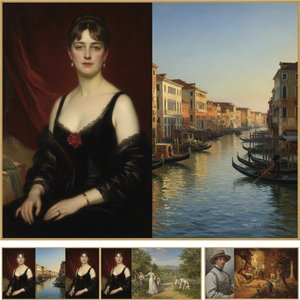
1885. Acrylic On Canvas, 62.0 x 51.0 cm. المتحف المتروبوليتاني للفنون.

§ 1بيانات الكتالوج

- 62.0 x 51.0 cm


§ 2تجريدي
وصف القطعة المقتناة
Explore John Frederick Peto's masterful trompe l'oeil painting "Office Board," depicting an organized workspace with a portrait and subtle details reflecting the artist’s meticulous approach to capturing everyday life.
 عرض المزيد
السيرة الذاتية للفنان
اكتشف جون فريدريك بيتو (1854-1907)، سيد الترووبيل لو (trompe l'oeil) الأمريكي! استكشف مناظره الطبيعية الآسرة للأشياء اليومية، جوهرة مكتشفة من الواقعية والعاطفة.
§ 3تعليق
A Window Into Victorian Domestic Life: John Frederick Peto’s “Office Board”
John Frederick Peto's "Office Board," completed in 1885, isn’t merely a depiction of an everyday scene; it’s a masterful encapsulation of Victorian sensibilities—a testament to meticulous observation and a subtle exploration of social dynamics. Painted with astonishing precision using oil on canvas, the artwork transports viewers back to a time when domestic interiors were carefully curated spaces reflecting status and intellect. Peto's deliberate choice of subject matter – a cluttered desk populated by books, papers, and a portrait – speaks volumes about the aspirations of Victorian gentlemen.- Subject Matter: The painting captures the essence of an organized workspace, dominated by a man’s portrait—likely intended as inspiration or guidance for his endeavors. Alongside this central figure is a collection of objects that represent not just practicality but also cultural refinement.
- Style & Technique: Peto eschewed the grand narratives favored by many of his contemporaries, opting instead for *trompe l'oeil*, a technique that seeks to deceive the eye into perceiving illusionistic realism. This method is evident in the subtle textures and tonal variations achieved through layering paint—a deliberate departure from the polished surfaces characteristic of academic painting.
- Historical Context: Created during Queen Victoria’s reign, “Office Board” reflects the prevailing Victorian preoccupation with order, rationality, and moral seriousness. The inclusion of scholarly texts underscores the importance placed on education and intellectual pursuits within Victorian society.
Decoding Symbolism Within Everyday Objects
Beyond its technical brilliance, Peto’s painting is rich in symbolic significance. Consider the carefully arranged books—representing knowledge and erudition—and the scattered papers hinting at ongoing correspondence and contemplation. The portrait itself serves as a focal point, embodying both identity and aspiration. Each item contributes to a larger narrative about Victorian ideals of gentlemanly culture. The artist's meticulous attention to detail isn’t simply decorative; it aims to convey a profound understanding of human psychology and social convention.- The Desk: More than just furniture, the desk symbolizes productivity and intellectual engagement—a space where ideas are formulated and decisions are made.
- The Portrait: The depiction of the doctor’s face is imbued with dignity and seriousness, reflecting Victorian values of moral responsibility and self-discipline.
- The Objects: Each item on the desk – from the spectacles to the inkwell—holds subtle connotations related to intellect, profession, and domestic life.
Peto’s Approach Versus Harnett's Illusionism
Comparing Peto’s “Office Board” with William Michael Harnett’s similarly styled paintings reveals a crucial distinction in artistic philosophy. While Harnett prioritized illusionistic realism—creating convincing representations of surfaces and textures—Peto favored a more restrained aesthetic, prioritizing decorative effects of color and texture over meticulous imitation of reality. This difference underscores Peto's belief that art should engage the viewer emotionally rather than merely presenting a flawless visual facsimile. He sought to capture not just what was seen but also what was felt—a characteristic that distinguishes his work from Harnett’s more technically ambitious endeavors.A Legacy of Quiet Observation
Ultimately, John Frederick Peto's “Office Board” stands as a remarkable achievement in American *trompe l'oeil* painting. It exemplifies the Victorian commitment to detailed observation and thoughtful representation—a legacy that continues to inspire artists today. The artwork’s understated elegance and subtle symbolism invite contemplation on themes of identity, intellect, and domestic life—making it an enduring symbol of Victorian culture and artistic innovation.الأسئلة والأجوبة
إلى أي مرحلة من مسيرة جون فريدريك بيتو المهنية تعود تاريخ 1885 لعمل "Office Board"؟
بما أنها تعود إلى عام 1885، فإن لوحة "Office Board" تنتمي إلى Mature Period الخاص بـ جون فريدريك بيتو.
هل "Office Board" للفنان جون فريدريك بيتو لوحة زيتية، أم رسم، أم مطبوعة؟
تُصنف "Office Board" للفنان جون فريدريك بيتو ضمن فئة WallArt، ويحدد هذا التصنيف نوع العمل الفني الأصلي.
كم كان عمر جون فريدريك بيتو عند إبداع "Office Board"؟
عندما أُبدع العمل "Office Board" في عام 1885، كان عمر الفنان جون فريدريك بيتو - المولود في 1854 - هو 31 عاماً.


 التبديل إلى نسخة مطبوعة


 بالنسبة للأعمال الفنية أو النسخ المطبوعة التي يتجاوز طول أي من أضلاعها 105 سم (حوالي 41 بوصة)، سيتم شحن الإطار كمجموعة مفككة؛ حيث تضمن هذه الطريقة سلامة التوصيل وتمنع حدوث أي أضرار أثناء النقل.