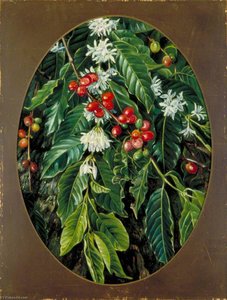
1876. Oil On Canvas, 13.0 x 34.0 cm. مجموعة معشبة جامعة ريتشموند.

§ 1Catalogue data
 Oil On Canvas
- WallArt
- Impressionistic Style
 1876
1876 13.0 x 34.0 cm
 مجموعة معشبة جامعة ريتشموند
§ 2Abstract
وصف المقتنيات
Experience the breathtaking beauty of Java's volcanoes with Marianne North’s impressionistic oil painting depicting Ijen and Papandayan Volcanoes. Explore vibrant colors & masterful brushstrokes capturing a serene volcanic landscape.
 اقرأ المزيد
نبذة عن الفنان
ماريان نورث: فنانة ومستكشفة فيكتورية رسمت نباتات غريبة حول العالم! اكتشفوا معرضها المذهل في حدائق كيوي، الذي يضم أكثر من 800 لوحة نابضة بالحياة - شهادة على روح المغامرة!
§ 3Commentary
A Victorian Explorer's Ode to Java’s Volcanic Majesty
The canvas breathes with an ethereal stillness—a deliberate choice by Marianne North, a British botanist and artist who defied societal norms of her time to pursue a singular passion: documenting the extraordinary flora of Indonesia. Completed in 1876, “Ijen Volcano and Papandayan Volcano,” now housed in the Raffles Museum Singapore, transcends mere topographical representation; it’s an immersive experience rendered in oil on canvas with an impressionistic brushstroke that captures not just what is seen but how it feels—a testament to North's unwavering dedication to scientific observation blended seamlessly with artistic expression.The Impressionistic Dance of Light and Color
North eschewed meticulous detail, favoring instead a technique rooted in capturing the fleeting effects of light on volcanic landscapes. Loose, expressive brushstrokes dominate the composition, layering hues of azure and ivory to depict the billowing clouds that envelop Ijen Volcano’s peak—a deliberate strategy to convey its misty grandeur. Papandayan Volcano receives darker tones, emphasizing its conical form and grounding the scene in a sense of solidity amidst the ethereal expanse above. This stylistic decision aligns perfectly with the broader artistic currents of Impressionism, where artists prioritized capturing subjective perception over objective accuracy. The artist’s aim wasn't to reproduce reality verbatim but to distill its essence—the drama of volcanic eruptions and the serene beauty of tropical vegetation into a single evocative image.A Pioneer Among Botanists: Contextualizing North’s Vision
Marianne North’s journey to Java was driven by an ardent desire to expand botanical knowledge and, crucially, to advocate for conservation – a remarkably progressive stance for Victorian England. Recognizing the vulnerability of these volcanic ecosystems threatened by deforestation, she undertook arduous expeditions armed with scientific instruments alongside her artistic pursuits. Her meticulous drawings served as invaluable records of plant species previously unknown to Western science, bolstering the burgeoning field of botany and establishing her reputation as one of the era’s foremost explorers. The painting itself embodies this spirit of discovery—a celebration of natural beauty intertwined with a subtle awareness of its fragility.Symbolism Woven into Volcanic Landscapes
Beyond its aesthetic qualities, “Ijen Volcano and Papandayan Volcano” carries symbolic weight. The towering volcanoes represent both destructive force and creative potential – mirroring the cyclical nature of geological processes and reflecting North’s belief in the transformative power of confronting challenges head-on. The pervasive clouds symbolize obscurity and mystery, inviting contemplation about the unseen wonders hidden beneath the surface of our world. Simultaneously, they serve as a backdrop for the vibrant blossoms—a visual reminder of life's resilience amidst adversity.Emotional Resonance: Capturing Volcanic Spirit
Ultimately, North’s masterpiece succeeds in conveying an emotional response to its subject matter – awe and wonder at the raw beauty of Java’s volcanic region. The painting invites viewers into a contemplative space where they can appreciate not only the visual splendor but also the profound connection between art and science. It stands as a poignant reminder that true artistic achievement lies in capturing not just what is seen, but what is felt—a legacy that continues to inspire artists and collectors alike.الأسئلة والأجوبة
كيف يتجلى التباين والانسجام في "Ijen Volcano and Papandayan Volcano, Java"؟
في "Ijen Volcano and Papandayan Volcano, Java"، يجتمع Serene التباين مع Strong Color Unity الانسجام.
ما هي الغرفة التي يُنصح بوضع "Ijen Volcano and Papandayan Volcano, Java" للفنان ماريان نورث فيها، بالنظر إلى ألوانه؟
بالنظر إلى ألوانه التي تتميز بـ Neutrals، يُقترح وضع لوحة "Ijen Volcano and Papandayan Volcano, Java" في Living Room.
ما هو اللون الأكثر بروزاً في "Ijen Volcano and Papandayan Volcano, Java"؟
يُعد اللون Rosy Brown (#a7abb2) هو اللون الطاغي في لوحة "Ijen Volcano and Papandayan Volcano, Java" للفنان ماريان نورث.


 التبديل إلى المطبوعات


 بالنسبة للأعمال الفنية أو النسخ المطبوعة التي يتجاوز طول أي من أضلاعها 105 سم (حوالي 41 بوصة)، سيتم شحن الإطار كمجموعة مفككة. تضمن هذه الطريقة سلامة التوصيل وتمنع حدوث أي أضرار أثناء النقل.