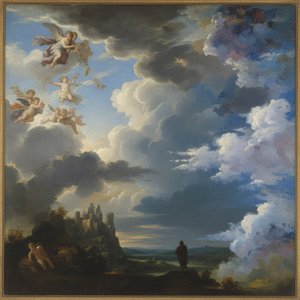
1931. Acrylic.

§ 1Catalogue data


§ 2Abstract
وصف القطعة المقتناة
Nicholas Roerich’s ethereal River Chandra captures majestic mountains bathed in crimson hues beneath swirling white clouds—a stunning testament to the artist's Symbolist style and 1931 vision. Explore this captivating landscape reproduction and bring its timeless beauty into your home.
 عرض المزيد
السيرة الذاتية للفنان
نيكولاس ريريش (1874-1947): رسام روسي رائد، اشتهر بلوحاته الرمزية والمناظر الطبيعية الهيمالايا الساحرة. صمم مسارح الباليه الروسي ودافع عن الحفاظ على التراث الثقافي العالمي.
§ 3Commentary
A Visionary Landscape: Exploring Nicholas Roerich’s “River Chandra”
- Subject Matter: This breathtaking landscape depicts the majestic Himalayas, rendered with an unparalleled sensitivity to light and atmosphere. The painting captures a serene vista of towering mountains enveloped in swirling clouds—specifically, two prominent white formations dominating the upper reaches of the composition.
- Style: Roereich’s artistic style is firmly rooted in Symbolism and Transcendental Impressionism. He eschewed purely representational depiction, opting instead to convey spiritual ideas and emotions through color and form. The painting embodies a profound connection between nature and the divine—a hallmark of his distinctive approach.
- Technique: Roereich employed a masterful glazing technique, layering thin washes of pigment over each other to achieve luminous effects and subtle tonal variations. This meticulous process allowed him to capture the ethereal quality of the mountains and clouds, creating an illusion of depth that transcends mere visual observation. The artist utilized tempera on canvas, a medium known for its durability and ability to preserve color vibrancy.
- Historical Context: Created in 1931, “River Chandra” emerged during Roereich’s prolific period of artistic exploration—particularly his engagement with Eastern mysticism and shamanic traditions. His travels throughout Tibet and Mongolia profoundly influenced his worldview and fueled his desire to depict landscapes imbued with spiritual significance. The painting reflects the broader cultural movement toward synthesizing Western scientific observation with Eastern philosophical contemplation.
- Symbolism: The white clouds symbolize purity, enlightenment, and transcendence—concepts central to Roereich’s cosmology. They represent the boundless expanse of consciousness and invite viewers to contemplate the mysteries of existence. The river itself symbolizes flow, continuity, and the cyclical nature of life, mirroring the spiritual journey toward self-realization.
- Emotional Impact: “River Chandra” evokes a feeling of awe and wonder—a visceral response to the grandeur of the natural world combined with an inner contemplation of its spiritual essence. It’s more than just a beautiful image; it's an invitation to reconnect with one’s own intuition and experience the transformative power of art.
الأسئلة والأجوبة
ما مدى تناغم ألوان "River Chandra" للفنان نيكولاي ريريتش؟
يتميز التناغم اللوني لـ "River Chandra" بكونه Softly Mixed Palette.
ما هو الطابع العام لـ "River Chandra"؟
تتجلى الحالة المزاجية العامة لـ "River Chandra" للفنان نيكولاي ريريتش في Ethereal، حيث تعكس هذه الحالة الأجواء العامة للعمل الفني.
ما هو اللون السائد في تكوين "River Chandra" للفنان نيكولاي ريريتش؟
يتميز العمل الفني "River Chandra" للفنان نيكولاي ريريتش بلونه السائد وهو Putty (#d5bfc4).


 التبديل إلى نسخة مطبوعة


 بالنسبة للأعمال الفنية أو النسخ المطبوعة التي يتجاوز طول أي من أضلاعها 105 سم (حوالي 41 بوصة)، سيتم شحن الإطار كمجموعة مفككة؛ حيث تضمن هذه الطريقة سلامة التوصيل وتمنع حدوث أي أضرار أثناء النقل.