


 معاينة الحجم الواقعي
 إرسال
إرسال مشاركة
 عرض التفاصيل
 دليل الأعمال الفنية للطلاب

 تحميل
تحميل
 قطع مشابهة
 الأشعة السينية
 عرض شرائح متتابع
 الإحصائيات
Forest
 اقرأ المزيد
طباعة جيلي / مطبوعات فنية
طباعة جيكلي أو كانفاس بجودة المتاحف، مع سرعة في التنفيذ وخيارات متنوعة للتشطيب. ( اطلب نسخة مرسومة يدويًا التحويل إلى الصورة الرقمية)




































اختر من بين أحجامنا المُعدّة مسبقاً والتي تتوافق مع النسب الأصلية للعمل الفني.

أدخل العرض والارتفاع اللذين تحتاجهما، ليتناسب مع إطارك أو جدارك. يمكن قص المطبوعة فقط، ولا يمكن أبداً جعلها أكبر من الصورة الأصلية، لذا فإن أي مقاس بشكل مختلف سيؤدي إلى فقدان جزء من الصورة. سنرسل لك نموذجاً رقمياً تجريبياً لاعتماده قبل البدء في عملية الطباعة. الصورة المعروضة في هذه الصفحة لا توضح القص الفعلي — النموذج التجريبي فقط هو ما يظهر ذلك.
توصيل عالمي إلى خلال أسبوعين بدلاً من المدة القياسية البالغة 4/5 أسابيع. (28 أكتوبر)

شحن سريع ومجاني لجميع أنحاء العالم

قماش كتان فاخر

تأمين شامل على الشحن

ضمان استرداد الرسوم الجمركية

ضمان دقة مطابقة الألوان

سياسة الإرجاع خلال 100 يوم (في حالات العيوب فقط)

ضمان استرداد نقدي بنسبة 100%

عرض خصم الكميات
 خيار الزجاج متاح فقط للمقاسات التي تقل عن 110 سم

Forest
طباعة جيلي / مطبوعات فنية
مقاس النسخة المطبوعة
-


إجمالي السعر
E£ 3332
أعمال فنية مشابهة


نبذة عن الفنان
Simon de Vlieger: Master of the Dutch Marine
Born in Rotterdam around 1601, Simon Jacobsz. de Vlieger emerged as a pivotal figure in the burgeoning world of Dutch maritime painting during the 17th century. His life was marked by a constant relocation – initially residing in his birthplace, then moving to Delft and finally settling in Amsterdam and Weesp – reflecting the dynamic shifts within the artistic landscape of the Netherlands. De Vlieger’s career spanned nearly half a century, culminating in his death in Weesp in 1653, leaving behind a legacy profoundly influencing subsequent generations of maritime artists.
Early influences on de Vlieger's work were deeply rooted in the style of Jan Porcellis, a contemporary known for his monochrome depictions of ships at sea. However, unlike Porcellis’s restrained palette and simplified forms, de Vlieger embraced a more vibrant and realistic approach to color. He meticulously rendered the intricate details of ship rigging, hull construction, and the tumultuous conditions of the ocean – elements that would become hallmarks of his distinctive style. This shift represented a significant departure from the prevailing artistic trends, paving the way for a new era in Dutch marine painting.
A Painter of Storms and Serenity
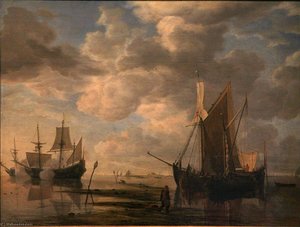
De Vlieger’s oeuvre encompassed a remarkably diverse range of subjects. He skillfully captured both dramatic scenes of storms and shipwrecks – often rendered with an almost violent energy – and more tranquil depictions of ships in harbor or engaged in everyday activities. His ability to convey the power of nature, combined with his meticulous attention to detail, resulted in paintings that were not only visually stunning but also imbued with a sense of realism and immediacy. He wasn’t simply painting ships; he was capturing the essence of maritime life, the challenges faced by sailors, and the beauty of the open sea.
Beyond his contributions to marine art, de Vlieger demonstrated versatility as a designer. He created tapestries depicting historical events, designed intricate etchings, and even contributed to the decoration of sacred spaces, including stained glass windows for the Nieuwe Kerk in Amsterdam and an organ screen for the St. Laurenskerk in Rotterdam. This multifaceted talent underscores his position as a respected artist within the broader artistic community.
Influence and Legacy
De Vlieger’s impact on the development of Dutch maritime painting is undeniable. He moved away from the monochrome style favored by earlier artists like Jan Porcellis and Willem van de Velde the Elder, introducing a more nuanced use of color and a heightened level of realism. His detailed depictions of rigging and ship construction served as a model for subsequent generations of painters, including his own pupils: Willem van de Velde the Younger, Adriaen van de Velde, and Jan van de Cappelle. Jan van der Cappelle, in fact, amassed an impressive collection of over 1300 prints by de Vlieger, highlighting the artist’s considerable popularity during his lifetime.
One particularly noteworthy example of de Vlieger's work is a painting depicting a fisherman dragging nets to shore, which was later acquired by Joanna Six, wife of Simon van der Stel, and eventually found its way to Groot Constantia in the Cape of Good Hope. This journey across continents demonstrates the far-reaching influence of his art and its appreciation even in distant lands. His work wasn’t merely admired; it was actively sought after and displayed as a testament to Dutch artistic excellence.
Notable Works
- Estuary at Day's End (c. 1640/1645): A captivating depiction of a coastal scene, showcasing de Vlieger’s masterful use of light and color to capture the atmosphere of the sea.
- In the Hague Woods (date unknown):
A landscape painting demonstrating his ability to integrate maritime elements into broader compositions.
- River Landscape (1640s): A serene depiction of a river scene, highlighting de Vlieger’s skill in portraying the tranquility of nature.
Simon de Vlieger's legacy endures as one of the most important and influential figures in Dutch maritime art. His innovative approach to color, his meticulous attention to detail, and his ability to capture both the drama and serenity of the sea continue to inspire artists today.
Simon Jacobsz De Vlieger
1601 - 1653
لمحة سريعة
- Artistic Movement Or Style: Marine painting
- Artists Or Movements Influenced By This Artist:
- Willem van de Velde, the Younger
- Dutch Golden Age
- Artists Who Influenced This Artist:
- Jan Porcellis
- Willem van de Velde, the Elder
- Date Of Birth: 1601
- Date Of Death: 1653
- Full Name: Simon Jacobsz de Vlieger
- Nationality: Dutch
- Notable Artworks:
- Estuary at Day's End
- Visit of Frederick Hendriks II
- River Landscape
- Place Of Birth: Rotterdam, Netherlands

