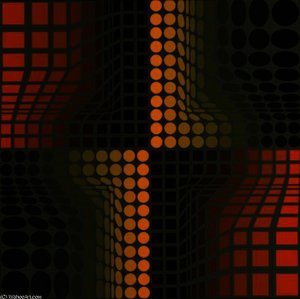
Acrylic On Canvas.

§ 1Catalogue data


هذا العمل الفني محمي بموجب حقوق الطبع والنشر
إن العمل الفني المعروض في هذه الصفحة محمي بموجب قوانين حقوق الطبع والنشر، مما يعني أنه لا يحق لنا قانوناً إنشاء أو بيع نسخ مطابقة له. وتُطبق هذه الحماية بموجب الاتفاقيات الدولية مثل الـ اتفاقية برن ووفقاً للقوانين الوطنية، بما في ذلك تلك المنصوص عليها في قانون حقوق الطبع والنشر في الولايات المتحدة - الباب 17.
وكبديل قانوني ومحترم، نقدم أعمالاً فنية مخصصة ومرسومة يدوياً مستوحاة من العمل الأصلي. حيث يقوم فنانونا المهرة والمحترفون بدراسة أسلوب العمل الأصلي، وأجوائه، وجوهره الفني بعناية فائقة لابتكار قطعة جديدة وفريدة تثير الشعور ذاته - مع بقائها عملاً أصيلاً بحد ذاته.
تتوافق هذه الطريقة تماماً مع لوائح حقوق النشر لأنها لا تتضمن نسخ أو تكرار العمل الفني المحمي، بل هي إعادة تفسير إبداعية؛ أي أنها لوحة جديدة مستوحاة من الأصل ولكنها ليست مطابقة له.
 اقرأ المزيد
§ 2Abstract
وصف المقتنيات
Vibrant abstract composition by Victor Vasarely, a key figure in Op Art, showcases dynamic geometric shapes and bold colors – yellow, orange, blue, and purple. Explore this captivating kinetic artwork and bring its visual energy into your space.
نبذة عن الفنان
فيكتور فاسارلي، رائد فن البوب آرت والحركة البصرية! اكتشف تجريداته الهندسية، وأوهام بصرية آسرة، وتأثيره الدائم على الفن والتصميم الحديث. من أعماله المميزة 'زيبرا' و'جورج بومبيدو'.
§ 3Commentary
A Symphony of Geometric Perception: Exploring Victor Vasarely’s ‘Abstract Composition 6’
Victor Vasarely's “Abstract Composition 6” is more than just a colorful painting; it’s an invitation to reconsider the very nature of visual perception. Created by one of the foremost figures in Op Art, this vibrant work embodies the artist’s lifelong fascination with geometry and its impact on how we experience the world. Painted primarily in a dynamic palette of yellows, oranges, blues, and purples, the composition immediately draws the eye into a mesmerizing dance of shapes and patterns – triangles, squares, circles, and more – meticulously arranged to create an illusion of movement and depth. This isn't simply decorative art; it’s a rigorously constructed exploration of optical illusions, reflecting Vasarely’s deep engagement with scientific principles and his desire to translate mathematical concepts into tangible artistic forms.
The Genesis of Op Art: Bauhaus Roots and Kinetic Vision
Born in 1906 in Pécs, Croatia (then part of Austria-Hungary), Vasarely’s artistic trajectory began unexpectedly. Initially pursuing a medical degree, he abandoned this path in 1927 to embrace painting, ultimately finding his true calling within the burgeoning movement of Op Art – Optical Art. This pivotal shift was profoundly influenced by his studies at Sándor Bortnyik’s “Műhely” workshop, a school deeply rooted in the principles of functional design and geometric abstraction championed by the Bauhaus. The Bauhaus, with its emphasis on reducing form to its essential elements and exploring the relationship between art and industry, provided Vasarely with the theoretical framework for his groundbreaking work. He wasn't merely creating abstract images; he was attempting to capture the *effect* of visual perception – the way our eyes and brains interpret shapes and colors – a concept that would become central to Op Art’s success.
Technique and Illusion: A Masterclass in Visual Deception
Vasarely's technique was remarkably precise, relying on meticulous layering and the careful manipulation of color and scale. He employed a method he termed “static illusion,” creating the impression of movement through precisely controlled geometric forms. The seemingly random arrangement of shapes is, in fact, a carefully calculated system designed to trick the eye. Each element is rendered with exceptional clarity, contributing to the overall sense of depth and dynamism. The use of contrasting colors further enhances this effect, guiding the viewer’s gaze across the canvas and reinforcing the illusion of movement. This technique demanded not just artistic skill but also a deep understanding of optics and visual psychology – qualities that Vasarely possessed in abundance.
Symbolism and Emotional Resonance: Beyond Pure Geometry
While rooted in geometric abstraction, “Abstract Composition 6” possesses an undeniable emotional resonance. The vibrant colors evoke feelings of energy, excitement, and perhaps even a sense of wonder. Vasarely’s work isn't about representing the external world; it’s about exploring the internal landscape of perception itself. The dynamic composition can be interpreted as a reflection of the constant flux and change inherent in our experience – a visual representation of the ever-shifting patterns of thought and emotion. The piece invites contemplation on how we actively construct our reality through our sensory perceptions, making it a powerful statement about the subjective nature of vision.
الأسئلة والأجوبة
هل يستخدم "Abstract composition 6" للفنان فيكتور فاسارلي تباينات قوية أم تناغمات ناعمة؟
تجمع التكوينات اللونية في "Abstract composition 6" للفنان فيكتور فاسارلي بين تباين Statement وتناغم Discordant Palette.
ما هو الموضوع والأجواء التي يجمع بينها "Abstract composition 6" للفنان فيكتور فاسارلي؟
تُصور "Abstract composition 6" للفنان فيكتور فاسارلي موضوعات abstract art, geometric shapes, color field, op art, victor vasarely, visual perception, dynamic design، في أجواء Calm. ويصف الموضوع والأجواء معاً هذا العمل الفني.
ما هو حجم الطباعة الموصى به لـ "Abstract composition 6" للفنان فيكتور فاسارلي؟
حجم الطباعة الموصى به لعمل "Abstract composition 6" للفنان فيكتور فاسارلي هو Large.


 التبديل إلى المطبوعات


 بالنسبة للأعمال الفنية أو النسخ المطبوعة التي يتجاوز طول أي من أضلاعها 105 سم (حوالي 41 بوصة)، سيتم شحن الإطار كمجموعة مفككة. تضمن هذه الطريقة سلامة التوصيل وتمنع حدوث أي أضرار أثناء النقل.