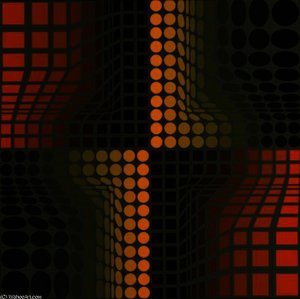
1969. Screenprint.

§ 1بيانات الكتالوج


هذا العمل الفني محمي بموجب حقوق الطبع والنشر
إن العمل الفني المعروض في هذه الصفحة محمي بموجب قوانين حقوق الطبع والنشر، مما يعني أنه لا يحق لنا قانوناً إنشاء أو بيع نسخ مطابقة له. وتُطبق هذه الحماية بموجب الاتفاقيات الدولية مثل الـ اتفاقية برن ووفقاً للقوانين الوطنية، بما في ذلك تلك المنصوص عليها في قانون حقوق الطبع والنشر في الولايات المتحدة - الباب 17.
وكبديل قانوني وراقٍ، نقدم أعمالاً فنية مخصصة ومرسومة يدوياً مستوحاة من العمل الأصلي. حيث يقوم فنانونا المهرة والمحترفون بدراسة أسلوب العمل الأصلي وأجوائه وجوهره الفني بعناية فائقة، لابتكار قطعة جديدة وفريدة تثير الشعور ذاته - مع بقائها عملاً أصيلاً بحد ذاته.
تتوافق هذه الطريقة تماماً مع لوائح حقوق النشر لأنها لا تتضمن نسخ أو تكرار العمل الفني المحمي، بل هي إعادة تفسير إبداعية؛ أي أنها لوحة جديدة مستوحاة من الأصل ولكنها ليست مطابقة له.
 للمزيد من المعلومات
§ 2تجريدي
وصف القطعة المقتناة
Experience the vibrant optical illusions of Victor Vasarely's 1969 Op Art masterpiece, Torony-Nagy, featuring geometric towers that play with depth and color; discover this modern vision today.
السيرة الذاتية للفنان
فيكتور فاسارلي، رائد فن البوب آرت والحركة البصرية! اكتشف تجريداته الهندسية، وأوهام بصرية آسرة، وتأثيره الدائم على الفن والتصميم الحديث. من أعماله المميزة 'زيبرا' و'جورج بومبيدو'.
§ 3تعليق
The Illusion of Structure: Exploring Vasarely's Geometric Vision
To stand before Victor Vasarely’s "Torony-Nagy" is not merely to observe paint on canvas; it is to engage in a sophisticated dialogue with perception itself. This vibrant 1969 composition plunges the viewer into a world governed by pure geometry, where structure becomes both subject and illusion. The piece presents four stylized tower forms arranged in a meticulously balanced square. These are not representations of buildings as we know them, but rather abstract meditations on architectural permanence and visual dynamism. Vasarely, a master cartographer of the eye, uses color and line to construct an environment that seems simultaneously solid and utterly ephemeral.
Mastery of Op Art: Technique and Visual Vibration
The defining characteristic of "Torony-Nagy" is its unwavering commitment to Op Art. This style, which flourished in the mid-20th century, challenges the viewer's assumptions about pictorial space. Vasarely achieves this breathtaking effect through rigorous geometric construction. Notice how the grid-like patterns within each tower appear to recede into an impossible depth, despite the flatness of the surface. The artist employs a bold, contrasting palette—vivid blues against sharp greens, punctuated by warm yellows and reds—all held together by crisp white lines that define every plane. This precise application of color and line creates what art historians call optical vibration; your eye is forced to work overtime, oscillating between recognizing pattern and experiencing the dizzying sense of depth.
A Dialogue with Modernity: Symbolism and Context
Created in 1969, this work sits at a fascinating intersection of post-war modernism and burgeoning technological optimism. The towers themselves can be interpreted as allegories for the skyscraper age—symbols of human ambition, industrial scale, and the relentless march of progress. However, Vasarely resists simple narrative reading. Instead, he invites contemplation on how we perceive reality itself. Are these structures real? Do they exist in physical space or only within the mechanics of our vision? This ambiguity is the core strength of the piece; it speaks to the intellectual currents of the era—the rise of abstract thought and man's increasing reliance on constructed systems.
Bringing Geometric Brilliance Home
For collectors, interior designers, or anyone seeking a focal point imbued with intellectual energy, "Torony-Nagy" offers unparalleled visual impact. Reproducing this piece allows one to incorporate high art that is both visually arresting and conceptually rich into any space. Its bold color blocking means it anchors a room without adhering to traditional decorative motifs. It demands attention while simultaneously inviting quiet study. Owning a reproduction of this work is acquiring not just decoration, but a conversation starter—a testament to the enduring power of abstract thought rendered in breathtaking, vibrant form.
الأسئلة والأجوبة
كيف يرتبط موضوع "Torony-Nagy" بالمواضيع المعتادة لدى فيكتور فاسارلي؟
تتضمن الثيمات المتكررة لدى فيكتور فاسارلي موضوع bauhaus geometric abstraction influence, exploration of visual perception, modernist architectural representation, key op art period work؛ بينما يركز عمل "Torony-Nagy" على op art, geometric, abstract, towers, pattern, illusion, modernism.
هل ألوان "Torony-Nagy" للفنان فيكتور فاسارلي مشبعة أم خافتة؟
تتميز لوحة "Torony-Nagy" للفنان فيكتور فاسارلي بدرجة تشبع تبلغ Balanced Soft.
هل "Torony-Nagy" للفنان فيكتور فاسارلي لوحة شخصية، أم طبيعية، أم ذات تكوين مربع؟
تأتي لوحة "Torony-Nagy" للفنان فيكتور فاسارلي بتنسيق Square، وهو التنسيق الذي يحدد أبعاد التكوين الفني.


 التبديل إلى نسخة مطبوعة


 بالنسبة للأعمال الفنية أو النسخ المطبوعة التي يتجاوز طول أي من أضلاعها 105 سم (حوالي 41 بوصة)، سيتم شحن الإطار كمجموعة مفككة؛ حيث تضمن هذه الطريقة سلامة التوصيل وتمنع حدوث أي أضرار أثناء النقل.