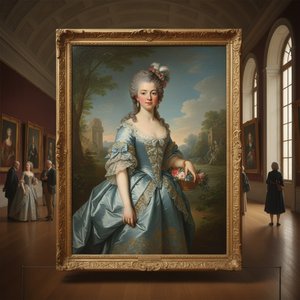
The Architect of Rococo Splendor
To understand the essence of 18th-century French elegance, one must look to the intricate carvings and ornamental designs of Nicolas Pineau. A master carver and ornamental designer, Pineau stood as a pivotal figure in the birth of the rocaille style, more commonly known today as Rococo. His artistry was not merely about decoration; it was about the creation of an atmosphere—a delicate dance of light, shadow, and movement that transformed static interiors into living, breathing expressions of luxury. Born in Paris, he carried within his lineage a deep connection to the craft, being the son of the carver Jean-Baptiste Pineau.
Pineau's career was marked by an extraordinary reach that extended far beyond the borders of France. In 1716, he was among the talented group of designers and craftsmen who accompanied Alexandre Le Blond to St. Petersburg. This journey proved transformative, as his Russian contracts tasked him with the creation of essential aristocratic elements: doors, chimney pieces, frames, and table ornaments. Following the untimely death of Le Blond in 1719, Pineau emerged as the preeminent French decorative artist in Russia. His most profound achievement during this period was the design and carving of the Grand Cabinet of Peter the Great in Peterhof. This masterpiece featured richly carved panels with bold central cartouches and military trophies, a testament to his ability to marry structural grandeur with delicate ornamentation.
A Legacy of Ornament and Design
Upon his return to Paris, Pineau found a landscape of design that was rapidly evolving, yet he maintained an extraordinaire vogue through his specialized mastery of carving designs. While the architectural field in Paris was becoming increasingly crowded with competent practitioners, Pineau relied on his unique ability to breathe life into wood and ornament. He often collaborated with architects such as Jean-Baptiste Leroux, whose work provided the perfect canvas for Pineau’s exuberant decorative flourishes.
The significance of his work lies in the way he bridged the gap between structural architecture and fine art. His designs were not merely applied to surfaces; they defined them. Whether it was through:
- Intricate Wood Carving: Transforming heavy materials like oak into fluid, organic shapes that seemed to defy their weight.
- Ornamental Prints: Serving as a designer of ornament prints that spread the Rococo aesthetic across Europe.
- Interior Integration: Creating cohesive environments where gilded frames, marble mantelpieces, and carved panels worked in concert to expand and elevate the perceived space.
Through his hands, the rigid symmetries of previous eras gave way to the flowing, asymmetrical grace of the Rococo. His influence remains etched in the very fabric of 18th-century decorative arts, reminding us of a time when every corner of a room was an opportunity for narrative sculpture and unparalleled refinement.
الأسئلة والأجوبة
هل يمكنني زيارة متحف افتراضي لأعمال Nicolas Pineau؟
يمكنكم مشاهدة أعمال Nicolas Pineau الفنية في معرض ثلاثي الأبعاد عبر صفحة متحف ثلاثي الأبعاد الخاصة بالفنان.
كيف تنقسم المسيرة المهنية لـ Nicolas Pineau إلى فترات زمنية؟
تتجلى المسيرة المهنية لـ Nicolas Pineau مرحلة تلو الأخرى في صفحة مسيرة فنية: وهي عبارة عن خط زمني أفقي للأعمال الفنية، مُصنفة ضمن فصول تمثل كل حقبة من مسيرته.
إلى أي حقبة تاريخية ينتمي Nicolas Pineau؟
أبدع Nicolas Pineau خلال حقبة Early Modern، وهي الفترة التي تضع نشاط الفنان في سياقه التاريخي.